Summary
- Opposition leaders also announced plans for nationwide protests against the emergency measures and governor’s rule in K-P.
- Meanwhile, Allama Raja Nasir Abbas also condemned the imposition of emergency measures and governor’s rule in K-P.
- Abbas also questioned the justification for imposing emergency measures in K-P, arguing that the security situation in Balochistan warranted similar scrutiny.
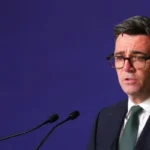
Pakistan Tehreek-e-Insaf (PTI) Chairman Barrister Gohar Ali Khan has announced that he will personally challenge the imposition of emergency measures and governor’s rule in Khyber-Pakhtunkhwa (KP) before the Peshawar High Court on Tuesday. The party has also vowed to continue its long march and protests against the federal government’s decision.
Speaking at a press conference outside Parliament alongside opposition leaders Mahmood Khan Achakzai and Allama Raja Nasir Abbas, Gohar rejected the measures, describing October 11 as a dark day for Pakistan’s democratic history. He demanded the withdrawal of the decisions and said the party would pursue legal and political options to challenge them.
Gohar said PTI would raise its objections on every available platform. He added that the party’s parliamentary meeting on Tuesday would determine its strategy for opposing the measures in the provincial assembly. He also accused the federal government of abruptly changing the provincial administration and escalating tensions despite continued contacts between the two sides.
The PTI chairman stressed that a strong federation depended on strong provinces. He urged political leaders to avoid dividing the public while confronting terrorism, describing it as a serious threat to Pakistan’s security and stability.
Opposition leaders also announced plans for nationwide protests against the emergency measures and governor’s rule in K-P. Mahmood Khan Achakzai said opposition parties would organise peaceful demonstrations across the country while keeping the door open for negotiations with the government.
Achakzai said opposition groups would be encouraged to launch protests according to their capacity. He also called for a democratic movement in districts where emergency measures had not been imposed, arguing that constitutional rights and parliamentary supremacy must be protected.
Criticising the federal government’s decision, Achakzai questioned why similar action had not been taken in Balochistan, where he claimed the security situation was more serious. He accused the government of applying different standards to provincial administrations and alleged that large parts of Balochistan had become inaccessible to security forces.
He also renewed allegations of electoral manipulation in the February 8 elections, claiming that PTI had been denied its public mandate. He maintained that Pakistan could move forward only if Parliament was strengthened and all state institutions operated within constitutional boundaries.
Achakzai further called for permission to meet PTI founder Imran Khan. He offered to provide a written assurance that he would not disclose details of their conversation. He also rejected claims that he was unwilling to meet Prime Minister Shehbaz Sharif, saying he remained open to dialogue but would not visit the Prime Minister’s House or the Speaker’s Office for such a meeting.
Meanwhile, Allama Raja Nasir Abbas also condemned the imposition of emergency measures and governor’s rule in K-P. He accused the government of undermining the Constitution and treating political workers like terrorists. He called for collective action against terrorism while urging authorities to distinguish between political opposition and security threats.
Abbas also questioned the justification for imposing emergency measures in K-P, arguing that the security situation in Balochistan warranted similar scrutiny. He warned that political divisions could further worsen the situation if the public and political leadership failed to unite.
The latest confrontation follows a week of growing tensions surrounding PTI’s long march, led by K-P Chief Minister Sohail Afridi. The protest was initially scheduled for September 27 but was postponed to October 4 amid security arrangements, traffic restrictions and attempts to negotiate with the federal government.
Talks between government and opposition representatives on October 2 and 3 failed to produce an agreement. PTI leaders later identified differences over the provincial government’s counterterrorism policy as a major obstacle to negotiations.
Following the breakdown of talks and the continuation of the long march, President Asif Ali Zardari approved Prime Minister Shehbaz Sharif’s recommendation to impose emergency rule in K-P. The federal government cited deteriorating security conditions and alleged failures by the provincial administration to take adequate action against terrorism.
The proclamation referred to the governor’s report, which highlighted concerns about the constitutional and administrative situation in the province. Under the decision, the chief minister, provincial ministers, advisers, special assistants and advocate general ceased to hold their offices with immediate effect.
The federal government also authorised the deployment of Pakistan Army personnel and resources under Article 245 of the Constitution to protect citizens, public property and government installations during the emergency.
PTI and other opposition groups have rejected the measures as unconstitutional and undemocratic. They have vowed to challenge the decision through courts, legislative forums and public demonstrations, setting the stage for a further escalation in tensions between the federal government and opposition leadership.
We welcome your contributions! Submit your blogs, opinion pieces, press releases, news story pitches, and news features to opinion@minutemirror.com.pk and minutemirrormail@gmail.com