Summary
- He also pointed to several confidence-building measures, including the withdrawal of 170 cases registered against protesters and compensation packages for families of both civilians and law enforcement personnel who lost their lives during the unrest.
- Meanwhile, AJK police reported that four law enforcement personnel were killed and dozens injured during the clashes.
- The group alleges that security forces used excessive force against protesters and claims that seven civilians were killed and many others injured.
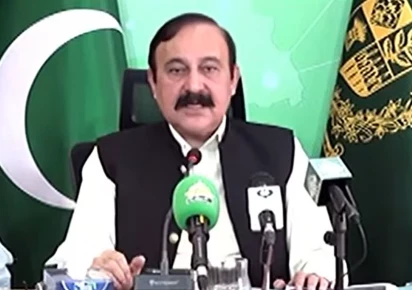
Federal Minister for Parliamentary Affairs Dr. Tariq Fazal Chaudhry on Monday urged the recently banned Joint Awami Action Committee (JAAC) to abandon what the government describes as a path of violence and instead pursue its objectives through constitutional and democratic means. While clarifying that the government is not engaged in direct talks with the outlawed group, he said there would be no objection if Azad Jammu and Kashmir (AJK) Prime Minister Faisal Rathore attempted to facilitate dialogue indirectly.
Speaking at a press conference outside Parliament House, Chaudhry stressed that disputes should be resolved through peaceful negotiations rather than confrontation. He emphasized that violence must come to an end and called on the JAAC leadership to work toward a solution that promotes stability and public welfare.
The minister noted that tensions in AJK have intensified following recent clashes that resulted in multiple fatalities and injuries. Official figures confirm at least seven deaths, while competing accounts continue to emerge regarding the circumstances surrounding the violence. Authorities maintain that some elements within the protest movement engaged in violent acts, including attacks on public property and security personnel.
Chaudhry highlighted the government’s efforts to address protesters’ concerns, claiming that 35 of the 38 demands raised by the JAAC had already been accepted. The remaining demands, he explained, could not be implemented due to ongoing legal proceedings. He also pointed to several confidence-building measures, including the withdrawal of 170 cases registered against protesters and compensation packages for families of both civilians and law enforcement personnel who lost their lives during the unrest.
According to the minister, employment opportunities were also offered to relatives of the deceased, while significant administrative reforms were introduced. These included reducing the size of the AJK cabinet from 36 members to 20 and cutting the number of ministries from 32 to 22 in line with previous agreements.
Addressing the contentious issue of the 12 refugee seats in the AJK Legislative Assembly, Chaudhry argued that any changes should be pursued through political, legislative, or judicial channels, as the arrangement is protected under AJK’s interim constitution. He expressed regret that calls to postpone the recent long march were not heeded, saying this ultimately contributed to the escalation of violence.
The unrest has sparked strong political reactions. A day earlier, Pakistan Peoples Party Chairman Bilawal Bhutto-Zardari appealed to protesters to end their demonstrations peacefully, warning that instability could provide opportunities for hostile actors and external forces to exploit the situation.
Meanwhile, AJK police reported that four law enforcement personnel were killed and dozens injured during the clashes. Authorities also alleged that protesters vandalized the Combined Military Hospital in Rawalakot and attacked security forces. Police stated that 81 cases had been registered between June 6 and June 14, leading to the arrest of 425 individuals. Officials further claimed that weapons, communication equipment, and other materials were recovered during the operation.
The JAAC, however, disputes the official narrative. The group alleges that security forces used excessive force against protesters and claims that seven civilians were killed and many others injured. The disagreement comes amid growing political tensions ahead of AJK elections scheduled for July 27.
The dispute over refugee representation remains a central issue. The JAAC argues that the current system is unfair and has proposed alternative arrangements, while government officials insist that any reforms must be carried out within the constitutional framework. As elections approach, the unresolved issue continues to fuel political debate and public unrest across the region.
We welcome your contributions! Submit your blogs, opinion pieces, press releases, news story pitches, and news features to [email protected] and [email protected]