Summary
- According to the commerce ministry, if the NTP is implemented in its true form without deviations, import duties on cars, jeeps, and auto parts could be reduced by approximately 25% to 50%.
- The commerce ministry has proposed cutting the maximum customs duty rate by half to 50%, reducing additional customs duties by 2% per slab, and limiting regulatory duties to around 20% for the fiscal year 2026–27.
- Under the long-term NTP plan, customs duties on auto parts are expected to fall from 35% to 25%, while rates on smaller vehicles (up to 800cc) will decrease from 50% to 30%.
In Islamabad, the government is currently working through significant challenges surrounding its proposed new automobile policy, as senior officials confirmed that vehicle tariff structures are being developed in line with the National Tariff Policy (NTP) and its broader goals of trade liberalisation.
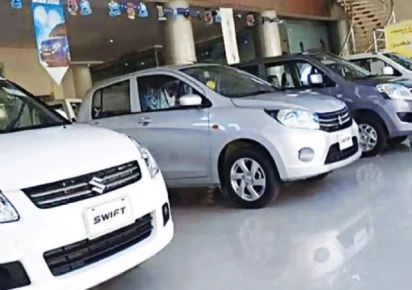
According to the commerce ministry, if the NTP is implemented in its true form without deviations, import duties on cars, jeeps, and auto parts could be reduced by approximately 25% to 50%. This was highlighted in a presentation shared with a National Assembly committee reviewing the upcoming federal budget. Such reductions would substantially lower the overall tax burden on vehicles, potentially making them more affordable for consumers. However, this would also increase competitive pressure on local automobile assemblers, who may face greater competition from imported vehicles.
During a meeting of the National Assembly Standing Committee on Finance, chaired by PPP leader Syed Naveed Qamar, Commerce Secretary Jawad Paul reiterated that auto tariffs are being set while keeping the principles of the National Tariff Policy in view. He stated that the ministry’s position remains consistent with earlier proposals aimed at gradually reducing customs duties and simplifying the tariff structure.
The commerce ministry has proposed cutting the maximum customs duty rate by half to 50%, reducing additional customs duties by 2% per slab, and limiting regulatory duties to around 20% for the fiscal year 2026–27. Under this framework, the overall maximum tariff level would fall significantly to about 74%, compared to the current peak rate of 156%. However, officials noted that the 82% gap between existing rates and proposed reductions has become a major point of disagreement, delaying final approval of the new Auto Policy for 2026–31.
Reports indicate that the International Monetary Fund (IMF) has not fully supported certain aspects of the proposed policy, leading to differences within government institutions. Among the proposals under discussion is a suggestion to charge 50% of the standard sales tax on hybrid vehicles, and as low as 1% sales tax on new energy vehicles. However, due to conflicting views among ministries and IMF concerns, it is becoming increasingly difficult to finalize and implement the new policy before the current one expires on June 30.
Officials are currently considering two main options: either align tariffs with the NTP target of 74%, or maintain the same tariff reduction while imposing additional Federal Excise Duty to protect the local industry. The second option, however, would represent a departure from the original auto policy framework.
The commerce secretary clarified that there has been no deviation from the approved NTP so far, and that proposals for FY2026–27 remain consistent with its roadmap. He explained that thousands of tariff lines—around 7,590 in total—will see gradual reductions in customs duty, regulatory duty, and additional customs charges.
Under the long-term NTP plan, customs duties on auto parts are expected to fall from 35% to 25%, while rates on smaller vehicles (up to 800cc) will decrease from 50% to 30%. Similarly, vehicles up to 1,000cc will see duties drop from 55% to 35%, while 1,500cc cars will face a reduction from 60% to 40%. For larger vehicles, tariffs will also be progressively reduced, though luxury cars above 1,800cc may face separate treatment through possible excise duties.
The overall reform program aims to reduce the average tariff rate to 13%, though current projections still place it slightly higher at 13.77%. Officials also estimate that tariff reductions in the second year alone will result in a revenue impact of approximately Rs 143.4 billion.
Despite disagreements, the government maintains that the reforms are designed to gradually liberalize trade, improve market competition, and align Pakistan’s tariff system with international standards over the coming years.
We welcome your contributions! Submit your blogs, opinion pieces, press releases, news story pitches, and news features to [email protected] and [email protected]