Summary
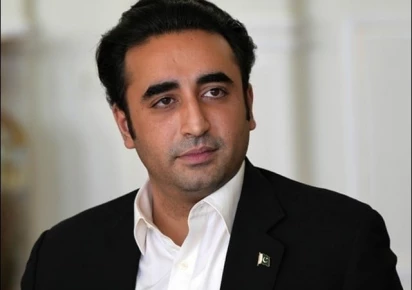
- I wanted to believe Bilawal Bhutto-Zardari might become a different kind of leader: younger, more reflective, and more willing to challenge the habits that have kept Pakistani politics trapped in the same family rivalries and power bargains.
- A leader who wants public trust must be able to face difficult questions without treating the person asking them as an opponent.
- But they share a troubling pattern: Pakistani politics keeps asking the public to choose which powerful personality to trust, while too few leaders build institutions that can serve people without depending on a family name or a single commanding figure.
I wanted to believe Bilawal Bhutto-Zardari might become a different kind of leader: younger, more reflective, and more willing to challenge the habits that have kept Pakistani politics trapped in the same family rivalries and power bargains. His speech at the Karachi Press Club briefly encouraged that hope. He spoke about poverty, unemployment, inflation, a political reset, and the need to restore public trust. He even acknowledged that politicians had made mistakes.
Then came the interview with Shahzeb Khanzada. When Khanzada pressed him about Karachi, education, development, and the PPP’s nearly eighteen years in power in Sindh, Bilawal did not simply defend his government. At moments, he seemed to mock the interviewer and turn the exchange into a personal contest, saying, “If you want to do politics, then Shahzeb bhai, I can do better politics than you.” Khanzada replied that he was asking questions about the government’s performance, not trying to do politics.
I found that response rude and disappointing. Bilawal was speaking to a journalist raising questions about public services and statistics that affect millions of people. The questions may have been uncomfortable, but they deserved a serious answer—not a taunt. I never expected that kind of dismissiveness from someone I had hoped might represent a more thoughtful generation of leadership.
The moment exposed a deeper contradiction. Bilawal spoke about poverty, unemployment, and the failures of the political system, yet seemed unwilling to engage patiently when that same system’s record in Sindh was put under scrutiny. A leader who wants public trust must be able to face difficult questions without treating the person asking them as an opponent.
The people of Sindh deserve more than arguments about who started a debate or which level of government is to blame. UNICEF estimates that 7.4 million children aged five to sixteen in Sindh are out of school—44 percent of the province’s children in that age group. That number is not a party slogan. It is a measure of the distance between political promises and ordinary families’ lives.
Bilawal also carries a political inheritance that is impossible to ignore. He is the grandson of Zulfikar Ali Bhutto, a former prime minister, and the son of Benazir Bhutto, also a former prime minister. He may have a right to lead, but inherited prominence does not substitute for earning public trust. To many Pakistanis, he represents a feudal political order in which power circulates among familiar families while the poor are asked to wait for change.
His remarks about the system made the contradiction sharper. He warned against coercion and defended political rights, including the rights of opponents. Those are important principles. But principles matter most when they are applied consistently—when a leader is willing to examine his own party’s conduct with the same urgency he applies to its rivals. In the interview, I wanted to hear that self-examination. I heard defensiveness and, at times, contempt instead.
Maryam Nawaz presents a related problem. She, too, comes from a powerful political family and leads with a strong focus on her own public image and claims of performance. When questioned about the use of an official aircraft for a family-related trip, she defended it as part of the chief minister’s work and described herself in the third person as someone who delivers more than she promises. Supporters may see confidence and energy in that style. I see a politics that too often asks people to admire the leader instead of scrutinizing the government.
Imran Khan is different in one important respect: he did not inherit a governing dynasty in the same way Bilawal and Maryam did. His rise drew on a real public appetite for change, and his supporters continue to see him as a challenger to entrenched power. But his politics, too, became centered on one man—his personal struggle, his loyalty tests, and his claim to embody the people’s cause. His political appeal has been analyzed through the lens of populism and personalized political communication. A leader can challenge the old elite and still concentrate political attention around himself.
These leaders are not identical, and their histories are not interchangeable. But they share a troubling pattern: Pakistani politics keeps asking the public to choose which powerful personality to trust, while too few leaders build institutions that can serve people without depending on a family name or a single commanding figure.
I cannot claim to know what is in any politician’s heart. But I can judge what their politics seems to prioritize. Too often, the priority appears to be survival, control, and the preservation of influence. The poor are invoked in speeches, but they remain surrounded by the same failures—in schools, hospitals, jobs, housing, safety, and basic services.
I hoped Bilawal might show that a younger leader could break from that pattern. His speech raised that hope; his interview weakened it. Pakistan does not need another heir, saviour, or self-proclaimed champion of the people. It needs leaders willing to answer hard questions about their own record—and to measure success by whether ordinary people’s lives actually improve.
I also urge journalists to conduct more interviews like this with politicians, senior bureaucrats, and, where possible, military leaders. Ask direct questions, give them room to defend themselves, and then let the people of Pakistan decide what their answers and actions mean for the country.
We welcome your contributions! Submit your blogs, opinion pieces, press releases, news story pitches, and news features to opinion@minutemirror.com.pk and minutemirrormail@gmail.com