Summary
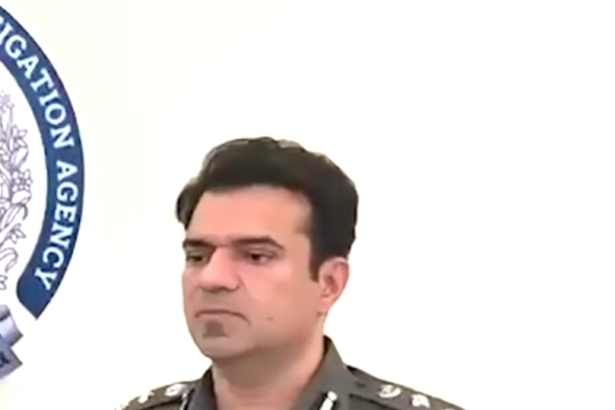
- That is the starting point Muhammad Ali Waseem, director of the National Cyber Crime Investigation Agency (NCCIA) in Lahore, offered in a recent conversation about the kind of cases his office deals with every single day.
- Here, Mr Waseem used a memorable comparison — investigating these cases, he said, is like “finding a needle in a haystack”.
- Mr Waseem also spoke about the everyday workload his office handles, such as bank fraud cases involving people impersonating bank employees, hacked Facebook accounts (belonging to ordinary citizens and public figures alike), land and property disputes citizens bring to his office even when they fall outside strict cybercrime jurisdiction, and sensitive complaints involving defamation, blasphemy, and extremism, where one person’s “free speech” is another person’s harm.
Not all cybercrimes look the same, and not all cyber criminals work the same way. That is the starting point Muhammad Ali Waseem, director of the National Cyber Crime Investigation Agency (NCCIA) in Lahore, offered in a recent conversation about the kind of cases his office deals with every single day.

According to Mr Waseem, online crime generally falls into two broad patterns: some offenders work entirely alone, quietly building their schemes in isolation, while others are part of larger, more complicated operations that involve multiple people working together. In such cases, the NCCIA has to counter fake identities, fake accounts, and several hands moving money or material behind the scenes.
To explain the first kind, Waseem mentioned a disturbing case from Lahore. Investigators arrested a man who had been running a fake online “spiritual consultation” service, branded as an Istikhara (spiritual guidance) website. On the surface, it looked like an ordinary platform offering religious advice to people struggling with personal problems: family disputes, marriage troubles, the kind of everyday worries that make people search for answers online. But the women and girls who reached out for help were, in reality, walking into a trap.
Once someone made contact, the suspect would gradually convince them to share personal photos or appear on video calls. He then used that material to blackmail them. As if that was not enough, the NCCIA also discovered that the man ran a side business renting out a wedding hall and had secretly installed hidden cameras there to record unsuspecting guests. Investigators have since seized the recording equipment and are now examining whether any hall employees, or anyone in the suspect’s own household, played a role in the scheme.
Despite the scale of harm, Waseem said his agency believes this was most likely the work of one person, not a wider gang. He said a pattern investigators often see: predators running this kind of operation usually avoid bringing in partners, because every extra person involved raises the risk that the secret gets out. Forensic work on the suspect’s devices is still underway, but so far, personal data belonging to more than 40 women has already turned up, including hundreds of photos and videos. Once the forensic process wraps up, officials say they’ll try to track down and contact every woman affected.
But identifying victims is only half the problem. Mr Waseem was candid about the real obstacle: silence. Out of fear of social judgment, many victims and their families never report blackmail cases at all. He appealed directly to the public to come forward, and urged parents to talk openly with their children about staying safe online. He calls it a shared social responsibility, not just police work.
Then there’s the second, messier category of cybercrime: financial fraud. Here, Mr Waseem used a memorable comparison — investigating these cases, he said, is like “finding a needle in a haystack”. Unlike a lone predator hiding behind one fake persona, financial scams are often layered with fake identities at every stage: a false identity used by the scammer, a false identity shown to the victim, and even the bank accounts receiving stolen money turn out to be fraudulent. Tracing the money means wading through banking networks just to find a starting thread. And just like blackmail cases, a huge number of financial scams are never even reported, leaving the true scale of the problem hidden.
Mr Waseem also spoke about the everyday workload his office handles, such as bank fraud cases involving people impersonating bank employees, hacked Facebook accounts (belonging to ordinary citizens and public figures alike), land and property disputes citizens bring to his office even when they fall outside strict cybercrime jurisdiction, and sensitive complaints involving defamation, blasphemy, and extremism, where one person’s “free speech” is another person’s harm.
It is a heavy caseload, and Mr Waseem did not shy away from acknowledging the strain. Hundreds of complaints currently sit pending, something he linked to staffing shortages and a lack of vehicles and fuel needed to act faster. The encouraging part, however, is that the NCCIA is currently in an expansion phase. According to Waseem, once ongoing recruitment is completed, the agency expects to clear its backlog far more efficiently and respond to the growing volume of public complaints in a much quicker timeframe.
We welcome your contributions! Submit your blogs, opinion pieces, press releases, news story pitches, and news features to opinion@minutemirror.com.pk and minutemirrormail@gmail.com