Summary
- ISLAMABAD: The Inter Board Coordination Commission (IBCC) has approved a series of significant measures aimed at improving Pakistan’s examination system, expanding academic equivalence opportunities and enhancing transparency in educational records.
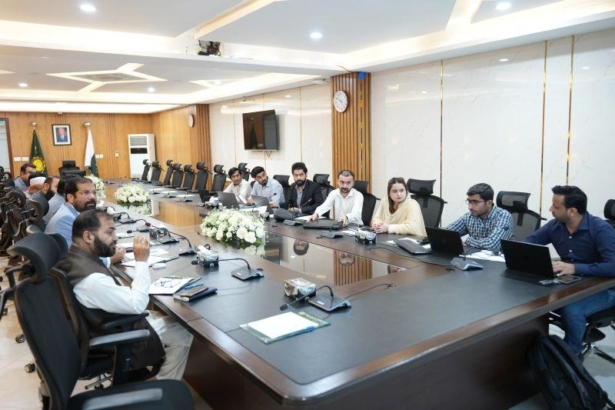
- The decisions were taken during the 184th meeting of the IBCC Forum, held in Murree, where representatives of examination boards from across the country discussed reforms designed to shift the education system away from rote learning and towards conceptual and understanding-based assessment.
- He said the forum provided a national platform for examination boards to exchange experiences, share successful practices and develop common solutions to challenges confronting the examination system.
ISLAMABAD: The Inter Board Coordination Commission (IBCC) has approved a series of significant measures aimed at improving Pakistan’s examination system, expanding academic equivalence opportunities and enhancing transparency in educational records.
The decisions were taken during the 184th meeting of the IBCC Forum, held in Murree, where representatives of examination boards from across the country discussed reforms designed to shift the education system away from rote learning and towards conceptual and understanding-based assessment.
Under the new decision, students from foreign examination boards will be eligible for Science Group equivalence if they have successfully passed at least two science subjects. The move is expected to provide greater flexibility to students pursuing education under foreign examination systems and seeking equivalence in Pakistan.
The forum also recommended adding 12 more Deeni Madaris to the list of institutions whose qualifications can be considered for equivalence with Secondary School Certificate (SSC) and Higher Secondary School Certificate (HSSC) levels. With the addition of these institutions, the total number of Madaris covered under the equivalence framework will rise to 26.
Another important decision was to include B-Form or CNIC numbers on SSC and HSSC certificates. The measure is intended to make educational records easier to identify, verify and access while improving the overall reliability of academic documentation.
The IBCC Forum also agreed to introduce scholarships and overseas exposure opportunities for board toppers. In addition, winter and summer camps will be organised for high-achieving students to provide them with opportunities for broader learning, leadership development and academic exposure.
According to an IBCC press release, chairpersons of Boards of Intermediate and Secondary Education (BISEs), technical education boards and senior officials from curriculum and textbook boards participated in the two-day meeting.
National Coordinator of the IBCC Forum, Inayatullah Waseem, stressed the importance of collective participation in implementing examination reforms. He said the forum provided a national platform for examination boards to exchange experiences, share successful practices and develop common solutions to challenges confronting the examination system.
The forum was informed that boards in Sindh, the Federal Board of Intermediate and Secondary Education (FBISE), AJK Board, KIU Board, Aga Khan Board and Ziauddin Board had implemented the revised grading policy, under which the minimum passing marks have been increased to 40 per cent. Awareness sessions and workshops will be conducted to support the implementation of the new grading formula nationwide.
The forum also approved work on a uniform examination calendar covering theory and practical examinations. Common guidelines and procedures for practical exams will also be developed to promote consistency, fairness and transparency among boards.
Meanwhile, BISE Kohat, BISE Quetta and FBISE presented their innovative initiatives and best practices for possible adoption by other examination boards.
IBCC Executive Director Dr Ghulam Ali Mallah praised the Punjab government for merit-based appointments of examination board chairpersons. He also appreciated the Sindh government and examination boards for introducing e-marking, calling it an important step towards improving transparency, efficiency and credibility.
Dr Mallah said the reforms reflected a broader national effort to establish an examination system that evaluates students’ understanding rather than their ability to memorise, while promoting technology and strengthening the national and international recognition of Pakistani qualifications.
We welcome your contributions! Submit your blogs, opinion pieces, press releases, news story pitches, and news features to opinion@minutemirror.com.pk and minutemirrormail@gmail.com