Summary
- Sana also revealed that the school recently signed an agreement with the Chinese Consulate, meaning Chinese language classes will soon be added alongside French, giving children even broader exposure to the world beyond their immediate surroundings.
- Sana described it as a deliberate policy meant to ensure that quality early education reaches children who might otherwise never have access to it.
- For what happens after grade two, Sana said the school is working on partnerships with private schools to secure scholarships, allowing children from low income families to continue quality education without financial barriers.
The Nawaz Sharif Center of Excellence for Early Childhood Education recently found itself in the public spotlight after provincial education minister Rana Sikandar Hayat enrolled his own son as a student there. Many saw this as a message to the public, a way of showing that even government leaders trust public education when it is done right. But a closer look at the school reveals a facility that looks nothing like a typical government school. Its scale, its resources and its ambitions set it apart and the children studying in common mohalla schools will have to wait to reach this level.
The building itself carries an interesting history. It once served as a children’s library complex before being converted into an early education centre. The regular goers to the library miss the old days. That earlier purpose still shapes the spirit of the place today, even though its function has changed completely.
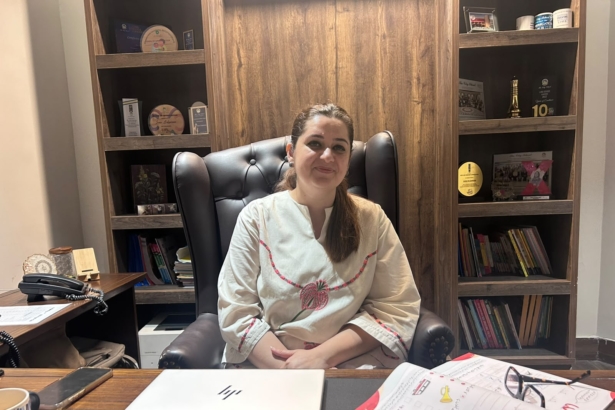
Sana Zulqarnain is the school director. She spoke about her current role that how the centre tracks every child’s progress through a portfolio system. Rather than relying only on test scores, teachers and parents document each child’s learning experiences from the very first day they join the school. Sana said this gives a full and honest picture of a child’s growth, one that goes far beyond grades on a piece of paper.

One of the more surprising details Sana shared was about language education. The kindergarten children at the centre have been taking French lessons throughout the year. She says that this is not just an experiment but a deliberate choice rooted in child development research. According to her, 90 percent of a person’s brain development happens before the age of five, which makes early childhood the ideal window for absorbing new skills, including languages. Whatever is introduced to a child during this stage, she said, tends to stay with them for life. Sana also revealed that the school recently signed an agreement with the Chinese Consulate, meaning Chinese language classes will soon be added alongside French, giving children even broader exposure to the world beyond their immediate surroundings.
Learning at the center does not stop at the classroom door. Sana described a range of physical activities available to students, including swimming lessons in the school’s own pool and gymnastics classes held in an indoor play area. She explained the practical reasoning behind building an indoor space specifically for physical activity. Punjab experiences harsh weather on both ends, extremely hot summers and cold winters, and rather than letting the weather limit how often children can move and play, the school built an indoor gym so that physical activity continues no matter the season.
Sana also mentioned that a library is currently being completed at the centre, and once finished, it will include a digital corner offering both books and technology based learning tools.
The admissions process at the center has also been designed with transparency in mind, according to Sana. Applications are now submitted online through the school’s website, replacing older paper based systems. Once a child meets the basic age requirement, they are invited for a screening, though this is not a written exam in the traditional sense. Instead, children are observed while playing and interacting with shapes and objects, giving teachers a sense of whether a child is ready to begin school rather than testing academic knowledge outright. Following this screening, parents sit down for an interview, during which the school’s wellbeing officer evaluates the child further, looking at communication skills, behavior when separated from parents, and basic readiness indicators such as toilet training.
Perhaps the most significant detail Sana shared relates to who actually attends the school. Eighty percent of enrolled children come from low income backgrounds, while only 20 percent come from families with higher incomes. This is not accidental. Sana described it as a deliberate policy meant to ensure that quality early education reaches children who might otherwise never have access to it. She posed a simple but powerful question, asking that if a school does not actively reach out to low income families, then who will. She sees this outreach as a core responsibility of the institution rather than an optional gesture.
She that the school’s structure only extends through grade two, or up to around age eight by international standards. The goal during these early years is to build a strong foundation in reading, writing and basic math, strong enough that children will not struggle regardless of which school they attend afterward. For what happens after grade two, Sana said the school is working on partnerships with private schools to secure scholarships, allowing children from low income families to continue quality education without financial barriers. There are also plans to work more closely with nearby government schools, including inviting government teachers to training sessions, in hopes of eventually creating a smoother pathway between private and public education systems.
Sana says that the centre’s model is now expanding to three new districts across the province, with groundwork already underway to identify locations and begin operations. Teacher training has also been a major focus, with the school partnering with respected international names such as Cambridge and Oxford University Press. It has received specialized phonics training from Jolly Phonics, whose founder Christopher Jolly personally trained staff and donated a teacher resource package worth 450 pounds. Additional training has come from the Aga Khan University.
Sufian Bajar is director libraries. He says that the Nawaz Complex housing the school has existed since 1988, long before the early education centre was established within it. Discussing the school’s teaching approach, Bajar explained that the curriculum is built on the national curriculum as its base, with additional layers developed in partnership with Jolly Phonics, blending local standards with internationally recognized phonics based teaching. He said the school had 240 students at the time of its inauguration, and that number has remained steady since. Bajar also revealed that plans exist to establish similar centers across ten districts, with locations planned at divisional headquarters, though he noted this expansion is still in its early approval stages.
What makes one frowned upon is the behind the classrooms a heavy layered administrative structure. Dr Khurram Shahzad is as chief executive officer, bringing a civil bureaucracy background rather than an education one. Sana Zulqarnain follows as the driving educational force. Director of Operations is Sadaf Malik and School Head Minahil Hussain, an educator holding a Master’s degree in Economics.
We welcome your contributions! Submit your blogs, opinion pieces, press releases, news story pitches, and news features to opinion@minutemirror.com.pk and minutemirrormail@gmail.com