Summary
- Iran on Thursday laid to rest its late Supreme Leader Ayatollah Ali Khamenei at the Imam Reza Shrine in Mashhad, bringing an end to days of nationwide mourning ceremonies and funeral processions.
- The funeral followed a week of events held across Iran and Iraq, where his remains were taken through major religious and political centres.
- Khamenei became Iran’s Supreme Leader in 1989 after the Islamic Revolution and remained the country’s most powerful political and religious figure for 37 years.
Iran on Thursday laid to rest its late Supreme Leader Ayatollah Ali Khamenei at the Imam Reza Shrine in Mashhad, bringing an end to days of nationwide mourning ceremonies and funeral processions.
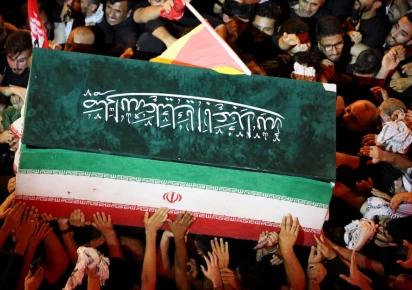
Large crowds gathered in Mashhad to attend the final burial ceremony, waving Iranian flags, carrying portraits of Khamenei, and chanting revolutionary slogans. The funeral followed a week of events held across Iran and Iraq, where his remains were taken through major religious and political centres.
Khamenei was killed in an airstrike on February 28, which Iran blamed on the United States and Israel. His death marked a major political shift for the Islamic Republic after nearly four decades of his leadership.
The funeral took place amid renewed tensions between Iran and the United States following a brief period of truce. During the ceremony, some mourners raised anti-American slogans and called for retaliation against US President Donald Trump.
Khamenei’s successor and son, Mojtaba Khamenei, has remained out of public view since the strike that killed his father. Iranian officials have said he suffered serious injuries in the attack and is currently recovering. Although he has issued written statements, no recent public appearance or recording has been released.
The burial also included the remains of four family members who were killed alongside Khamenei. The funeral processions had earlier passed through Tehran, the religious city of Qom, and Iraq’s holy cities of Najaf and Karbala.
Khamenei became Iran’s Supreme Leader in 1989 after the Islamic Revolution and remained the country’s most powerful political and religious figure for 37 years. During his rule, he strengthened the influence of the Supreme Leader’s office, the Islamic Revolutionary Guard Corps, and Iran’s military institutions.
His legacy remains deeply debated. Supporters describe him as a defender of Iran’s independence, while critics accuse his leadership of expanding state control and facing the country with economic and political challenges.
We welcome your contributions! Submit your blogs, opinion pieces, press releases, news story pitches, and news features to opinion@minutemirror.com.pk and minutemirrormail@gmail.com