Summary
- According to Mobile Surveillance Monitor, a research firm that studies mobile espionage, telecom networks in the Middle East have recently received numerous requests aimed at determining the current location of specific mobile phones roaming outside their home network.
- Several thousand US military personnel are stationed in the Middle East, including Bahrain, and Miller told The New York Times that telecommunications networks there received a large number of SS7 pings.
- According to the Financial Times, officials in Gulf countries believe that Iran or its allies are trying to track the location of US personnel by taking advantage of roaming agreements with local mobile companies.
A British and American newspaper report has revealed that the use of digital tracking methods has been increasing in the ongoing conflict since the start of the war imposed by the United States and Israel on Iran. According to reports, a campaign targeting the mobile phones of American soldiers stationed in the Middle East has been discovered, which has come to light amid ongoing military tensions between the two countries.
Iranian hackers took advantage of the outdated and weak security of the Middle East’s telecommunications infrastructure to try to locate the mobile phones of American soldiers and contractors in the region. According to Mobile Surveillance Monitor, a research firm that studies mobile espionage, telecom networks in the Middle East have recently received numerous requests aimed at determining the current location of specific mobile phones roaming outside their home network. The organisation’s founder and cybersecurity researcher, Gary Miller, stated that the available data indicates a systematic and coordinated attack campaign.
A report by the Financial Times notes that these cyberattacks intensified before the start of the US-Israeli war on Iran and continued into the early days of the conflict, until Tehran retaliated with missile and drone attacks on US military installations in the region.
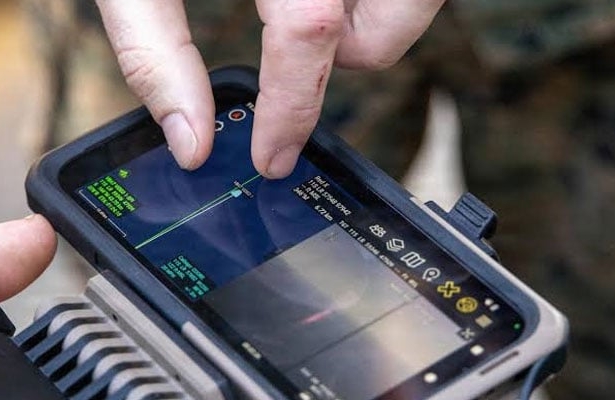
Several thousand US military personnel are stationed in the Middle East, including Bahrain, and Miller told The New York Times that telecommunications networks there received a large number of SS7 pings. An SS7 ping is actually a silent request sent over the global telecommunications network, the purpose of which is to find out the location of a specific mobile phone or to verify whether it is active and roaming.
According to the Financial Times, officials in Gulf countries believe that Iran or its allies are trying to track the location of US personnel by taking advantage of roaming agreements with local mobile companies. Miller says that Iran has the ability to obtain location information in real time and would be very surprised if Iran is not monitoring American users using SS7 or access to mobile networks in the region. He said that some of the intercepted tracking attacks could be linked to an Iranian mobile operator, which revealed a digital fingerprint that was consistent with other attacks.
According to Miller, this operation does not appear to be part of a general surveillance effort, but rather an attempt to target specific users and specific devices.
Iran, with the help of its regional allied militias, carried out numerous attacks during the war in Iraq, Bahrain, where the US Navy’s Fifth Fleet is headquartered, and other areas in the Middle East. On some occasions, American contractors and military personnel were also injured in these attacks.
A cybersecurity researcher affiliated with the Center for Strategic and International Studies (CSIS) told The New York Times that the use of mobile network signals to identify targets marks a significant advance in Iran’s cyberwarfare capabilities, which could pose a potential threat to American personnel in the range of Iranian missiles. The researcher said that in the past few years, and especially during this conflict, Iran has demonstrated extraordinary creativity, which serves as a clear sign of its growing technological prowess.
Advertising IDs provided by smartphone device manufacturers have been used to track the location of a specific phone or group of phones for many years, while the United States itself has used advertising technology for surveillance in the past. However, US officials fear that this same technology could now be used by enemy countries to monitor US military personnel, which has raised concerns among US lawmakers.
In April, US Central Command told Congress that it had received multiple intelligence reports indicating that adversaries were using commercial location data to target or monitor US personnel. According to Centcom, extraordinary security measures have been taken to ensure the safety of US forces, though the specific details cannot be disclosed for security reasons.
We welcome your contributions! Submit your blogs, opinion pieces, press releases, news story pitches, and news features to opinion@minutemirror.com.pk and minutemirrormail@gmail.com