Summary
- An international seminar on the Indus Waters Treaty held in Islamabad on June 30 marked a significant achievement in Pakistan’s ongoing legal, diplomatic and media campaign surrounding the agreement.
- International media outlets largely concentrated on legal principles and questions of treaty compliance, while much of the Indian media coverage steered away from the underlying legal debate, instead emphasizing emotional reactions, political statements and a tone of concern.
- Officials in Islamabad argue that the seminar has helped establish Pakistan’s legal position on the treaty as a fixture within broader international policy discussions, rather than simply a position advanced by Pakistani officials alone.
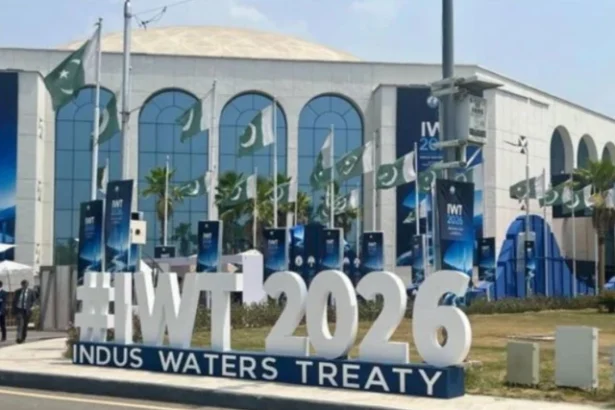
An international seminar on the Indus Waters Treaty held in Islamabad on June 30 marked a significant achievement in Pakistan’s ongoing legal, diplomatic and media campaign surrounding the agreement.
The gathering, described as the first of its kind, pushed the Indus Waters Treaty back into international headlines and reinforced Pakistan’s position that no country can unilaterally suspend or alter an international treaty without violating both international law and the broader principles underpinning the global legal system. Organizers and officials say the event succeeded in shifting the conversation, turning an issue India had hoped to keep as a quiet bilateral matter into a topic drawing global diplomatic attention.
The seminar functioned as more than an academic exercise. Pakistani officials designed it as a deliberate diplomatic move aimed at placing the treaty within a wider international conversation about treaty obligations, the rights of lower riparian states, water security and regional stability. Through the event, Pakistan presented the treaty not as a routine administrative arrangement between two governments but as a binding international legal commitment with direct consequences for regional peace and the water security of millions of people across the region.
Pakistan used the seminar to bring its longstanding legal position, one already documented at the United Nations Security Council and the Court of Arbitration, directly into international public discussion. Organizers measured the event’s success largely through the scale of international attention it generated and its ability to influence global conversation around the treaty.
Within hours of the seminar’s conclusion, major international newspapers, news agencies and policy focused platforms began publishing coverage centered on Pakistan’s legal argument. Outlets including The Washington Post, the Associated Press, The Independent, Arab News, TRT World, BBC Hindi, The Discourse and The Eastern Herald published reports and analysis examining treaty sanctity, the rights of downstream nations and regional stability concerns. While Indian officials have described their actions as a suspension of the treaty, much of the international press instead focused on questions of international law and treaty compliance, generating coverage the same day in Washington, London, Riyadh and Hong Kong.
The seminar also drew extensive attention across Indian media outlets, indicating that officials in New Delhi could not simply ignore the narrative building around the event. Leading Indian publications, including The Hindu, India Today, NDTV, the Times of India, Hindustan Times, Navbharat Times, Dainik Jagran, News9, India Herald, MSN India, Deccan Herald and The Economic Times, all provided substantial coverage. Indian television networks and digital channels, including ANI, Times Now, CNBC TV18, CNBC Awaaz, CNN News18 and News18 India, devoted significant airtime to the seminar during prime broadcast hours.
The scale of coverage across both countries revealed a clear difference in how each side approached the story. International media outlets largely concentrated on legal principles and questions of treaty compliance, while much of the Indian media coverage steered away from the underlying legal debate, instead emphasizing emotional reactions, political statements and a tone of concern. The Press Trust of India stood apart from much of that coverage, offering straightforward reporting without adopting a more charged editorial angle.
Officials in Islamabad point to India’s response as further evidence of the seminar’s impact. India’s Ministry of External Affairs issued a formal denial addressing the seminar within 72 hours of the event, a rapid reaction that Pakistani officials say demonstrates how seriously New Delhi treated the diplomatic messaging coming out of Islamabad. The scale of Indian media attention, combined with that official response, has led Pakistani officials to describe the seminar as a clear diplomatic success.
Officials in Islamabad argue that the seminar has helped establish Pakistan’s legal position on the treaty as a fixture within broader international policy discussions, rather than simply a position advanced by Pakistani officials alone. They say the international attention generated by the event places pressure on India to respond to legal arguments on a global stage rather than through domestic media channels alone.
The debate over the Indus Waters Treaty continues to carry significant weight for both countries, given its direct connection to water resources that millions of people across the region depend on for agriculture, drinking water and daily life. As international attention on the treaty continues, officials on both sides are likely to face continued pressure to clarify their respective legal positions in the months ahead.
We welcome your contributions! Submit your blogs, opinion pieces, press releases, news story pitches, and news features to opinion@minutemirror.com.pk and minutemirrormail@gmail.com