Summary
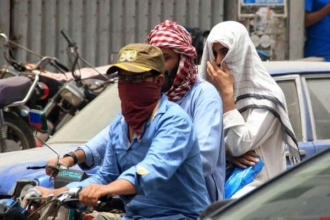
- Karachi: A new research study has raised serious concerns about the impact of extreme heat on people working outdoors in Karachi.
- The study also draws attention to the urban heat island effect in Karachi.
- The study highlights that large-scale cutting of trees has worsened the heat problem.
Karachi: A new research study has raised serious concerns about the impact of extreme heat on people working outdoors in Karachi.
The study found that workers exposed to direct sunlight, such as delivery riders, street vendors, and daily wage transport workers, are experiencing dangerously high body temperatures. Their body temperature was recorded up to 5.5°C higher than that of average individuals.
Experts say this level of heat exposure is extremely dangerous. It can damage vital organs and put lives at risk.
The research highlights that continuous work under the sun significantly increases the chances of heatstroke. It also raises the risk of heart attacks and respiratory problems.
Medical experts warn that prolonged exposure to high temperatures can lead to serious health complications. In extreme cases, it can even result in death.
The study notes that workers who already suffer from conditions like high blood pressure, heart disease, or lung issues are at even greater risk during heatwaves.
They are more vulnerable and may experience rapid health deterioration in extreme weather conditions.
Researchers recommend that outdoor workers should be given regular rest breaks. A break of 15 to 20 minutes is suggested during peak heat hours.
They also stress the need for cooling stations in busy work areas. These stations should provide shade, drinking water, and a safe space for recovery.
The study also draws attention to the urban heat island effect in Karachi.
It explains that dense construction, concrete buildings, pollution, and lack of green spaces are trapping heat in the city.
As a result, some areas are significantly hotter than others. Central urban zones with high-rise buildings are particularly affected.
In contrast, areas with more trees and open land experience comparatively lower temperatures.
Experts explain that trees play an important role in reducing heat. They provide shade and help absorb excess heat from the environment.
The report warns that uncontrolled urban development is making the situation worse. Continuous construction without planning is increasing heat levels across the city.
It also calls for better urban planning. This includes proper spacing between buildings, more green areas, protection of water channels, and improved city design.
Authorities are urged to prioritize tree plantation and environmental protection. The study highlights that large-scale cutting of trees has worsened the heat problem.
The report further warns that if immediate steps are not taken, the city’s temperature will continue to rise in the coming years.
Meanwhile, outdoor workers say the heat is directly affecting their livelihood.
Many report financial losses due to extreme temperatures. Some even mention damage to goods and daily earnings being reduced.
They say lack of shade and water makes it difficult to continue work during peak hours.
Experts conclude that urgent action is needed to protect outdoor workers. Without proper measures, both health risks and economic losses are expected to increase further during future heatwaves.
We welcome your contributions! Submit your blogs, opinion pieces, press releases, news story pitches, and news features to [email protected] and [email protected]