Summary
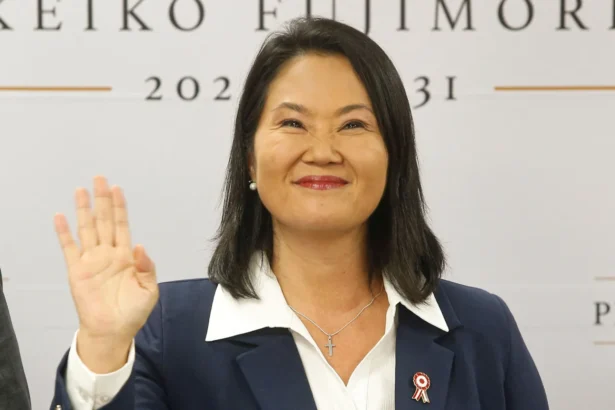
- Keiko Fujimori has officially been declared the winner of Peru’s presidential election after weeks of uncertainty and legal review following one of the closest contests in the country’s recent history.
- The election campaign also revived debate over the political legacy of her father, former president Alberto Fujimori.
- Once sworn in, Fujimori will become Peru’s ninth president in just ten years.
Keiko Fujimori has officially been declared the winner of Peru’s presidential election after weeks of uncertainty and legal review following one of the closest contests in the country’s recent history.
Official results confirmed that Fujimori secured 50.135% of the vote in the presidential runoff held on June 7.
Her opponent, left-wing candidate Roberto Sánchez, received 49.865% of the vote.
The difference between the two candidates was fewer than 50,000 votes nationwide.
The narrow margin reflected the deep political divisions that continue to shape Peruvian politics.
The victory marks Fujimori’s fourth attempt to win the presidency.
She previously contested presidential elections in 2011, 2016 and 2021 but was defeated on each occasion by slim margins.
Speaking after her victory was confirmed, Fujimori pledged to lead the country with responsibility, humility and dedication.
She said the transition period would be used to prepare her administration for the challenges facing the country.
The president-elect called for dialogue and national unity following the closely contested race.
Public security and organised crime emerged as the central issues during the election campaign.
Fujimori built much of her campaign around promises to restore law and order and strengthen state authority.
She vowed to launch a major crackdown on criminal organisations operating across Peru.
Particular attention was given to extortion networks and violent gangs, which have expanded significantly in recent years.
Fujimori also promised tougher border controls and stricter immigration policies.
She said undocumented foreigners involved in criminal activity would face immediate deportation.
Economic recovery was another key pillar of her campaign.
She pledged to attract private investment, encourage business growth and create new employment opportunities.
Supporters argued that stronger economic policies were needed to restore investor confidence and revive growth.
The election campaign also revived debate over the political legacy of her father, former president Alberto Fujimori.
His presidency remains one of the most controversial periods in Peru’s history.
Supporters credit him with stabilising the economy and defeating insurgent movements.
Critics accuse his administration of serious human rights violations and authoritarian practices.
He was later imprisoned for crimes related to his time in office.
Meanwhile, defeated candidate Roberto Sánchez rejected the election outcome.
He alleged that the electoral process had been compromised and announced plans to challenge the results through legal channels.
His party called for the vote to be annulled and questioned the legitimacy of support received by Fujimori from overseas voters.
Election authorities, however, completed the review process and formally certified the final results.
Political analysts said concerns over crime, economic uncertainty and years of political instability heavily influenced voter decisions.
Peru has experienced repeated political crises over the past decade.
Governments have changed frequently, while several presidents have either resigned, been removed from office or faced legal investigations.
Once sworn in, Fujimori will become Peru’s ninth president in just ten years.
Her inauguration ceremony is expected to take place on July 28.
Observers believe her victory reflects a broader political shift taking place across Latin America.
Several countries in the region have recently elected conservative and right-leaning leaders.
Rising crime, economic challenges and public frustration with traditional politics have contributed to this trend.
Fujimori’s administration will face immediate pressure to improve security, stabilise the economy and reduce political tensions.
Many Peruvians now hope the new government will bring stability after years of uncertainty and political turmoil.
We welcome your contributions! Submit your blogs, opinion pieces, press releases, news story pitches, and news features to opinion@minutemirror.com.pk and minutemirrormail@gmail.com