Summary
- *Literacy for People: No One Left Behind* For Pakistan, the first priority must be ensuring that no child, young person or adult is permanently excluded from learning.
- This is where Non-Formal Education and Adult Literacy programmes can play a transformative role.
- We need to move from “counting literate people” to “creating empowered literate citizens.” A truly literate Pakistan would be one where a farmer can understand modern agricultural information, a mother can support her child’s education, a worker can learn new skills, a young person can use digital technology productively, and a community can respond intelligently to a natural disaster.
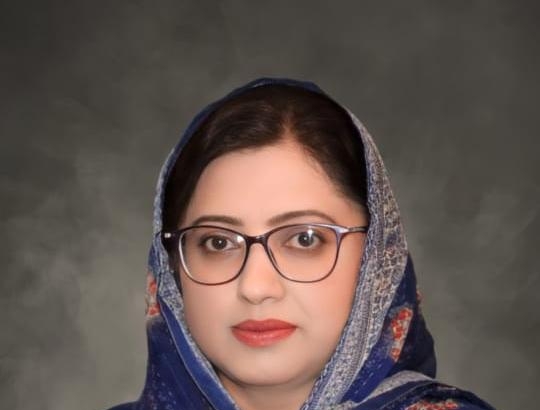
By Dr. Tahira Rafiq
Pakistan stands at a critical crossroads. On one side, we have a young and energetic population with enormous potential; on the other, millions of children, youth and adults still remain deprived of meaningful educational opportunities. In such circumstances, literacy cannot be treated merely as the ability to read and write. It must become a national movement—one that empowers people, protects the planet and creates pathways to prosperity.
The theme “Literacy for People, Planet and Prosperity” is particularly relevant to Pakistan. It connects education with three of the country’s most important challenges: human development, climate resilience and economic growth.
*Literacy for People: No One Left Behind*
For Pakistan, the first priority must be ensuring that no child, young person or adult is permanently excluded from learning. Children who leave school, working children, adults who never attended school, and learners living in remote and disadvantaged communities need flexible and accessible learning opportunities.
This is where Non-Formal Education and Adult Literacy programmes can play a transformative role. A learner who missed the opportunity for formal schooling should not be considered a lost generation. With the right learning environment, skills and support, that learner can return to education, acquire vocational skills and become a productive member of society.
Literacy is especially powerful for women. When a woman becomes literate, the benefits extend far beyond the individual. She can better understand health information, support her children’s education, manage household matters and participate more confidently in economic and social activities.
Pakistan therefore needs to see literacy not simply as an education-sector responsibility, but as an investment in human dignity, equality and national development.
*Literacy for Planet: Educating for Climate Resilience*
Pakistan is among the countries highly vulnerable to climate-related disasters. The devastating floods of recent years have shown how deeply environmental disasters can affect homes, schools, livelihoods and entire communities.
In this situation, literacy must go beyond books. Communities need climate literacy.
A literate and environmentally aware citizen can understand the importance of clean water, sanitation, tree plantation, waste management and conservation of natural resources. More importantly, people can learn how to prepare for floods, heatwaves and other emergencies.
Our literacy centres can become powerful community hubs for climate awareness. Learners can be taught simple but life-saving messages: how to respond to flood warnings, how to protect drinking water, where to seek shelter and how to safeguard children and vulnerable family members during emergencies.
Thus, literacy can help transform vulnerable communities into informed and resilient communities.
*Literacy for Prosperity: From Learning to Livelihood*
Pakistan cannot achieve sustainable economic development without investing in its human capital. Basic literacy provides the foundation, but today’s world demands much more.
A modern literacy programme should gradually integrate digital literacy, financial literacy, health literacy and vocational skills. A person who can read but cannot use a smartphone, understand basic financial information or acquire marketable skills may still remain economically vulnerable.
For young people in particular, literacy programmes should provide a bridge from basic education to employment and entrepreneurship. Skills such as digital technology, agriculture, livestock management, tailoring, handicrafts, technical trades and small-business management can turn learning into livelihood opportunities.
The objective should be clear: every learner should leave a literacy programme with not only knowledge, but also greater confidence and better opportunities for earning a dignified livelihood.
*The Special Role of Non-Formal Education*
Pakistan’s formal education system has an important role, but it cannot address every educational challenge on its own. Non-Formal Education provides flexibility for those who cannot attend conventional schools because of poverty, distance, work, family responsibilities or other circumstances.
A well-designed Non-Formal Education system can bring education closer to communities and provide accelerated learning opportunities to out-of-school children and adults.
However, the success of such programmes depends on quality teachers, regular monitoring, reliable learner data, adequate learning materials and strong community participation. Most importantly, literacy programmes should be viewed as a long-term investment rather than a short-term project.
*From Literate Pakistan to Learning Pakistan*
Pakistan’s literacy challenge is not simply about increasing a percentage in a statistical report. It is about changing lives.
We need to move from “counting literate people” to “creating empowered literate citizens.”
A truly literate Pakistan would be one where a farmer can understand modern agricultural information, a mother can support her child’s education, a worker can learn new skills, a young person can use digital technology productively, and a community can respond intelligently to a natural disaster.
This is why People, Planet and Prosperity cannot be treated as three separate goals. They are deeply interconnected.
An educated person can protect the environment.
A healthy environment protects livelihoods.
Better livelihoods create prosperity.
And prosperous, educated communities create a stronger Pakistan.
A National Movement, Not Just a Government Programme
The responsibility for literacy cannot rest solely on education departments. Government institutions, teachers, local communities, civil society, media, universities, private organisations and every literate citizen must contribute.
The media can promote the value of education. Communities can identify people who need learning opportunities. Teachers can become ambassadors of lifelong learning. Universities can support innovative literacy initiatives. Businesses can contribute through skills and employment programmes.
Most importantly, every literate person can help another person become literate.
Imagine if every educated citizen committed to helping just one person learn to read and write. The impact would extend far beyond classrooms and government programmes.
Pakistan’s Opportunity
Pakistan has challenges, but it also has tremendous potential. Our young population, community networks and growing access to digital technology provide an opportunity to create a new literacy movement.
We should aspire to a Pakistan where every person has the opportunity to learn, every community understands how to protect its environment, and every learner has the skills to contribute to the economy.
The journey begins with a simple act: teaching someone to read.
But the destination is much bigger.
It is a Pakistan where people are empowered, the planet is protected and prosperity is shared.
Literacy is not merely the ability to read words. It is the ability to understand the world, respond to its challenges and build a better future.
For Pakistan, literacy is not an option—it is the foundation of People, Planet and Prosperity.
We welcome your contributions! Submit your blogs, opinion pieces, press releases, news story pitches, and news features to opinion@minutemirror.com.pk and minutemirrormail@gmail.com