Summary
- TEHRAN: The conflict between the United States and Iran intensified sharply on Saturday, with fresh US strikes on Iranian military infrastructure followed by retaliatory attacks from Tehran against several Gulf states hosting American military assets.
- The US Central Command said fighter jets, drones, warships, and other military assets were used in the operation, adding that more than 50,000 American troops remain deployed across the Middle East.
- In response, Iran launched missile and drone attacks aimed at US military facilities and strategic locations in Bahrain and Kuwait.
TEHRAN: The conflict between the United States and Iran intensified sharply on Saturday, with fresh US strikes on Iranian military infrastructure followed by retaliatory attacks from Tehran against several Gulf states hosting American military assets.
Iranian officials said a US strike damaged a water desalination plant in Bunji, Hormozgan province, cutting off drinking water to nearly 10,000 residents across 20 villages and triggering a humanitarian crisis in the area. Another desalination facility in Jask was also reportedly affected, disrupting water supplies to nearby communities.
The latest escalation came after a seventh consecutive night of US military operations targeting Iranian logistics facilities, surveillance sites, underground weapons storage, and maritime capabilities. The US Central Command said fighter jets, drones, warships, and other military assets were used in the operation, adding that more than 50,000 American troops remain deployed across the Middle East.
In response, Iran launched missile and drone attacks aimed at US military facilities and strategic locations in Bahrain and Kuwait. The Islamic Revolutionary Guard Corps (IRGC) claimed to have targeted military infrastructure, communication centres, and logistics hubs linked to American forces. Gulf countries, including Bahrain, Kuwait, and Jordan, reported intercepting several incoming missiles and drones, while their armed forces remained on high alert.
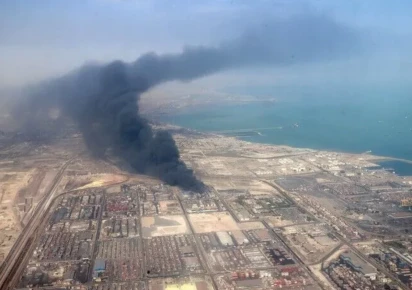
Kuwait confirmed that a fire broke out at a power generation and water desalination plant following the attacks, prompting emergency measures to protect the national electricity grid. Kuwait International Airport temporarily suspended flight operations before rescheduling services as security concerns mounted.
Maritime tensions also intensified in the Strait of Hormuz, where the United States said it continued enforcing a naval blockade, while Iran claimed it had intercepted vessels violating its maritime restrictions. The heightened confrontation raised concerns over global energy supplies, with oil prices climbing as fears grew over potential disruptions to one of the world’s most important shipping routes.
The United Nations voiced alarm over the expanding conflict, particularly the reported attacks on civilian infrastructure across Iran and the wider region. Meanwhile, the US State Department renewed its travel advisory for the Middle East, urging American citizens to avoid unnecessary travel amid the deteriorating security situation.
The latest exchange of attacks has deepened fears of a broader regional conflict, as both Washington and Tehran continue to exchange military strikes following the collapse of a ceasefire agreement reached only days earlier.
We welcome your contributions! Submit your blogs, opinion pieces, press releases, news story pitches, and news features to opinion@minutemirror.com.pk and minutemirrormail@gmail.com