Summary
- Mir Yar Baloch’s anti-Pakistan orientation is also apparent from his open letter to Prime Minister Narendra Modi in last May, in which he referred to Pakistan’s nuclear capability and called upon the international community to secure Pakistan’s unsafe nuclear weapons.
- Mir Yar Baloch, the so-called human rights activisit while reaching out to Modi probably forgot that Mr.
- Mir Yar Baloch’s letter to a Hindu extremist leader Modi not only points towards his dublicity on human rights but it also clearly shows his inclination towards India.
By Eman Khan
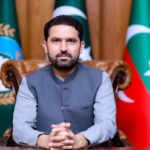
Mir Yar Baloch known for his anti-Pakistan rhetoric in a recent letter has claimed the establishment of ‘Republic of Balochistan.’ The letter on social media platforms reads “The Republic of Balochistan Will Conduct It’s First National Population And Housing Census In 2027.” He also claimed that the Republic of Balochistan has prepared a force of 500, 000 personnel. Mir Yar Baloch’s claim is nothing but another failed attempt to disrupt Balochistan’s development under the China-Pakistan Economic Corridor (CPEC). Mir Yar Baloch’s anti-Pakistan orientation is also apparent from his open letter to Prime Minister Narendra Modi in last May, in which he referred to Pakistan’s nuclear capability and called upon the international community to secure Pakistan’s unsafe nuclear weapons. Mir Yar Baloch, the so-called human rights activisit while reaching out to Modi probably forgot that Mr. Modi as Chief Minister of Gujarat abetted the killings of Muslims. Mr.Modi’s government has also introduced the Citizenship Amendment Act (CAA) that places Muslims in subservient position to Hindus elites. It was also during Modi’s regime that the special status of IIOJK (Indian Illegally Occupied Jammu & Kashmir) was abrogated (revocation of Article 370 and 35-A). Mir Yar Baloch’s letter to a Hindu extremist leader Modi not only points towards his dublicity on human rights but it also clearly shows his inclination towards India. India’s interest in Balochistan in backdrop of ongoing development work under CPEC has seen an upward trend. The arrest of Kulbhushan Jadhav, an Indian naval officer from Balochistan on account of espionage and sabotage proves this point. Yadav was running a clandestine terror network in the province primarily to undermine CPEC. Yadav’s confession of sabotage exposed India’s subversive pursuits against Pakistan. India’s hostility towards Pakistan clearly points towards adversarial tendencies.
Mir Yar Baloch and India’s so-called concern on human rights in Pakistan places them on the same page. Mir Yar Baloch projects himself as an advocate of human rights on platform ‘X’. However, his content’s close alignment with the agenda of Hyrbyair Marri, a known abbettor of terrorist outfit Balochistan Liberation Army (BLA) signals the anti-Pakistan narrative. India is also employing the digital platforms to tarnish Pakistan’s image. The EU DisinfoLab case (2020) is a proof of India’s anti-Pakistan campaign wherein human rights was employed as a tool to malign Pakistan.
What is the exact agenda of Mir Yar Baloch when it comes to the province of Balochistan. He wants to see a developed Balochistan or is he toeing the line of anti-Pakistan elements. Mir Yar Baloch’s letter to Narendra Modi reinforces the perception of him being pro-India. This further amplifies his opposition to CPEC as India has objected to the corridor.
Seeing the advancement of CPEC, the corridor is an economic opportunity for region. CPEC will bring in investment in province through industrialisation and trading links. With investment inflows, job opportunities will be created, and the area will grow economically. However, another angle to CPEC is Pakistan’s economic growth (estimated investment of CPEC is $62 billion, 2015-2030), and China’s trans-regional advancement to South Asia / Indian Ocean. Gwadar seaport, the prime pillar of CPEC sits around 400 kilometres away from the Strait of Hormuz, an important route through which 35 per cent of global seaborne trade and 43 per cent (approximately) of the Chinese oil trade pass. With the operation of CPEC, Gwadar seaport will emerge as a trading hub between South, East and Central Asia. CPEC will also provide China with direct access to the Indian Ocean. The regional countries with CPEC will prioritise trading linkages thus, diluting the confrontational politics. These developments will tilt the balance of power more towards geo-economics. In backdrop of the economic dividends of CPEC, the objection to regional connectivity by some regional quarters refers to the geopolitical competition in region, to weaken Pakistan economically, and also to counter China’s role in South Asia. In pursuance of their nefarious agenda against Pakistan, and CPEC, covert and overt tactics are being employed by the disgruntled elements to sabotage the development work in Balochistan.
Eman Khan, Student of Public Policy at Pakistan Institute of Development Economics (PIDE) and currently Working as Research Intern at Islamabad Policy Research Institute (IPRI)
We welcome your contributions! Submit your blogs, opinion pieces, press releases, news story pitches, and news features to opinion@minutemirror.com.pk and minutemirrormail@gmail.com