Summary
- Rescue teams on both sides of the Nepal-China border continued operations on Sunday as difficult weather, rising river levels and massive amounts of debris hampered efforts to locate survivors.
- Nepal has also appealed for international assistance with specialised rescue operations.
- Equipment and supplies are being transported to affected areas, while Chinese rescue teams are using specialised life-detection technology to search for missing people.
Nearly 800 people have died and more than 3,000 remain missing after a devastating glacier-related mudslide swept through parts of Nepal and Tibet, leaving widespread destruction across the Himalayan region.
Rescue teams on both sides of the Nepal-China border continued operations on Sunday as difficult weather, rising river levels and massive amounts of debris hampered efforts to locate survivors.
Nepal’s disaster management authorities reported 781 deaths and 2,502 people still missing. In Tibet’s Gyirong County, Chinese authorities confirmed 16 deaths and 546 missing people.
China has also reported that 261 foreign nationals from 23 countries remain unaccounted for in areas near the Nepal border.
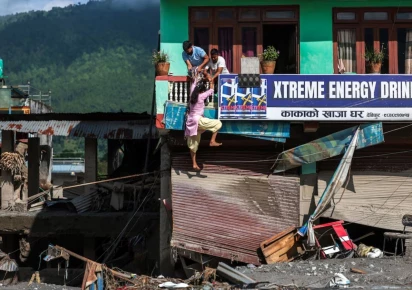
The disaster began on Wednesday when a glacier collapse triggered a powerful flow of ice, rocks, mud and other debris through mountain valleys and river systems. The resulting floods destroyed homes, roads, infrastructure and other facilities.
The International Red Cross estimates that more than 90,000 people may have been affected by the disaster.
The scale of destruction has made rescue operations extremely difficult. In Nepal, fresh rainfall caused water levels in the Trishuli River to rise, forcing residents and rescue workers in some areas to move to higher ground.
Rescue operations have been repeatedly interrupted because of bad weather and fears of further flooding. A temporary lake formed near the Nepal-China border after the disaster also raised concerns that overflowing water could trigger additional flooding downstream.
Although the lake had largely drained by Saturday, authorities detected another landslide downstream. The landslide created a new natural blockage and caused another pool of water to form, increasing concerns for communities located further downstream.
Several hydropower projects in Nepal have been severely affected. Rescue teams are focusing particularly on five damaged projects, including the Upper Trishuli complex.
Authorities believe around 350 people may have been trapped inside a tunnel at the complex. Nepal has deployed about 10,000 troops, while specialist teams from China and India are also assisting the rescue operation.
Heavy machinery was transported to the remote area by military aircraft on Sunday. Rescuers reached the entrance of one tunnel and began removing the debris blocking access.
Teams equipped with oxygen supplies and cameras are expected to enter the tunnel once a safe passage has been established.
Nepal has also appealed for international assistance with specialised rescue operations. Officials said the country urgently needs expertise in tunnel rescues, DNA testing, body preservation and forensic identification.
Meanwhile, authorities have begun burying unidentified victims as many recovered bodies have deteriorated badly.
In Chitwan district, hundreds of graves were prepared at Devghat for bodies recovered downstream from the flood-hit Rasuwa region. Officials said mass burials became necessary because of the serious public health risks caused by decomposition.
Authorities buried 96 unidentified bodies on Saturday and planned to bury more than 100 additional victims on Sunday. DNA samples were collected and burial locations were documented so that families could potentially identify their relatives in the future.
Police said many of the recovered bodies were severely damaged and could no longer be recognised.
Chinese authorities have linked the disaster to climate change and glacier instability caused by long-term global warming. Scientists say increasing instability in high-altitude ice and snow systems could contribute to more severe disasters in the Himalayan region.
China has mobilised more than 2,100 rescue personnel and allocated millions of dollars for emergency relief. Equipment and supplies are being transported to affected areas, while Chinese rescue teams are using specialised life-detection technology to search for missing people.
We welcome your contributions! Submit your blogs, opinion pieces, press releases, news story pitches, and news features to opinion@minutemirror.com.pk and minutemirrormail@gmail.com