
Summary
- Most Palestinians remain displaced as Israeli attacks continue, military withdrawal stalls and Gaza’s promised recovery remains largely unfulfilled.
- One year after a ceasefire took effect in Gaza, the agreement has secured the return of all Israeli captives, but its broader promises of peace, Israeli military withdrawal, Palestinian governance and reconstruction remain largely unfulfilled.
- Israeli withdrawal stalls The agreement also promised a phased withdrawal of Israeli forces, but the military pullback has stalled and subsequently reversed in some areas.
Most Palestinians remain displaced as Israeli attacks continue, military withdrawal stalls and Gaza’s promised recovery remains largely unfulfilled.
One year after a ceasefire took effect in Gaza, the agreement has secured the return of all Israeli captives, but its broader promises of peace, Israeli military withdrawal, Palestinian governance and reconstruction remain largely unfulfilled.
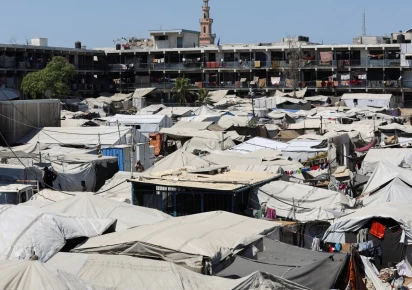
Millions of lives have been devastated by the conflict, and most of Gaza’s approximately 2.1 million residents remain displaced. Many are living in tents, damaged buildings or makeshift shelters surrounded by rubble, with reconstruction yet to begin on the scale needed to restore normal life.
The ceasefire took effect on October 10, 2025, following mediation by Egypt, Qatar, Türkiye and the United States. It was intended to establish a phased Israeli withdrawal, expand humanitarian assistance, introduce new governance arrangements and pave the way for rebuilding the war-ravaged territory.
However, continued attacks and disagreements over the agreement’s second phase have left its central objectives unfulfilled.
Captives returned, but attacks continue
On October 13, 2025, Hamas released the remaining 20 living Israeli captives, while Israel freed 1,968 Palestinian detainees, according to the International Committee of the Red Cross.
The process of returning remains continued until January 26, 2026, when the Israeli army announced the recovery of the final body.
Despite this milestone, the ceasefire has not stopped the violence. Gaza’s Health Ministry says Israeli violations of the agreement have killed more than 1,470 Palestinians and wounded over 5,180 during the past year.
Egypt, Qatar and Türkiye warned in August that continued Israeli attacks violated the agreement and obstructed efforts to implement its second phase.
Israeli withdrawal stalls
The agreement also promised a phased withdrawal of Israeli forces, but the military pullback has stalled and subsequently reversed in some areas.
Before the ceasefire, Israeli forces controlled approximately 75% of Gaza. Under the initial arrangement, the military withdrew partially to the so-called yellow line, leaving around 53% of the territory under Israeli deployment, according to the UN Office for the Coordination of Humanitarian Affairs (OCHA).
By late June, Israeli forces had expanded westward beyond the line, bringing the area under direct military control or tighter restrictions to 64.9%, according to OCHA. By August, the UN said nearly two-thirds of Gaza was inaccessible to Palestinians or subject to severe restrictions.
Governance plan remains incomplete
A second-phase roadmap linked further Israeli withdrawals to restrictions on Hamas’s weapons, the deployment of an international stabilisation force, a transfer of governance and reconstruction.
A technocratic National Committee for the Administration of Gaza, headed by Ali Shaath, was established in January to oversee civilian affairs during the transition.
However, the transfer of governing responsibilities remains incomplete, and the planned international force has yet to be deployed.
Reconstruction faces billions in costs
Rebuilding Gaza remains another major challenge. The UN, European Union and World Bank estimate that recovery and reconstruction will require $71.4 billion over 10 years, including $26.3 billion during the first 18 months.
Their assessment found that 1.9 million Palestinians had been displaced and 371,888 housing units damaged or destroyed.
Humanitarian access also remains restricted. OCHA reported in September that Kerem Shalom was the only operational crossing for goods after the Zikim crossing closed in May. Restrictions on tents, shelter supplies and construction materials have further complicated efforts to provide displaced families with safe accommodation.
Since October 2023, more than 74,000 Palestinians have been killed and over 175,000 injured in Israeli attacks, according to Palestinian figures. Around 90% of Gaza’s infrastructure has been destroyed.
One year after the ceasefire, the return of the captives represents a significant milestone, but it has not delivered the future promised to Gaza’s population. For displaced Palestinians still waiting for homes, security and basic services, the transition from war to recovery remains painfully distant.
We welcome your contributions! Submit your blogs, opinion pieces, press releases, news story pitches, and news features to opinion@minutemirror.com.pk and minutemirrormail@gmail.com