Summary
- KARACHI: Pakistan will enter the upcoming Asian Games in Japan with its medal hopes largely dependent on a small group of athletes, as limited investment, delayed preparations and the lack of a long-term sports development system continue to affect the country’s performance.
- The 2018 Asian Games in Jakarta produced four bronze medals for Pakistan, including one won by javelin thrower Arshad Nadeem.
- For Pakistan, the Asian Games will therefore be about more than the final medal tally.
KARACHI: Pakistan will enter the upcoming Asian Games in Japan with its medal hopes largely dependent on a small group of athletes, as limited investment, delayed preparations and the lack of a long-term sports development system continue to affect the country’s performance.
The Asian Games are scheduled to take place from September 19 to October 4. Pakistan’s preparations for the continental event have been progressing under pressure, with training camps starting later than expected.
Pakistan has a strong history at the Asian Games. Athletics, boxing, wrestling, weightlifting, squash and hockey have traditionally provided the country with medals. However, the performance has declined as other Asian countries strengthened their sporting systems and increased spending on athlete development.
Pakistan’s recent record highlights the scale of the challenge.
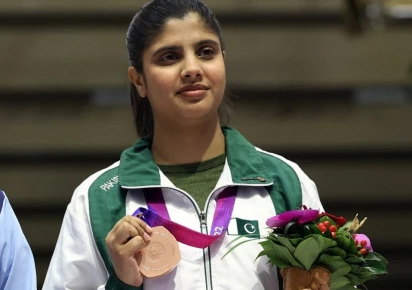
At the 2023 Asian Games in Hangzhou, Pakistan won only three medals. The haul included a silver in team squash, a bronze in kabaddi and a bronze for shooter Kishmala Talat. Talat created history by becoming the first Pakistani shooter to win an Asian Games medal.
The 2018 Asian Games in Jakarta produced four bronze medals for Pakistan, including one won by javelin thrower Arshad Nadeem. Five years earlier, at the 2014 Games in Incheon, Pakistan won cricket gold, hockey silver and bronze medals in kabaddi, boxing and wushu.
The country’s difficulties have also been visible at other major international events. Pakistan’s campaign at the Commonwealth Games in Glasgow ended with just one bronze medal in boxing.
This time, several sports are expected to provide Pakistan with its best opportunities. Men’s cricket, squash, hockey, shooting, kabaddi and javelin throw are among the disciplines being closely watched.
Olympic champion Arshad Nadeem remains one of the biggest names in Pakistan’s contingent. He won a bronze medal at the 2018 Asian Games but was unable to participate in Hangzhou because of injury.
Nadeem’s form will be under particular scrutiny in Japan. The star javelin thrower has faced difficulties in recent months, creating uncertainty over whether he will be able to return to his top level at the Asian Games.
Squash is another discipline where Pakistan has realistic medal ambitions. Noor Zaman and Nasir Iqbal are expected to lead the country’s challenge. Their Asian Games campaign will also form part of their wider preparation for future international competitions and the 2028 Olympic cycle.
Pakistan faces a tougher situation in wrestling. The event is expected to feature several leading international wrestlers, making the competition particularly demanding.
Weightlifting is another major setback. Pakistani lifters are unable to participate because of issues surrounding the suspension of the national federation.
Wushu has also lost some of its earlier strength. A shortage of top-level athletes, along with limited facilities and resources, has reduced Pakistan’s chances in the discipline.
Boxing offers a smaller but potentially significant opportunity. Female boxer Fatima Zehra recently secured a bronze medal at the Commonwealth Games. However, producing a similar result at the Asian Games will require a strong performance against a much deeper field.
Shooting could again deliver an unexpected success. Kishmala Talat will be among Pakistan’s leading hopes, while experienced shooters including Ghulam Mustafa Bashir and Colonel Farrukh Nadeem are also expected to compete.
Hockey remains another traditional source of optimism, despite the national team’s recent struggles. Pakistan finished 11th at the World Cup, which has lowered expectations ahead of the Asian Games.
The Pakistan Hockey Federation, however, remains hopeful of a podium finish. The team has arranged a training camp and a three-match series in South Korea as part of its preparations for the continental competition.
Kabaddi is also regarded as a possible medal prospect, with Pakistan targeting a place on the podium.
Pakistan’s limited medal prospects have once again raised questions about the country’s broader sporting structure. Sustained investment in coaching, training facilities, nutrition, sports science and international exposure remains essential if Pakistan is to compete consistently with the continent’s leading sporting nations.
For Pakistan, the Asian Games will therefore be about more than the final medal tally. The event will provide another measure of the country’s ability to rebuild its sporting system and reverse years of decline.
We welcome your contributions! Submit your blogs, opinion pieces, press releases, news story pitches, and news features to opinion@minutemirror.com.pk and minutemirrormail@gmail.com