
Summary
- ISLAMABAD: The federal government has finalised a wide-ranging civil service reform package estimated to cost around Rs11 billion, proposing major changes to recruitment, senior-level appointments, the CSS examination, performance evaluation and training of government officers.
- The proposed reforms are aimed at creating a more specialised, merit-based and digitally enabled federal bureaucracy, with the government seeking to reduce reliance on the traditional generalist model and strengthen professional expertise across key sectors.
- The government says specialised recruitment would allow ministries to develop officers with relevant academic qualifications and professional expertise instead of relying predominantly on generalist career paths.
ISLAMABAD: The federal government has finalised a wide-ranging civil service reform package estimated to cost around Rs11 billion, proposing major changes to recruitment, senior-level appointments, the CSS examination, performance evaluation and training of government officers.
The proposed reforms are aimed at creating a more specialised, merit-based and digitally enabled federal bureaucracy, with the government seeking to reduce reliance on the traditional generalist model and strengthen professional expertise across key sectors.
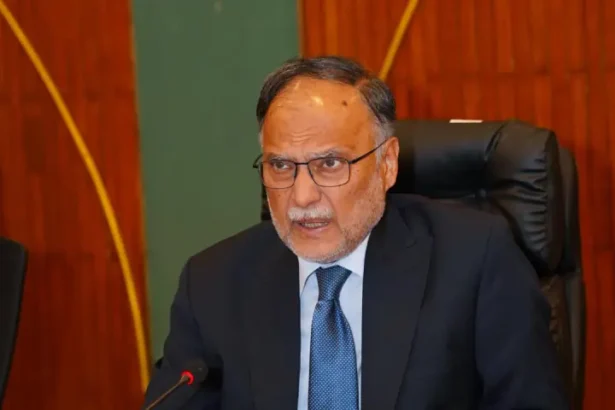
The reform framework was discussed at a multi-party consultative session chaired by Planning Minister Ahsan Iqbal on September 19. The process has involved consultations with political leaders, policymakers, experts and representatives of different sectors.
11 Specialised Professional Cadres Proposed
One of the central elements of the package is the creation of 11 specialised professional cadres covering areas including human resources, law, engineering, science and technology, information technology and telecom, energy, climate, agriculture and forestry, education and health.
The government says specialised recruitment would allow ministries to develop officers with relevant academic qualifications and professional expertise instead of relying predominantly on generalist career paths.
National Executive Service for Senior Posts
The reforms also propose a National Executive Service (NES) for senior federal positions.
Under the proposed arrangement, posts in BS-20 and above would be opened to competition through five-year contractual appointments against defined performance targets. Serving government officers, private-sector professionals and academics would be eligible to compete.
The proposal is intended to place greater emphasis on professional expertise and demonstrated performance in senior-level appointments.
Establishment Division Set for Restructuring
The package proposes transforming the Establishment Division into a Human Resource and Organisation Development Division, with the aim of bringing modern human-resource management practices into the federal bureaucracy.
The number of tiers involved in federal decision-making would also be reduced from five to three, according to the proposed reforms, with the objective of shortening administrative processes and speeding up disposal of official matters.
Major Changes Proposed for CSS
The CSS examination will continue, but several changes have been proposed.
The preliminary screening threshold would be increased from 33 per cent to 40 per cent, while analytical reasoning would be added to the assessment. The proposals also include removing negative marking.
Candidates would be given the option to attempt the compulsory CSS papers in English or Urdu, while English proficiency would remain part of the screening requirements.
The government also plans to fully digitise the recruitment process and reduce the overall recruitment cycle to six months or less.
Performance-Based Promotions
Another major component is a revised performance management system.
Government officers would undergo performance assessments twice a year, while ministries would work against defined annual performance targets. The proposals also envisage allocating 5 per cent of employee-related expenditure for performance-based financial incentives.
Promotion and career progression would increasingly take into account performance, leadership, competencies and specialised skills rather than relying primarily on traditional annual confidential reporting mechanisms.
Training System to Be Consolidated
The reforms also propose merging existing national and specialised training institutions into a National University of Public Administration.
The National Management Course would reportedly be reduced from 18 weeks to 10 weeks, while training programmes would be redesigned around professional competencies and modern public-sector requirements.
Implementation Target
According to the proposed framework, an implementation committee would oversee the reforms following approval, with a target of completing implementation within 120 days. The committee would report progress to the prime minister on a regular basis.
The government has presented the package as a long-term institutional reform effort rather than a measure limited to a single administration. Planning Minister Ahsan Iqbal said the reform framework was intended to build a specialised, accountable and technology-enabled public administration capable of responding to contemporary governance challenges.
The proposals still require the relevant approvals and implementation steps before they become operational. Their practical impact will therefore depend on how the framework is formally approved, notified and implemented across the federal civil service.
We welcome your contributions! Submit your blogs, opinion pieces, press releases, news story pitches, and news features to opinion@minutemirror.com.pk and minutemirrormail@gmail.com