Summary
- Bangkok / Islamabad: Finance Minister Senator Muhammad Aurangzeb has held a series of meetings with international investors, major banks, development institutions and foreign officials to attract investment to Pakistan, strengthen access to international financial markets and promote reforms aimed at boosting exports, creating jobs and supporting private sector growth.
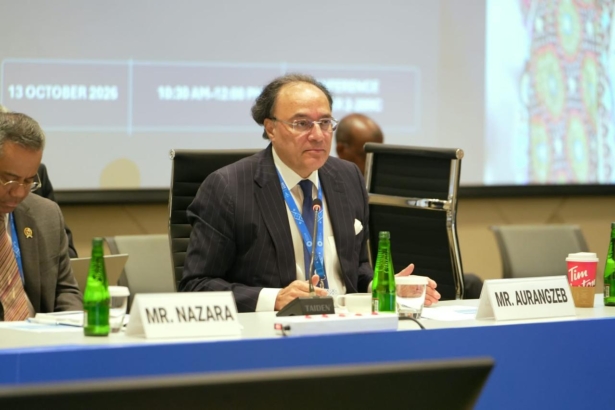
- During engagements on the sidelines of the World Bank Group and International Monetary Fund Annual Meetings in Bangkok on October 13, Aurangzeb highlighted Pakistan’s progress towards economic stability, including improved government finances, stronger foreign exchange reserves, consecutive primary budget surpluses and upgrades in the country’s credit ratings.
- The Finance Minister also met Imad Fakhoury, International Finance Corporation Regional Vice President for the Middle East and Central Asia, to discuss ways to increase private sector investment, develop businesses and create jobs.
Bangkok / Islamabad: Finance Minister Senator Muhammad Aurangzeb has held a series of meetings with international investors, major banks, development institutions and foreign officials to attract investment to Pakistan, strengthen access to international financial markets and promote reforms aimed at boosting exports, creating jobs and supporting private sector growth.
During engagements on the sidelines of the World Bank Group and International Monetary Fund Annual Meetings in Bangkok on October 13, Aurangzeb highlighted Pakistan’s progress towards economic stability, including improved government finances, stronger foreign exchange reserves, consecutive primary budget surpluses and upgrades in the country’s credit ratings.
He said Pakistan had regained access to international capital markets through private placements and the issuance of Panda bonds and Eurobonds. The government aims to build on these developments by continuing reforms in taxation, energy, state owned enterprises and public finance while moving towards investment and export led economic growth.
At an investor roundtable organised by Barclays, Aurangzeb participated alongside State Bank of Pakistan Governor Jameel Ahmad. The Finance Minister outlined the government’s economic reform agenda and highlighted opportunities for investment, including privatisation, the outsourcing of airport operations and interest from foreign investors in electricity distribution companies.
He also pointed to a strong pipeline of initial public offerings, or IPOs, which allow companies to sell shares to the public for the first time. The meeting examined Pakistan’s economic outlook and the potential for greater investment as reforms continue. Aurangzeb invited the State Bank governor to discuss inflation trends, monetary conditions and stability in the external sector. The session ended with questions from participants.
The Finance Minister also participated in a panel discussion titled “Mitigating Sovereign Risks in Market Access Countries”. The discussion focused on how countries that borrow from international financial markets can manage their debts and reduce the risk of financial difficulties.
Aurangzeb highlighted Pakistan’s efforts to reduce inflation, improve government finances and rebuild foreign exchange reserves. He said the government was working to increase tax revenue, improve tax administration, control unnecessary spending and advance privatisation to strengthen the economy.
He outlined measures to reduce borrowing costs, extend loan repayment periods and lower the risk of having to repay or refinance large amounts of debt at the same time. He said renewed access to international markets provided an opportunity to improve the structure of Pakistan’s external debt without increasing its overall size.
The Finance Minister also stressed that Pakistan had taken ownership of reforms in taxation, energy, state owned enterprises and pensions under the IMF supported programme. He said the reforms needed to continue so that the gains from economic stability could translate into lasting growth and improvements in public welfare.
At a separate roundtable organised by Jefferies International, Aurangzeb was accompanied by Secretary Finance Imdadullah Bosal and SBP Governor Jameel Ahmad. The discussions covered economic reforms, debt management, financing options and opportunities for international investment.
The delegation highlighted improvements in fiscal and external balances, stronger foreign exchange reserves, credit rating upgrades and Pakistan’s return to international capital markets. The Finance Minister stressed that the next stage of the economic programme was to strengthen exports and encourage private businesses to play a greater role in growth.
Potential financing options, including Sukuk, further Panda bond issuance and tokenization, were also discussed. Sukuk are financial instruments structured according to Islamic finance principles, while tokenisation involves representing ownership or financial assets in digital form within an appropriate system.
Aurangzeb also discussed expanding the tax base, implementing agricultural income tax, using digital tools to enforce tax rules and improving coordination between the federal and provincial governments to meet fiscal targets.
Investor questions also covered regional political risks, energy security, obligations linked to liquefied natural gas supplies and Pakistan’s economic engagement with the United States and Saudi Arabia. The Finance Minister reaffirmed the government’s commitment to continued reforms and stronger investor confidence.
Aurangzeb separately met senior management of Mashreq Bank to discuss the bank’s expanding presence in Pakistan and opportunities in digital banking and financial services.
The discussions focused on using technology and microfinance to improve access to financial services, particularly for people and businesses that have limited access to conventional banking. The meeting also examined opportunities to expand offshore service operations by making use of Pakistan’s skilled workforce.
Other areas of discussion included digital bank accounts for overseas Pakistanis, foreign currency products and wider services for customers across the Gulf Cooperation Council region.
The meeting also explored possible cooperation in tokenization, blockchain and digital assets within Pakistan’s developing regulatory framework. Further discussions covered potential support for Sukuk, additional Panda bond issuance and innovative financing options under Pakistan’s medium term debt strategy.
The Finance Minister also met Imad Fakhoury, International Finance Corporation Regional Vice President for the Middle East and Central Asia, to discuss ways to increase private sector investment, develop businesses and create jobs.
The meeting reviewed the IFC’s expanding work in Pakistan, including financing for small businesses, support for entrepreneurship, development of capital markets and green and digital bonds.
Aurangzeb reaffirmed Pakistan’s commitment to the Reko Diq project and appreciated the IFC’s leading role in financing efforts. The discussions also covered infrastructure needed for mining projects and ways to add more value to minerals before they are sold.
Affordable housing and financing for property developers were also discussed. In agriculture, the two sides examined ways to improve storage facilities, cold chains and electronic warehouse receipt financing, which can help farmers and businesses obtain finance using stored agricultural goods as security under suitable arrangements.
The meeting also explored greater private sector participation in livestock development and support for pharmaceutical exports through stronger regulatory standards and investment.
Infrastructure discussions focused on public private partnerships in water services, advanced electricity metering and financing methods for projects being carried out by provincial governments.
Aurangzeb also met Sultan Abdulrahman Al Marshad, Chief Executive Officer of the Saudi Fund for Development, to review economic cooperation and development projects supported by the Saudi institution.
The Finance Minister expressed condolences over the loss of lives in recent incidents in Saudi Arabia and thanked the Kingdom for its longstanding support to Pakistan.
The two sides discussed ways to expand trade and investment, increase private sector engagement and follow up on the bilateral investment protection agreement. Opportunities to upgrade Pakistan’s refineries were also considered.
Both sides noted satisfactory progress on projects supported by the Saudi Fund for Development and stressed the importance of preparing a fresh list of projects for future cooperation. The fund reaffirmed its continued support for Pakistan within its mandate.
Beyond investment and financial reforms, Aurangzeb also highlighted Pakistan’s population growth challenge and the need to connect population planning with education, healthcare and employment.
Speaking at a World Bank roundtable titled “Transforming Demographic Transition into Human Capital Gains and Job Creation”, he stressed that rapid population growth was placing pressure on the country’s health and education systems and increasing the need to create jobs.
Drawing on experiences from Indonesia, Bangladesh and Iran, he highlighted women’s education, greater participation of women in the workforce and engagement with religious leaders on birth spacing as important priorities.
The Finance Minister outlined the establishment of a National Population Council led by the Prime Minister. The proposed council is intended to bring together federal and provincial efforts and help move separate initiatives into a coordinated national framework.
He stressed the need for continued political commitment, cooperation between the federal and provincial governments and measurable results. The aim is to ensure that population planning, healthcare, education and employment policies work together instead of operating separately.
Aurangzeb said Pakistan needed a skilled workforce and more jobs created by private businesses to benefit from its large and growing population. He highlighted freelancing, information technology services and digital skills as opportunities for young people to increase their earnings and help expand the country’s exports.
We welcome your contributions! Submit your blogs, opinion pieces, press releases, news story pitches, and news features to opinion@minutemirror.com.pk and minutemirrormail@gmail.com