Summary
- Mental health must move beyond hospitals and become part of education, parenting, workplaces, community development, media conversations, and public policy.
- Mental health awareness, respectful communication, anti-harassment mechanisms, fair workload distribution, and supportive leadership are not luxuries.
- If Pakistan is to build a resilient, productive, and progressive society, mental health must move beyond clinics and become an integral part of public policy, education, community development, and everyday life.
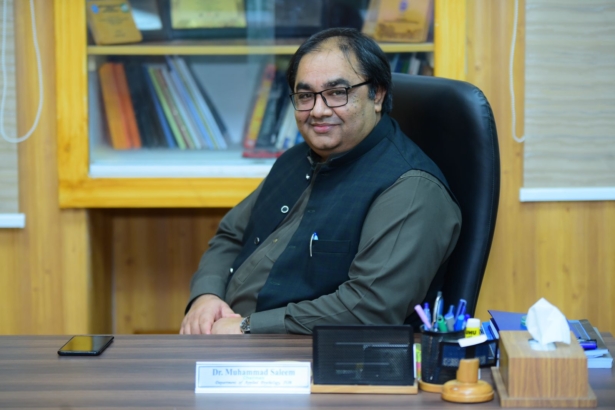
By:Prof. Dr. Muhammad Saleem
Pakistan is not only facing economic, political, and educational challenges; it is also confronting a growing emotional and psychological crisis. Rising anger on the roads, increasing intolerance in classrooms, despair among young people, violence within families, and hopelessness in workplaces are not isolated incidents. Rather, they are symptoms of deeper psychological issues that have remained largely neglected across society.
For too long, mental health in Pakistan has been understood mainly in clinical terms. We often speak of depression, anxiety, trauma, or addiction only when a person reaches a hospital, clinic, or counselling centre. This view is too narrow. Psychological well-being is not limited to psychiatric illness. It is connected with how people think, feel, communicate, tolerate difference, manage stress, raise children, resolve conflict, and find meaning in daily life.
In this sense, mental health is not only a private matter. It is a public concern.
A society under emotional pressure begins to show signs in many forms. People become less patient, families become more fragile, public debate becomes more aggressive, and young people begin to feel uncertain about their future. When emotional distress remains unaddressed, it does not disappear. It appears in anger, withdrawal, violence, substance use, poor academic performance, workplace conflict, and loss of hope.
The crisis is particularly visible among the youth. Many students today are academically connected but emotionally exhausted. They face pressure to succeed, fear of failure, uncertainty about employment, comparison through social media, and limited access to meaningful guidance. Families often expect performance but do not always provide emotional understanding. Educational institutions focus heavily on grades but give little structured attention to emotional regulation, resilience, communication skills, and psychological support.
This is not a minor issue. A young person who is anxious, hopeless, or emotionally unsupported cannot fully benefit from education. A student may sit in the classroom, but his or her mind may be occupied by fear, loneliness, family stress, or self-doubt. If universities and schools want better academic outcomes, they must also care about psychological well-being.
The same applies to families. Many homes are suffering from emotional distance despite physical closeness. Parents and children live under the same roof but often do not understand each other’s inner worlds. Harsh communication, unrealistic expectations, comparison among siblings, unresolved marital conflict, and lack of emotional listening can gradually weaken family relationships. In many cases, children do not rebel because they lack values; they withdraw because they feel unheard.
Workplaces also reflect the same problem. Stress, insecurity, poor communication, rigid authority, burnout, and lack of appreciation affect productivity and mental health. An employee who feels constantly humiliated or emotionally unsafe cannot perform at his or her best. Institutional success is not built only through rules and targets; it is also built through trust, respect, fairness, and psychological safety.
At the community level, intolerance has become one of the most disturbing signs of our emotional decline. We are increasingly losing the ability to disagree with dignity. Difference of opinion is often treated as personal attack. This attitude damages classrooms, families, institutions, media discussions, and politics. A psychologically mature society allows disagreement without hatred. It teaches people to listen before reacting and to argue without dehumanizing others.
The way forward is not only to build more clinics, although clinical services are certainly needed. The larger task is to bring psychology into the public life of Pakistan. Mental health must move beyond hospitals and become part of education, parenting, workplaces, community development, media conversations, and public policy.
First, schools and universities should introduce structured programs on emotional literacy, stress management, conflict resolution, digital well-being, and help-seeking behavior. These programs should not be ceremonial lectures delivered once a year. They should be regular, practical, and age-appropriate.
Second, every university and major educational institution should have functional counselling and psychological support services. These services must not be treated as a formality. They should be confidential, professional, and easily accessible. Students should be encouraged to seek help without shame.
Third, parents need guidance. Parenting in today’s world is more complex than before. Children are growing up with digital exposure, academic pressure, social comparison, and rapidly changing values. Parents must learn how to communicate, set boundaries, listen, and support children emotionally without either excessive harshness or complete permissiveness.
Fourth, workplaces should take employee well-being seriously. Mental health awareness, respectful communication, anti-harassment mechanisms, fair workload distribution, and supportive leadership are not luxuries. They directly affect productivity, commitment, and institutional culture.
Fifth, media has an important role. Public discussions on mental health should avoid sensationalism and stigma. Psychological issues should not be presented only as weakness, madness, or personal failure. Responsible media can help normalize help-seeking, educate families, and create a more compassionate public language.
Finally, policymakers must recognize psychological well-being as a national development issue. A nation cannot progress only through roads, buildings, and technology. It also needs emotionally healthy citizens, resilient youth, stable families, safe institutions, and communities capable of dialogue.
As a faculty member in applied psychology, I have observed that mental health concerns are no longer limited to clinical settings. They are increasingly visible in educational institutions, workplaces, communities, and homes. The emotional well-being of individuals has a direct impact on social harmony, productivity, academic performance, and overall national development. Yet psychological health continues to receive far less attention than it deserves.
Pakistan needs a shift in thinking. We must stop treating mental health as something relevant only after a person breaks down. We must begin to see it as a foundation of everyday life. Emotional literacy, resilience, empathy, self-control, hope, and healthy communication are not soft concerns. They are essential social skills.
If Pakistan is to build a resilient, productive, and progressive society, mental health must move beyond clinics and become an integral part of public policy, education, community development, and everyday life. Recognizing and addressing our collective psychological needs is no longer a luxury. It is a national imperative.