Summary
- 120 billion that ran from 2017 to 2022 and a fresh briefing in the Senate on 19 November 2026 revealing Rs.
- 120 Billion Cash The story begins in Peshawar, where two brothers, Rab Nawaz and Ahmed Nawaz, opened a small shop in a plaza and registered their company for just Rs.
- 120 billion, while the actual value was about Rs.
ISLAMABAD: The complete story of Pakistan’s largest trade-based money laundering scandal has now come to light, combining an old network of Rs. 120 billion that ran from 2017 to 2022 and a fresh briefing in the Senate on 19 November 2026 revealing Rs. 60 billion in new laundering.
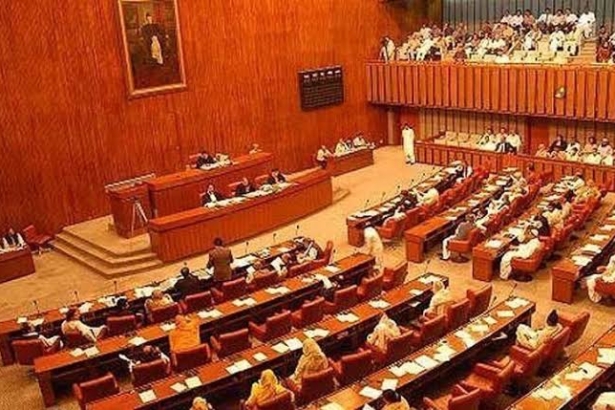
The details were presented by Mushtaq Ahmed Sukhera, Chairman of the National Anti-Money Laundering and Counter Financing of Terrorism Authority (NAML-CFT), in a meeting of the Senate Standing Committee on Cabinet Secretariat, chaired by Senator Rana Mahmoodul Hassan.
A Rs. 10,000 Shop And Rs. 120 Billion Cash
The story begins in Peshawar, where two brothers, Rab Nawaz and Ahmed Nawaz, opened a small shop in a plaza and registered their company for just Rs. 10,000.
On paper, it was an ordinary little shop. Then they went to Lahore and opened bank accounts at 13 different bank branches in the name of the same company. Rs. 120 billion in cash was deposited into those accounts.
In return, dollars were obtained from the State Bank in the name of importing solar panels and sent abroad. Cheap solar panels were imported and shown as expensive, and dollars were sent out. This was not trade, it was laundry.
7 Shell Companies And A Driver With Rs. 12 Billion
According to the investigation, the brothers, together with an employee, set up a network of 7 shell companies in Peshawar and Lahore, including Bright Star and Moonlight Traders.
These companies were registered on a small shop and a capital of a few thousand rupees, while cash transactions of Rs. 120 billion took place through their accounts in Lahore. Across the entire network, the amount reached Rs. 140 billion.
The committee was told that a bulldozer driver, an employee of the network, had Rs. 12 billion in his bank account. This shows that identity cards and accounts of ordinary citizens were used as frontmen and benami accounts.
Hundi Money Whitened Through Banks
According to FBR and Customs reports, this money did not come in containers from Peshawar. Instead, black money of hundi/hawala operators and illegal currency dealers was deposited directly in cash into these companies’ accounts in Lahore.
These people were providing a laundry service. Whoever had black money deposited cash in rupees, and in return his money reached abroad in dollars through the official banking channel, with legal paperwork.
The Solar Panel Game: $0.15 Shown As $0.70
The biggest trick was over-invoicing of solar panels. Since customs duty on solar panels was zero, the accused manipulated import invoices.
The actual price of panels imported from China was $0.15 per watt, but the price shown on paper was $0.35 to $0.70 per watt, a mark-up of up to 500%.
On paper, the value was shown as Rs. 120 billion, while the actual value was about Rs. 85 billion. In this way, additional dollars worth more than Rs. 35 billion were transferred through Letters of Credit to more than 10 countries, including China, UAE, and Singapore.
Fresh Briefing: Banks Became “Conveyor Belts”
In the Senate meeting, Sukhera said money laundering of up to Rs. 60 billion had taken place through solar imports. He said in clear words:
He said this was not just negligence. Some bank managers themselves were facilitating suspicious transactions. The Kohistan scandal was also mentioned, in which funds also passed through local banks.
Why Was No STR Sent?
The committee asked why no Suspicious Transaction Report (STR) was sent to the Financial Monitoring Unit (FMU) when billions were deposited and withdrawn. From 2017 to 2022, the State Bank’s monitoring system failed to catch this over-invoicing.
The committee said without collusion of bank staff, it is impossible for billions to be deposited into a shopkeeper’s or driver’s account and be immediately withdrawn.
Punishment: A Drop In The Ocean
The State Bank imposed fines of Rs. 40 million on Askari Bank and Rs. 27 million on Dubai Islamic Bank. The committee called these fines grossly inadequate, just 0.05% of a Rs. 120 billion scandal.
The Customs Adjudication Authority had imposed a fine of Rs. 111 billion on the companies, but recovery remains a big question. The main accused are still at large.
FATF And Senate’s Decision
Sukhera said Pakistan has implemented 127 out of 131 FATF action items since coming out of the grey list in 2022. But the committee asked how Rs. 60 billion laundering still took place if compliance was complete.
The committee summoned the Governor of the State Bank to the next meeting, directed NAML-CFT to present a complete reforms report, and demanded criminal action against bank officers and tightening of banking laws.
The committee made it clear: now mere fines will not work. Banks will have to answer, launderers will have to be caught, and the system will have to be fixed. Otherwise, the next Bright Star and Moonlight Traders will already have been registered from another Rs. 10,000 shop.
We welcome your contributions! Submit your blogs, opinion pieces, press releases, news story pitches, and news features to opinion@minutemirror.com.pk and minutemirrormail@gmail.com