Summary
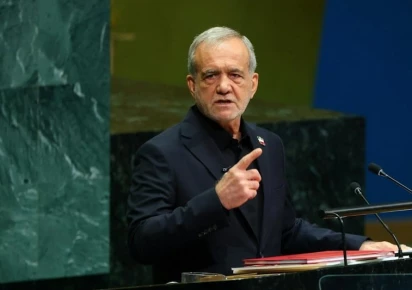
- WASHINGTON: Iranian President Masoud Pezeshkian has said Tehran does not want a war with the United States and remains willing to pursue a negotiated agreement with Washington as tensions between the two countries continue.
- In an interview with Fox News, Pezeshkian said Iran had not chosen the conflict and maintained that Tehran was prepared to move forward with an agreement previously reached with US President Donald Trump.
- He also rejected the suggestion that Iran was seeking a nuclear weapon, saying Tehran was prepared to allow its nuclear activities to be addressed within the relevant international framework.
WASHINGTON: Iranian President Masoud Pezeshkian has said Tehran does not want a war with the United States and remains willing to pursue a negotiated agreement with Washington as tensions between the two countries continue.
In an interview with Fox News, Pezeshkian said Iran had not chosen the conflict and maintained that Tehran was prepared to move forward with an agreement previously reached with US President Donald Trump.
He said the decision on whether to end the conflict ultimately rested with Washington. Pezeshkian also indicated that Tehran remained committed to resolving disputes through negotiations rather than continuing military confrontation.
On Iran’s nuclear programme, Pezeshkian said his country would comply with its obligations under international law and the Nuclear Non-Proliferation Treaty. He also rejected the suggestion that Iran was seeking a nuclear weapon, saying Tehran was prepared to allow its nuclear activities to be addressed within the relevant international framework.
Pezeshkian also rejected claims that Iran had deliberately closed the Strait of Hormuz, a major global energy route. The waterway has remained a central issue in discussions between Tehran and Washington.
The Iranian president further said he had met Supreme Leader Ayatollah Mojtaba Khamenei in person about a month earlier. He described Khamenei as healthy and capable of carrying out his responsibilities.
Meanwhile, Iran’s Foreign Minister Abbas Araghchi said Tehran had conveyed a proposal to Washington through intermediaries aimed at reopening the Strait of Hormuz as part of a broader agreement.
The diplomatic developments came as fighting involving Iran and regional armed groups continued to affect security across the Middle East.
Saudi Arabia, Pakistan and Türkiye plan urgent talks
Saudi Arabia, Pakistan and Türkiye are preparing an urgent meeting of their military chiefs to discuss support for Saudi Arabia under the Makkah Joint Defence Agreement amid intensified attacks by Yemen’s Houthis.
The development followed a meeting in New York between Saudi Foreign Minister Prince Faisal bin Farhan Al Saud, Pakistan’s Deputy Prime Minister and Foreign Minister Ishaq Dar and Turkish Foreign Minister Hakan Fidan.
The ministers discussed arrangements for the military chiefs’ meeting and condemned attacks targeting Makkah as well as civilian and economic facilities in Saudi Arabia. They also reaffirmed Saudi Arabia’s right to defend itself under international law.
Saudi authorities said air defences intercepted six ballistic missiles launched from Yemen. The Houthis have separately claimed missile and drone attacks against Saudi targets.
The Makkah Joint Defence Agreement, signed by Saudi Arabia, Pakistan and Türkiye in August, provides a framework for closer defence cooperation and states that an attack on one member would be treated as an attack on all three.
At the same time, Pezeshkian sought to distance Tehran from direct responsibility for Houthi actions, saying the group was responsible for its own decisions.
The latest developments have added to diplomatic and security tensions across the region, while Iran and the United States continue to face pressure to find a negotiated path out of the conflict.
Colombia cuts diplomatic ties with Iran
Colombia has also announced that it has severed diplomatic relations with Iran, citing national and regional security concerns, alleged links to transnational criminal and terrorist networks, human rights issues and disagreements over Iran’s nuclear programme.
The Colombian government said the decision took effect on September 19 and reflected its foreign policy priorities. It also cited concerns over attacks beyond the Middle East conflict and restrictions affecting international efforts to monitor Iran’s nuclear activities.
We welcome your contributions! Submit your blogs, opinion pieces, press releases, news story pitches, and news features to opinion@minutemirror.com.pk and minutemirrormail@gmail.com