Summary
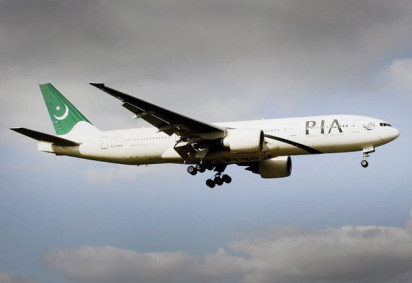
- Islamabad: The National Assembly Standing Committee on Finance and Revenue raised serious concerns over a proposed 15 year sales tax exemption for Pakistan International Airlines, warning that giving tax relief to only one airline could create an unfair market and hurt competition in the aviation sector.
- However, Committee Chairman Syed Naveed Qamar observed that tax policy should remain fair for the entire sector and should not give one company an undue advantage.
- The committee examined proposals related to sales tax exemptions, import rules, income tax changes, digital tax administration and concessions for different sectors.
Islamabad: The National Assembly Standing Committee on Finance and Revenue raised serious concerns over a proposed 15 year sales tax exemption for Pakistan International Airlines, warning that giving tax relief to only one airline could create an unfair market and hurt competition in the aviation sector.
The most controversial issue discussed in the meeting was the proposed tax concession for Pakistan International Airlines under its privatization agreement. Members questioned why one airline should receive special relief when other airlines would continue to operate without the same benefit.
Secretary Aviation informed the committee that the concession was part of the Share Purchase Agreement negotiated with possible investors during the privatization process. However, Committee Chairman Syed Naveed Qamar observed that tax policy should remain fair for the entire sector and should not give one company an undue advantage.
The committee recommended that the government review the wider impact of the proposal and consider whether similar concessions should be extended across the aviation sector to maintain a level playing field.
The meeting was chaired by Syed Naveed Qamar at Parliament House and continued the clause-by-clause review of the Finance Bill. The committee examined proposals related to sales tax exemptions, import rules, income tax changes, digital tax administration and concessions for different sectors.
Another major issue before the committee was the proposed expansion of the Third Schedule of the Sales Tax Act. Under this plan, sales tax would be charged at the manufacturing stage based on printed retail prices.
The Federal Board of Revenue informed the committee that 21 more categories may be added to this system. These categories include hundreds of consumer products such as packaged food items, beverages, cosmetics, insecticides and household goods.
Committee members raised concerns that the proposal could increase prices initially, disturb the market and create implementation problems. They asked the Federal Board of Revenue to explain how the proposal would affect ordinary consumers.
The committee also discussed taxation on stationery items. Members strongly emphasized that educational supplies such as pencils, geometry boxes and other student-use items should remain exempt from tax. They said families should not face extra burden on items used by schoolchildren.
The Federal Board of Revenue clarified that exercise books would remain exempt from sales tax, while other stationery items are proposed to be taxed at a concessional rate of 10 percent. The committee directed the Federal Board of Revenue to provide detailed revenue estimates and impact analysis before any final decision is taken.
The committee also reviewed proposals related to dredgers, tankers and shipping vessels. Chairman Syed Naveed Qamar said Pakistan has a chance to strengthen its maritime sector and use its ports as alternative regional trade and transit hubs due to changing regional conditions.
The committee asked the Ministry of Maritime Affairs to present a complete briefing on Pakistan’s maritime development strategy. Members said the country needs clear policies to take advantage of new opportunities in shipping, ports and logistics.
Digital tax administration also came under discussion. The committee reviewed proposals linked with digital integration, faceless assessment, algorithmic settlement and the creation of an Independent Case Scrutiny Committee.
Members welcomed efforts to modernize the tax system but expressed reservations about giving too many powers to the executive. They said there must be transparent legal safeguards, clear eligibility rules and strong oversight to protect taxpayers’ rights.
The chairman also expressed concern over proposals allowing the executive to determine withholding tax rates. He said decisions about tax rates must remain under parliamentary oversight because taxation is the responsibility of Parliament.
The committee agreed with the proposal to tax returns on life insurance policies surrendered within the first four years. Members observed that this step would discourage misuse of tax exemptions while protecting genuine long-term policyholders.
During the meeting, Syed Naveed Qamar said tax policy should encourage investment, economic growth and competitiveness instead of focusing only on revenue collection. He said excessive taxation and sector-specific distortions can discourage investors and reduce long term economic potential.
He emphasized that revenue collection is important, but it should not damage broader economic goals. He said Pakistan needs a balanced fiscal approach that supports businesses, consumers and the economy.
The chairman also expressed dissatisfaction over the absence of complete fiscal analysis on tax proposals. He said the committee had repeatedly asked for revenue impact assessments for every taxation proposal placed before it.
He said such information is necessary for evidence-based lawmaking. Without proper figures, the committee cannot judge whether a tax proposal is good, harmful or unnecessary.
The committee also confirmed the minutes of its previous meeting and decided to continue reviewing the Finance Bill in the next sitting.
We welcome your contributions! Submit your blogs, opinion pieces, press releases, news story pitches, and news features to [email protected] and [email protected]