Summary
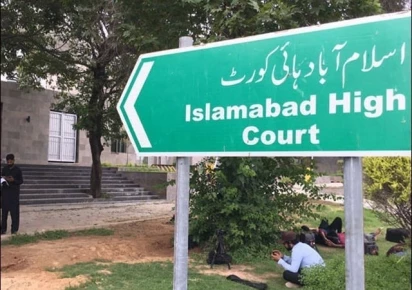
- SHEIKHUPURA: The recent Islamabad High Court decision dismissing petitions by three prisoners at Adiala Jail who sought treatment at private hospitals has renewed debate over prisoners’ constitutional rights to healthcare and their ability to choose where they receive medical treatment.
- Hafiz Ehsan Ahmad Khokhar, Advocate of the Supreme Court of Pakistan and an expert in constitutional and international law, said imprisonment does not strip a person of the right to life, dignity or necessary medical treatment.
- Article 10 of the International Covenant on Civil and Political Rights requires humane treatment of people deprived of liberty, while the Nelson Mandela Rules emphasize proper healthcare and professional medical judgment for prisoners.
SHEIKHUPURA: The recent Islamabad High Court decision dismissing petitions by three prisoners at Adiala Jail who sought treatment at private hospitals has renewed debate over prisoners’ constitutional rights to healthcare and their ability to choose where they receive medical treatment.
Hafiz Ehsan Ahmad Khokhar, Advocate of the Supreme Court of Pakistan and an expert in constitutional and international law, said imprisonment does not strip a person of the right to life, dignity or necessary medical treatment. However, he added that the law does not give prisoners an unrestricted right to select a private hospital of their choice.
He explained that Articles 4, 9, 14 and 25 of the Constitution provide important safeguards for people in custody. Article 4 requires lawful treatment, Article 9 protects life and liberty, Article 14 safeguards human dignity, while Article 25 guarantees equality before the law.
According to Khokhar, these provisions place a greater responsibility on the State because prisoners cannot arrange medical treatment independently like ordinary citizens. The prison administration must therefore ensure timely and appropriate healthcare.
He said the Prisons Act, 1894, particularly Sections 37, 38 and 39, establishes the legal framework for medical care. Prisoners who become ill or require medical attention must be brought before the Medical Officer without unnecessary delay.
The Pakistan Prison Rules, 1978, provide further procedures for medical examination, treatment and specialist referrals. Khokhar highlighted Rule 788, under which prisoners reporting illness must be examined by the Medical Officer, who determines the appropriate treatment.
He also referred to Rule 197, which allows prisoners suffering from serious illnesses to receive treatment at civil hospitals when necessary treatment cannot conveniently be provided inside the prison. The rule also recognizes emergencies requiring immediate action.
Khokhar stressed that outside treatment does not mean release from custody. A prisoner may receive treatment at a civil or private hospital while remaining under the required security and custodial arrangements.
He said the key legal distinction lies between the right to necessary medical treatment and the right to choose a particular hospital. If medical evidence shows that a prisoner needs urgent specialist care unavailable within the prison or government system, authorities cannot refuse appropriate treatment simply for administrative convenience. On the other hand, a prisoner cannot ordinarily demand a particular private hospital when adequate treatment is available through the prescribed system.
He said Article 25 also requires authorities to apply objective and consistent medical standards to all prisoners. Political influence, social status or media attention should never determine access to healthcare.
International standards support this approach. Article 10 of the International Covenant on Civil and Political Rights requires humane treatment of people deprived of liberty, while the Nelson Mandela Rules emphasize proper healthcare and professional medical judgment for prisoners.
Khokhar said Pakistan needs a transparent referral system based on medical evidence, independent assessment and clear procedures. Serious complaints should receive prompt examination, and authorities should record diagnoses, required treatment and available facilities.
He concluded that imprisonment restricts liberty but does not extinguish life, dignity or the right to necessary healthcare. The same legal and medical standards, he said, must protect both influential prisoners and those without power or connections.
We welcome your contributions! Submit your blogs, opinion pieces, press releases, news story pitches, and news features to opinion@minutemirror.com.pk and minutemirrormail@gmail.com