Summary
- JHELUM: The disappearance of three children from Jhelum has brought renewed attention to a deeply troubling question: what happens when domestic violence, substance abuse, family conflict and weak protection mechanisms converge around vulnerable children?
- While the circumstances differ from case to case, experts and investigators frequently identify domestic violence, financial pressure, substance abuse, family disputes and inadequate access to support services as factors that can increase risks to children.
- The Jhelum investigation has particularly highlighted the danger faced by children in households where domestic violence and substance dependence are already known.
JHELUM: The disappearance of three children from Jhelum has brought renewed attention to a deeply troubling question: what happens when domestic violence, substance abuse, family conflict and weak protection mechanisms converge around vulnerable children?
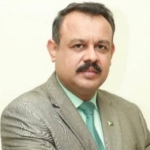
Police in Jhelum say they have arrested the children’s father, Raja Zeeshan alias Shani, in connection with their disappearance after he allegedly admitted throwing the children into the Upper Jhelum Canal. The allegations are contained in FIR No. 287/26 registered at Mangla Police Station on the complaint of the children’s mother, Ambreen Bibi.
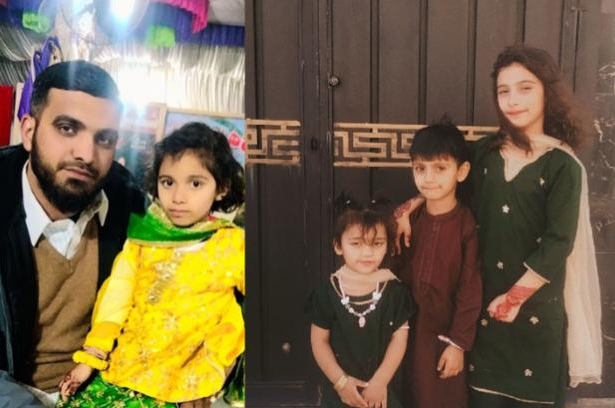
The children, identified as eight-year-old Fajar Zeeshan, five-year-old Umar Zeeshan and two-and-a-half-year-old Noor Fatima, disappeared on September 15 after their father reportedly took them out, telling relatives that he was taking them for an outing.

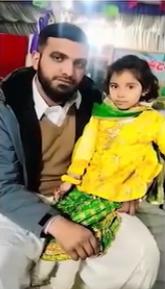

According to the FIR and statements cited by police, the family had experienced prolonged domestic conflict. Ambreen had reportedly left the marital home several months earlier following allegations of violence and substance abuse. The children were subsequently brought into the dispute through legal proceedings.
Relatives told investigators that the couple had recently reconciled following intervention by family elders. The accused allegedly assured the family that he had abandoned drugs and would no longer subject his wife to violence.
Police said that several days after the reconciliation, Zeeshan took the children from home. When he failed to return, relatives attempted to contact him repeatedly. His vehicle was later found abandoned in the Mughalabad area.
According to the investigation, the family subsequently received a video message in which Zeeshan allegedly claimed responsibility for the children’s disappearance and linked his actions to his dispute with his wife. Police say the message became a significant lead in the investigation.
Mangla Police subsequently registered the case and used call-data analysis and geofencing to trace the suspect. He was arrested near the Mangla-Dina area, according to police.
Investigators allege that during questioning the accused disclosed that the children had been taken to the canal near Lehri Bridge, close to the WAPDA Power House and the Punjab-AJK boundary.
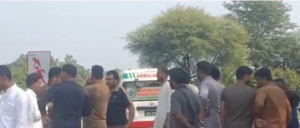
Rescue teams from Jhelum and Azad Jammu and Kashmir subsequently launched a joint search operation. According to officials cited in the report, the body of Fajar was recovered near Khari Sharif and transferred to THQ Hospital Dina for medico-legal procedures and preservation of evidence. The search for Umar and Noor Fatima was continuing at the time of reporting.
DPO Jhelum Shafiq Ahmed Chaudhry described the incident as an alleged deliberate act rather than an accident. Police have also sought forensic testing to establish whether substance abuse played a role in the case. The accused, however, remains legally innocent unless convicted by a court.
The Jhelum case is not being examined in isolation. Several other incidents involving children and alleged parental violence have been reported in Punjab in recent months, raising concerns about whether individual tragedies may share broader social and institutional risk factors.
In Lahore’s Valencia Town, a woman and three children died in July in a poisoning case that police investigated as an alleged deliberate act. In Murree, police investigated the death of an infant allegedly thrown into a watercourse. Other cases reported from the Muridke and Sheikhupura areas have involved allegations against fathers in incidents resulting in the deaths of multiple children.
While the circumstances differ from case to case, experts and investigators frequently identify domestic violence, financial pressure, substance abuse, family disputes and inadequate access to support services as factors that can increase risks to children. These factors should not, however, be treated as excuses for violence or as proof of motive in an individual criminal case.
The Jhelum investigation has particularly highlighted the danger faced by children in households where domestic violence and substance dependence are already known. The case also raises questions about what safeguards should accompany family reconciliation when there are allegations of violence or addiction.
Child-protection specialists have long stressed that reconciliation alone cannot guarantee safety where serious violence or substance dependence is involved. Risk assessment, access to shelters, psychological support, addiction treatment and effective monitoring may be necessary before children are placed back in potentially unsafe environments.
The tragedy has also renewed calls for stronger coordination between police, child-protection authorities, health departments and rescue services. Early warning systems could help identify families facing repeated domestic violence, threats or severe substance-abuse problems before a crisis escalates.
For law-enforcement agencies, the case underlines the importance of treating threats against children and spouses as potential indicators of serious risk rather than merely private family disputes. For communities, it raises difficult questions about whether warning signs are recognised and reported early enough.
For families experiencing violence, threats or substance-related instability, seeking help from appropriate authorities can be critical. In Punjab, emergency police assistance is available through 15, while Rescue 1122 provides emergency response services. Child-protection and women-protection services can also be approached where available.
The deaths and disappearances of children in such cases cannot be explained simply through poverty, addiction or marital conflict. Criminal responsibility rests with those who commit crimes, while prevention requires institutions and communities to recognise dangerous situations before children become victims.
The Jhelum case remains under investigation, with forensic and medico-legal procedures expected to provide additional evidence. As the investigation proceeds, the central concern remains the safety of children caught in violent family disputes—and whether warning signs that were visible beforehand could have triggered intervention sooner.
We welcome your contributions! Submit your blogs, opinion pieces, press releases, news story pitches, and news features to opinion@minutemirror.com.pk and minutemirrormail@gmail.com