Summary
- It needs a constitutional development compact that makes power measurable, applies one rule to every institution and binds taxation, borrowing and privilege to productive transformation, equal citizenship and human capability.
- Development begins when power is measured before people are instructed to adjust; when finance creates capability rather than dependence; and when every institution remains subject to the Constitution.
- Pakistan National Human Development Report 2020: The Three Ps of Inequality—Power, People and Policy.
Pakistan does not need another imported reform menu. It needs a constitutional development compact that makes power measurable, applies one rule to every institution and binds taxation, borrowing and privilege to productive transformation, equal citizenship and human capability.
- Make power and prices visible
- Convert finance into productive capability
- Put equality and childhood inside economic policy
- Rebuild democratic capacity from below
- Make the compact enforceable
This series began with a response to the IMF’s Rethinking Development. Its authors correctly argue that the old path from agriculture to mass manufacturing cannot provide enough productive jobs and that domestic services, smaller firms, learning and experimentation now matter more. Part I accepted the need to rethink development but rejected a new generalisation: the same prescription cannot have the same result where the structure of power is radically different.
Pakistan is not short of plans or programmes. It lacks an order in which the allocator is governed by the same rules as everyone else. Part II therefore treated capture as an empirical variable, not a slogan. Part III showed that prices record taxes, tariffs, scarcity, market concentration and administrative choice. Part IV demanded productive transformation rather than protection without performance. The remaining parts connected development with equality, childhood, debt, education and social trust.
The common conclusion is simple: Pakistan’s development problem is constitutional before it is technical. Policy cannot be scientific if it measures people while leaving organised power unmeasured. A constitutional development compact must therefore convert these diagnoses into public obligations that can be audited, contested and corrected.
Make power and prices visible
The first obligation should be an annual Capture and Privilege Account, placed before Parliament with the federal budget and mirrored by every province. It should identify the legal authority, fiscal cost, duration, beneficiary and promised result of each tax expenditure, subsidy, guarantee, concessional loan, land allotment, procurement preference, regulatory waiver and special investment concession.
Beneficial ownership must be disclosed. Civilian departments, state-owned enterprises, private conglomerates and military-controlled commercial entities must all appear within the same perimeter.
This account would test whether public power produces public value. Each privilege should carry a baseline, milestones, a sunset date and recovery provisions where promised results are not delivered. The Auditor-General and parliamentary committees should validate it, with anonymised data available for independent research. The UNDP’s inequality report located inequality in the interaction of power, people and policy.
A parallel Price Formation Account should decompose changes in food, energy, transport, housing and essential services into external prices, exchange-rate effects, indirect levies, administered tariffs, supply disruptions and market power.
The Pakistan Bureau of Statistics, State Bank, Competition Commission and regulators should publish a common methodology. Interest rates or raids cannot cure every form of inflation. Policy must act on the mechanism producing the price—and disclose who gains and who bears the adjustment.
The hardest rule is also the most necessary. Pakistan cannot build equal citizenship while the military establishment predominates over elected authority and retains economic domains insulated from ordinary scrutiny.
Hamza Alavi’s analysis of the bureaucratic-military apparatus and Ayesha Siddiqa’s Military Inc. remain relevant because exceptions granted to organised power change how markets and institutions work. One tax law, one competition regime, one procurement code and one standard of audit must apply irrespective of institutional parentage.
Convert finance into productive capability
The compact’s second obligation should be a Productive Transformation Contract for every material incentive. Support to agriculture, manufacturing, technology, exports or labour-absorbing services should specify investment, productivity, decent employment, training, foreign-exchange gains or technology diffusion.
Results must be verified against a counterfactual, not inferred from the beneficiary’s survival. Failed support should expire; gains created by public risk-taking should be shared with the public.
Pakistan should not abandon manufacturing and export capacity because global production has become less labour-intensive. Nor should it subsidise fashionable sectors while most citizens remain trapped in low-productivity work. The State must discover constraints with firms and workers, experiment at manageable scale and expand only what evidence supports.
Finance must pass the same test. Part VII distinguished liquidity, solvency and development. An annual Debt and Development Account should reconcile public and contingent liabilities; show maturities, currencies, creditors, rollovers and costs; and trace material borrowing to procurement and results. The IMF’s May 2026 staff report assesses debt as sustainable under a baseline while rating sovereign-stress risk high. That distinction must replace celebration of each rollover or bond.
Put equality and childhood inside economic policy
Part V argued that equal votes cannot sustain inclusion amid extreme inequality of property, knowledge and political influence. The compact should require an annual Equality and Democratic Economy Account showing the distribution of taxes, subsidies, credit, land, public employment and social expenditure by income, gender, region and sector. It should report effective tax rates rather than statutory labels, distinguish genuine income taxation from withholding and presumptive levies, and disclose political finance and conflicts of interest.
Redistribution after inequality has formed is insufficient. Predistribution requires schooling, healthcare, nutrition, labour rights, finance and competition before bargaining power is fixed. Part VI thus proposed an Early Childhood Guarantee joining maternal health, nutrition, caregiving and early learning. An Education Capability Account should measure foundational learning, completion, skills, research and employment—not buildings, enrolment and degrees alone. The Pakistan Economic Survey 2025–26 provides inputs; independent data must test whether they change lives.
Rebuild democratic capacity from below
Part VIII added the missing bridge between individual capability and collective action. Pakistan has strong family, biradari, commercial and institutional networks, but weak bridging ties across groups and unequal links between citizens and authority.
The compact should establish a repeated Social Cooperation and Institutional Trust module within national household surveys, covering confidence in institutions, cross-group participation, discrimination, bribery, grievance resolution and perceived equal treatment. Trust should be examined as a possible outcome of fair institutions, not preached as a substitute for them.
The Constitution already supplies essential anchors: access to information under Article 19A, equality under Article 25, elected and empowered local government under Article 140A, and fiscal federalism through Article 160.
The compact must protect these relationships rather than allow federal programmes or special bodies to bypass provinces and local communities. Municipal budgets, school councils, social audits and participatory pilots can build cooperation, provided capture is controlled through inclusion rules, open accounts, independent facilitation and credible evaluation.
Make the compact enforceable
These accounts should be integrated through a Constitutional Development and Accountability Act. Before each budget, the government would table a single report setting baselines, distributional effects, beneficiaries, financing, risks and independently verifiable outcomes.
An autonomous fiscal and development council should scrutinise assumptions; the Auditor-General should verify flows; parliamentary committees should hold public hearings; and the Council of Common Interests and National Finance Commission should examine federal and provincial consequences.
Failure to disclose should suspend a concession or new commitment rather than produce another unimplemented recommendation.
Every IMF, World Bank and domestically designed programme should also carry a Pakistan Applicability Statement. It should state the causal mechanism, institutional assumptions, groups gaining and losing, effects on federalism and equality, data limitations, counterfactual and exit rule.
The World Development Report 2017 acknowledges that exclusion, capture and clientelism arise from power asymmetries. Development partners should therefore stop treating formal compliance as proof of reform and test whether a programme changes the distribution and accountability of power.
This compact is not a promise that the State can know everything in advance. It creates a disciplined process for learning, disclosure and correction. Daron Acemoglu’s account of collective knowledge reminds us that technology and expertise serve the common good only through institutions that distribute voice and restrain domination.
Pakistan does not need to choose between markets and the State, or between domestic services and industrialisation. It must choose whether markets and the State will remain organised around privilege or become answerable to equal citizens.
Development begins when power is measured before people are instructed to adjust; when finance creates capability rather than dependence; and when every institution remains subject to the Constitution. No imported model can substitute for that settlement. Once it exists, Pakistan can learn from the world without allowing generalisation to erase its reality.
References
Acemoglu, Daron. 2026. “We Have the Knowledge to Build a Better World. But Is That Enough?” Big Think, September 2. Adapted from What Happened to Liberal Democracy? Remaking a Politics of Shared Prosperity.
Alavi, Hamza. 1972. “The State in Post-Colonial Societies: Pakistan and Bangladesh.” New Left Review 74.
Finance Division, Government of Pakistan. 2026. Pakistan Economic Survey 2025–26. Islamabad: Finance Division.
Hanson, Gordon, Dani Rodrik, and Rohan Sandhu. 2026. “Rethinking Development.” Finance & Development, September.
International Monetary Fund. 2026. Pakistan: Third Review Under the Extended Arrangement Under the Extended Fund Facility and Second Review Under the Resilience and Sustainability Facility Arrangement. IMF Country Report No. 26/101.
Mansuri, Ghazala, and Vijayendra Rao. 2013. Localizing Development: Does Participation Work? Washington, DC: World Bank.
National Assembly of Pakistan. 2022. The Constitution of the Islamic Republic of Pakistan. Islamabad.
Siddiqa, Ayesha. 2007. Military Inc.: Inside Pakistan’s Military Economy. London: Pluto Press.
United Nations Development Programme. 2021. Pakistan National Human Development Report 2020: The Three Ps of Inequality—Power, People and Policy. Islamabad: UNDP Pakistan.
World Bank. 2017. World Development Report 2017: Governance and the Law. Washington, DC: World Bank.
(Concluded)
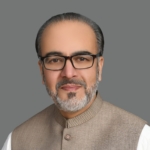
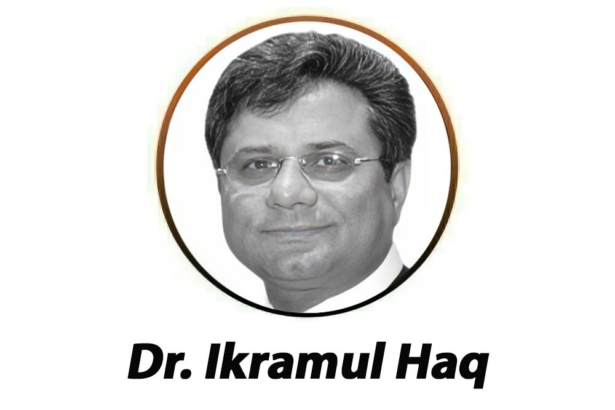
Dr. Ikramul Haq, Advocate Supreme Court, writer, literary critic, Adjunct Faculty at Lahore University of Management Sciences (LUMS), member Advisory Board and Visiting Senior Fellow of Pakistan Institute of Development Economics (PIDE), holds an LLD in tax laws. He was full-time journalist from 1979 to 1984 with Viewpoint and Dawn. He also served Civil Services of Pakistan from 1984 to 1996.
We welcome your contributions! Submit your blogs, opinion pieces, press releases, news story pitches, and news features to opinion@minutemirror.com.pk and minutemirrormail@gmail.com