Summary
- Islamabad: Questions over the spending of public money, an unfinished grid station and a reported transfer of Rs125 million from PESCO to HAZECO dominated a meeting of the National Assembly Standing Committee on Power Division, where an MNA demanded a full examination of the project record and action against anyone found responsible for irregularities.
- The committee directed SEPCO’s chief executive to submit a complete report on the proposed projects and measures to improve voltage and electricity supply in the affected areas at the next meeting.
- On issues raised by MNA Sheikh Aftab Ahmed, the chief executive of Islamabad Electric Supply Company was directed to speed up land acquisition for a proposed grid station in Hazro.
Islamabad: Questions over the spending of public money, an unfinished grid station and a reported transfer of Rs125 million from PESCO to HAZECO dominated a meeting of the National Assembly Standing Committee on Power Division, where an MNA demanded a full examination of the project record and action against anyone found responsible for irregularities.
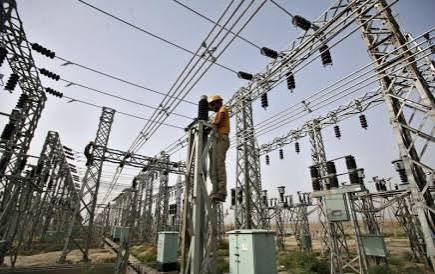
The controversy concerns the 132 kV grid station at Sarai Saleh in Haripur. The project was first planned in 2008 to replace the old 66 kV electricity system, but it remains incomplete despite years of planning and work.
During the meeting, MNA Babar Nawaz Khan questioned how the project had reached a reported 80 percent completion level without being completed. He raised concerns about the feasibility study, project approval, the price paid for the acquired land, the money already spent and the location and availability of equipment purchased for the project.
He also questioned a reported transfer of Rs125 million from PESCO to HAZECO and called for a detailed examination of the financial and technical records. He demanded that responsibility be fixed if any irregularities were found and that public money be recovered wherever warranted.
According to the Power Division, the project was originally planned in 2008, while the decision to establish the grid station was taken in 2020. However, later technical assessments suggested that completing it might not be justified by the area’s existing electricity demand.
The conflicting positions have raised questions about why the project was planned and carried forward, how much money was spent and whether the work and equipment can still be used. The committee meeting record does not establish that corruption or financial wrongdoing took place. It does, however, record the MNA’s demand for an investigation into possible irregularities.
The committee also discussed the continuing electricity problems faced by residents of Haripur, including excessive load shedding, low voltage and dependence on the outdated 66 kV infrastructure.
In another important decision, the committee recommended establishing a new 132 kV grid station at Padhana in Haripur, saying it was needed in the larger public interest.
The Power Division told the committee that the proposed project could not be completed within the existing budget and would require a separate request for additional funds. The Secretary Power Division said HAZECO would prepare the technical justification and submit it to the National Electric Power Regulatory Authority (NEPRA) for consideration.
The committee stressed that available funds must be used carefully and directed HAZECO Chief Executive Officer to begin the required follow up work, including preparation of the case for separate financing. Babar Nawaz Khan said he would also make efforts to arrange additional resources.
The committee then turned to complaints about electricity theft, detection charges and stolen equipment in areas served by the Sukkur Electric Power Company (SEPCO).
MNA Muhammad Shahryar Khan Mahar raised concerns about detection charges imposed on consumers, electricity theft by small industrial units, theft of conductors and transformers, and delays in repair and rehabilitation work.
The committee recommended that detection charges should only be imposed on people found responsible under the applicable rules. It directed NEPRA and the Power Division to develop a system to prevent unjustified charges against consumers.
SEPCO was asked to investigate electricity theft, particularly in Garhi Taseen, Madeji, Lakhi and Khanpur. The company must submit a report at the next meeting explaining theft incidents, the number of First Information Reports registered, action taken and steps planned to prevent further theft.
The SEPCO chief was also directed to meet the concerned MNA to resolve repair and rehabilitation problems in his constituency.
Electricity shortages and overloaded transmission lines in Larkana, Kamber and Shahdadkot were also discussed. MNA Khurshid Ahmed Junejo raised concerns about excessive load shedding, power outages and the need for a 220 kV grid station in Larkana.
He also highlighted the need to replace deteriorated conductors, install power transformers and build new transmission lines. The committee directed SEPCO’s chief executive to submit a complete report on the proposed projects and measures to improve voltage and electricity supply in the affected areas at the next meeting.
In Islamabad, the committee asked the Capital Development Authority to clarify the status of affected buildings in Sector E 11 and resolve pending No Objection Certificates and Layout Plans that are delaying electricity connections.
On issues raised by MNA Sheikh Aftab Ahmed, the chief executive of Islamabad Electric Supply Company was directed to speed up land acquisition for a proposed grid station in Hazro. IESCO was also asked to resolve problems involving electricity wiring and burning wires in Hazro and Hassan Abdal in consultation with the MNA.
The HAZECO chief was separately directed to coordinate with committee chairman Muhammad Idrees to address electricity infrastructure problems in Mansehra and Abbottabad.
We welcome your contributions! Submit your blogs, opinion pieces, press releases, news story pitches, and news features to opinion@minutemirror.com.pk and minutemirrormail@gmail.com