Summary
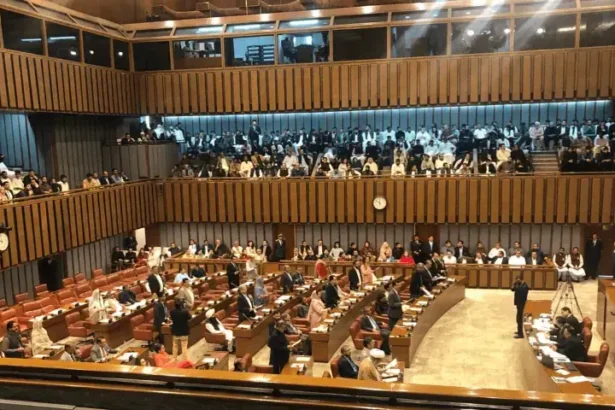
- ISLAMABAD – The Senate on Thursday adopted 123 recommendations on the federal budget for FY2026‑27, urging the government to raise the income tax exemption threshold for low‑income earners, cut electricity tariffs, and impose heavier taxes on luxury assets.
- The recommendations, though non‑binding, will now be transmitted to the National Assembly before the final vote on the budget.
- He also confirmed no new taxes for the IT sector, aligning with Senate recommendations to extend incentives for freelancers and exporters.
ISLAMABAD – The Senate on Thursday adopted 123 recommendations on the federal budget for FY2026‑27, urging the government to raise the income tax exemption threshold for low‑income earners, cut electricity tariffs, and impose heavier taxes on luxury assets.
The motion was moved by Senate Standing Committee on Finance and Revenue Chairperson Saleem Mandviwalla, who presented the committee’s report for the eighth consecutive year. The recommendations, though non‑binding, will now be transmitted to the National Assembly before the final vote on the budget.
Among the key proposals were relief measures for the salaried class, targeted subsidies for low‑consumption electricity users, reduced sales tax on essential food items and medicines, and incentives for agriculture and IT exporters. Senators also called for increased allocations for health, education, water conservation, and disaster management, alongside stricter taxation of luxury vehicles, properties, and non‑productive assets.
Mandviwalla stressed that Pakistan must avoid repeating past mistakes and focus on stability. He highlighted the need to broaden the tax base rather than burden existing taxpayers, and urged promotion of solar energy and abolition of taxes on credit card and ATM transactions.
Finance Minister Muhammad Aurangzeb, wrapping up the debate, admitted Pakistan missed its GDP growth target for FY26 due to global and regional conditions. He said reforms in the Federal Board of Revenue were underway to digitise processes and reduce human intervention. Aurangzeb pointed to concessions in the budget, including abolition of advance tax on exports, reduced markup rates on financing schemes, and removal of duties on agricultural machinery. He also confirmed no new taxes for the IT sector, aligning with Senate recommendations to extend incentives for freelancers and exporters.
Opposition senators, however, voiced sharp criticism. PPP’s Waqar Mehdi accused the finance ministry of ignoring the plight of low‑income households, citing the heavy burden on motorcycle users. He also raised concerns over water scarcity in Sindh. MQM‑P’s Khalida Ateeb attacked the Sindh government for Karachi’s water crisis and collapsing health and education sectors, pointing to shortages of basic vaccines.
The Senate’s role in budget debates was established under the 18th Amendment, though only the National Assembly has the power to pass money bills. Still, the recommendations reflect growing pressure on the government to balance fiscal discipline with relief for ordinary citizens.
We welcome your contributions! Submit your blogs, opinion pieces, press releases, news story pitches, and news features to [email protected] and [email protected]