Summary
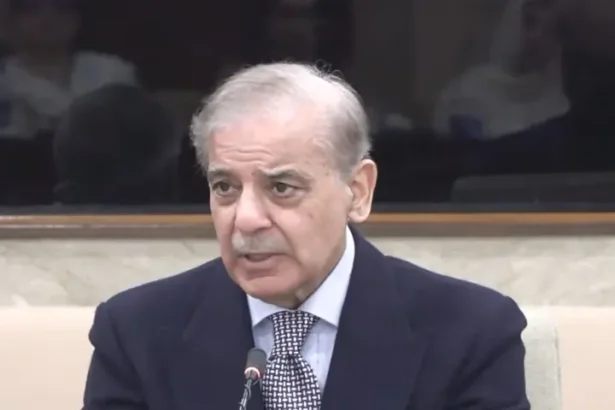
- Prime Minister Shehbaz Sharif on Tuesday defended the federal government’s decision to impose governor’s rule in Khyber Pakhtunkhwa, saying the Centre had exhausted efforts to resolve differences with the provincial government before taking what he described as an extreme step.
- The prime minister later addressed a parliamentary meeting of his own party, the Pakistan Muslim League-Nawaz (PML-N), where he questioned what alternative the federal government had after repeated attempts at dialogue failed.
- Shehbaz maintained that the federal government had sought cooperation with the provincial administration under former chief minister Ali Amin Gandapur and had also engaged with Afridi.
Prime Minister Shehbaz Sharif on Tuesday defended the federal government’s decision to impose governor’s rule in Khyber Pakhtunkhwa, saying the Centre had exhausted efforts to resolve differences with the provincial government before taking what he described as an extreme step.
The prime minister shared the reasons behind the decision with parliamentary delegations of allied political parties during meetings in Islamabad. He maintained that the federal government had tried to cooperate with the Pakistan Tehreek-e-Insaf (PTI)-led provincial administration but had become concerned over its approach to counterterrorism.
The federal government imposed governor’s rule in KP on Sunday, alongside emergency measures in 12 districts. It justified the move by accusing the provincial administration of failing to cooperate adequately in the fight against terrorism.
During a meeting with representatives of the Pakistan Muslim League-Quaid (PML-Q), Balochistan Awami Party (BAP), Istehkam-e-Pakistan Party (IPP) and PML-Zia, Shehbaz said the provincial government’s failure to take a clear position against terrorism had created risks for the country’s security and economic progress.
He said the federal government had transferred more than Rs800 billion to KP under the National Finance Commission arrangements. However, he argued that the province had not done enough to strengthen its Counter-Terrorism Department or establish Safe City projects to improve security and law enforcement.
According to the Prime Minister’s Office, the allied parties expressed support for the federal government’s decision and praised Shehbaz’s leadership during the current political and security crisis. The delegation also criticised the PTI’s performance in KP, claiming that the province had not received adequate development in health, education and infrastructure during its tenure.
The prime minister later addressed a parliamentary meeting of his own party, the Pakistan Muslim League-Nawaz (PML-N), where he questioned what alternative the federal government had after repeated attempts at dialogue failed.
Shehbaz accused the PTI of prioritising protests and political confrontations over development and security. He said residents of KP had been waiting for improvements in schools, universities, hospitals, law and order and the elimination of corruption for years.
He argued that the province needed stability to attract investment and continue its development, particularly as security personnel continued to lose their lives in terrorist attacks.
Referring to negotiations between the government and opposition on October 3, the prime minister said the two sides had come close to reaching an agreement. According to him, the demands had largely been settled and a draft based on consensus was ready.
However, he claimed that the PTI negotiating team requested additional time to consult KP Chief Minister Sohail Afridi. Shehbaz alleged that the talks subsequently broke down after the opposition failed to proceed with the proposed agreement.
The premier also recalled his discussions with Jamiat Ulema-e-Islam-Fazl chief Maulana Fazlur Rehman, saying the government had continued consultations in an attempt to reduce political tensions before reaching its final decision.
Shehbaz said the federal cabinet ultimately concluded that further delay could worsen the security situation. He described the imposition of emergency measures as necessary to protect national stability and prevent further deterioration.
The prime minister criticised Afridi over his recent political statements, accusing him of failing to show sufficient solidarity with the families of security personnel killed in terrorist attacks. He also questioned the provincial leadership’s response to militant violence.
He recalled previous PTI protests in Islamabad, including the 2014 sit-in at D-Chowk and the November 2024 demonstration, arguing that political confrontation had repeatedly diverted attention from governance and economic development.
Shehbaz maintained that the federal government had sought cooperation with the provincial administration under former chief minister Ali Amin Gandapur and had also engaged with Afridi. He insisted that counterterrorism was a shared responsibility requiring coordination between the Centre and the province.
The prime minister expressed hope that the newly formed KP Advisory Council, operating under the governor, would improve public safety and living conditions across the province. He said restoring peace was essential to sustaining the economic progress Pakistan had made in recent years.
Highlighting the country’s economic performance, Shehbaz referred to his recent interactions with international financial institutions and said their positive assessment of Pakistan’s reforms had strengthened his confidence in the economy. He also recalled a recent meeting with International Monetary Fund Managing Director Kristalina Georgieva, during which she reportedly praised the country’s economic transformation.
The prime minister argued that political stability and improved security were necessary to maintain investor confidence and continue the recovery. He reiterated that the federal government had acted after exhausting other options and maintained that national security must remain its foremost priority.
We welcome your contributions! Submit your blogs, opinion pieces, press releases, news story pitches, and news features to opinion@minutemirror.com.pk and minutemirrormail@gmail.com