Summary
- Taiwan’s coast guard has deployed patrol vessels in response to a Chinese maritime operation near the island, escalating tensions in regional waters already marked by competing territorial claims and growing diplomatic disputes.
- In the East China Sea, Chinese and Japanese coast guard vessels frequently encounter each other in contested areas, often leading to diplomatic tensions.
- According to officials, a Chinese survey ship was recently observed operating alongside a Chinese coast guard vessel near Pratas Island, a territory controlled by Taiwan but also claimed by Beijing.
Taiwan’s coast guard has deployed patrol vessels in response to a Chinese maritime operation near the island, escalating tensions in regional waters already marked by competing territorial claims and growing diplomatic disputes.
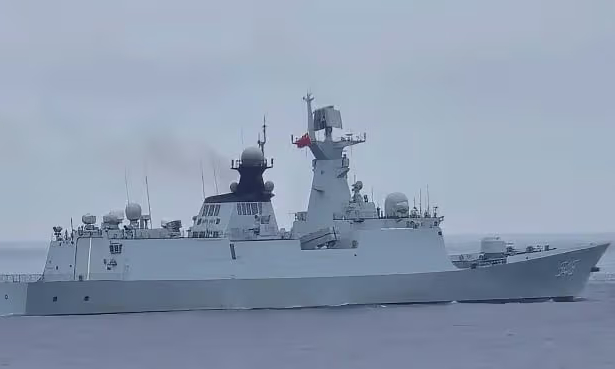
The move came after Chinese state media reported that authorities had launched what Beijing described as a law enforcement operation in waters east of Taiwan. Chinese officials said the action was linked to plans by Japan and the Philippines to begin discussions on defining maritime boundaries in the area, a step that has drawn strong objections from Beijing.
Taiwan’s coast guard said it had closely monitored Chinese vessels throughout the operation and had taken necessary measures to safeguard its interests. According to the agency, several Chinese government ships departed from the port city of Xiamen and sailed near waters southwest of Taiwan, though they remained outside restricted Taiwanese zones.
In response, Taiwan dispatched more than five coast guard vessels to strengthen surveillance and monitor the movements of the Chinese ships. Officials stated that the vessels were expected to reach the relevant waters on Sunday and stressed that China has no sovereign rights over areas east of Taiwan.
The latest development highlights increasing tensions in East Asian waters, where competing territorial claims have led to frequent confrontations involving China and its neighbours. Beijing claims Taiwan as part of its territory and regularly challenges actions by other countries that it believes undermine its position.
The dispute intensified after Japan and the Philippines announced last month that they would begin formal talks to establish maritime boundaries covering exclusive economic zones and continental shelf areas between the two countries. China strongly criticised the decision, describing the planned negotiations as illegitimate.
Chinese state media reported that maritime law enforcement authorities from the coastal provinces of Fujian and Guangdong were involved in the operation. However, officials did not provide detailed information regarding its duration, scope or whether it remained active after Saturday.
Taiwan has argued that any discussions affecting waters around the island should involve its participation. Officials in Taipei recently stated that they should be consulted regarding negotiations that concern maritime areas near Taiwan.
The issue comes amid broader regional disputes involving China. In the East China Sea, Chinese and Japanese coast guard vessels frequently encounter each other in contested areas, often leading to diplomatic tensions. Meanwhile, in the South China Sea, confrontations between China and the Philippines have become increasingly common as both sides seek to assert their claims over strategically important reefs and islands.
Taiwan’s coast guard also reported another incident involving Chinese vessels in the South China Sea. According to officials, a Chinese survey ship was recently observed operating alongside a Chinese coast guard vessel near Pratas Island, a territory controlled by Taiwan but also claimed by Beijing.
Taiwan described the development as the first known case of Chinese coast guard and survey vessels coordinating activities around the island. Officials viewed the move as a deliberate attempt to increase pressure on Taiwan in disputed waters.
Pratas Island remains strategically significant because of its location in the northern part of the South China Sea. Like many areas in the region, it is caught in overlapping territorial claims that continue to fuel political and security tensions.
As maritime disputes across East Asia become increasingly complex, the latest standoff underscores the challenges facing regional governments as they seek to protect their interests while avoiding a broader confrontation.
We welcome your contributions! Submit your blogs, opinion pieces, press releases, news story pitches, and news features to [email protected] and [email protected]