Summary
- He was not yet President of Uzbekistan when I encountered him, and I remember being struck less by any title he carried than by the scale of what he was already thinking about out loud: an economic vision that did not stop at Uzbekistan’s borders, a water and energy strategy built for the whole of Central Asia, and a sense — unusual in a region that had spent decades looking inward — that Uzbekistan’s future was inseparable from the future of its neighbors, and ultimately from the future of Asia itself.
- Once operational, it is projected to cut cargo transit time between Uzbekistan and Pakistan from 35 days to as little as three, while freight volumes are expected to reach 15 to 20 million tonnes annually by 2030 — the first direct rail access Central Asia will have ever had to the Arabian Sea and the Indian Ocean beyond it.
- Given the scale of everything else he has already delivered, I do not think it is unreasonable to hope that this corridor becomes, in time, a fully electrified, high-speed passenger and cargo route — a dual-track electric line carrying people and goods from Tashkent through Kabul to Karachi, turning a doubly landlocked nation into a genuine crossroads between Central Asia and the sea.
I have a confession to make before I make an argument: I am not a neutral observer of Uzbekistan, and I have never pretended to be. My grandmother was born in Bukhara, and something of that inheritance has stayed with me my whole life, quietly, the way a language half-learned in childhood never fully leaves you. When I finally visited Uzbekistan as an adult, I did not feel like a foreign visitor taking in unfamiliar streets. I felt something closer to what my grandmother must have felt looking at me — an unearned, uncomplicated warmth that asked nothing in return. I have come to understand that feeling as the quiet, private secret of belonging to a place through blood rather than through a passport. Tashkent is, in every way that matters to me, my second home.
It was in that spirit, long before he held the office he holds today, that I once had the chance to meet and listen to Shavkat Mirziyoyev. He was not yet President of Uzbekistan when I encountered him, and I remember being struck less by any title he carried than by the scale of what he was already thinking about out loud: an economic vision that did not stop at Uzbekistan’s borders, a water and energy strategy built for the whole of Central Asia, and a sense — unusual in a region that had spent decades looking inward — that Uzbekistan’s future was inseparable from the future of its neighbors, and ultimately from the future of Asia itself. I did not know, at the time, that I was listening to a future head of state. I knew only that I was listening to someone thinking at a scale most officials never attempt.
That background should not surprise anyone who looks closely at his biography. Mirziyoyev is, by training, an irrigation engineer. He graduated in 1981 from the Tashkent Institute of Irrigation and Melioration with a degree in mechanical engineering, and went on to earn a doctorate in technical sciences — a foundation in water management and applied engineering, not in the abstractions of political theory. I find something quietly reassuring in that. A leader who has spent his formative years thinking about the physical realities of water — how it moves, where it is wasted, how a system either functions or fails on the ground — tends to bring a different discipline to the running of a country than one who has only ever studied power itself. When he took the presidential oath on 14 December 2016, he inherited a country that had spent decades in careful, deliberate isolation under his predecessor, Islam Karimov. What he has built since is, by any honest measure, one of the most consequential transformations Central Asia has seen in a generation.
Mirziyoyev dismantled that isolation almost immediately. Borders that had been tense and heavily restricted with Kyrgyzstan and Tajikistan were resolved through negotiation rather than standoff. Trade and cross-border travel, once treated with suspicion, were opened. And rather than settling for improved bilateral relations, he proposed something more ambitious still: formalizing the informal annual summits among Central Asian leaders into a standing “Community of Central Asia,” with a rotating presidency and a permanent secretariat, built around shared trade, water management, transport infrastructure, and coordinated engagement with Afghanistan. It is the kind of regional architecture Central Asia lacked for the entire post-Soviet period, and it is very hard to picture it emerging under any of his predecessors.
The economic numbers now validate what, in that early conversation, still sounded like ambition rather than achievement. Uzbekistan implemented $43.1 billion in foreign investment in its most recent reporting period, of which $38.2 billion arrived as foreign direct investment — a 24 % surge over the prior year, and enough to make Uzbekistan the largest recipient of accumulated FDI stock in Central Asia, ahead of Kazakhstan. FDI absorption climbed from $19.5 billion in 2023 to $31.9 billion in 2024 before reaching this year’s historic peak, with a single record quarter bringing in $1.7 billion in net balance-of-payments inflows. China remains the leading investor at $17.1 billion, followed by Russia at $4.8 billion, with Turkey, Saudi Arabia, Germany, the UAE, and the United Kingdom all expanding their footprints. The capital is not concentrated in one sector either: energy and renewables lead at $7.1 billion, including ACWA Power’s $2.4 billion wind installation in Karakalpakstan, alongside major investment in agriculture, construction, and mining. The country’s foreign reserves stood at roughly $63.75 billion as of June 2026, after peaking above $77 billion earlier in the year, while real GDP grew 7.7 % in 2025 and is projected to hold near 6.8 % through 2026.
None of this happened by accident. Uzbekistan built nearly a thousand Free Economic Zones offering genuine tax relief and simplified customs. It collapsed business registration into a single electronic government portal, cutting the cost of starting a company to roughly $27. It fully liberalized its currency and removed the foreign exchange barriers that once made profit repatriation a genuine deterrent to investors. This is not a country hoping investors will come. It is a country that examined, line by line, every friction that had historically kept them away, and removed it.
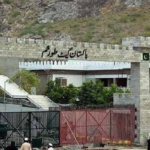
But the achievement I find most remarkable is geographic, because geography is the one obstacle policy alone usually cannot solve. Uzbekistan is one of only two doubly landlocked countries on Earth — a nation whose neighbors are themselves landlocked, placing it about as far from open water as any country can be. For most of its history, that was treated as a permanent constraint. Mirziyoyev has instead treated it as an engineering problem to be solved, which is precisely how an irrigation engineer would see it. The Trans-Afghan Railway, first proposed by Uzbekistan in 2018 and finally formalized in a trilateral framework agreement signed with Afghanistan and Pakistan in July 2025, will run roughly 650 kilometres from Termez on the Uzbek border through Mazar-i-Sharif, Kabul, and Logar, crossing into Pakistan at Kharlachi in the Kurram district, and connecting onward to the Pakistani rail network and the seaports of Karachi, Gwadar, and Qasim. Once operational, it is projected to cut cargo transit time between Uzbekistan and Pakistan from 35 days to as little as three, while freight volumes are expected to reach 15 to 20 million tonnes annually by 2030 — the first direct rail access Central Asia will have ever had to the Arabian Sea and the Indian Ocean beyond it.
I believe Mirziyoyev’s ambition here does not end with freight. Given the scale of everything else he has already delivered, I do not think it is unreasonable to hope that this corridor becomes, in time, a fully electrified, high-speed passenger and cargo route — a dual-track electric line carrying people and goods from Tashkent through Kabul to Karachi, turning a doubly landlocked nation into a genuine crossroads between Central Asia and the sea. I say this as a vision worth pursuing, not yet as an engineering fact on the ground. But I have watched enough of what this leader has already turned from ambition into infrastructure to believe he is precisely the kind of committed, technically-minded leader capable of finishing what he starts.
I am writing this now because I am hearing something directly from investors across the Middle East who once treated Uzbekistan as a curiosity: they are actively telling me they intend to shift their operations there. They describe an investment climate that feels, in their own words, close to unmatched anywhere in the world — predictable regulation, genuine ease of doing business, and a government that treats capital as a partner rather than a target for extraction.
That is the real lesson Uzbekistan now offers countries like my own, struggling simultaneously with economic fragility and deteriorating law and order. Transformation of this scale was not achieved through slogans or foreign aid alone. It was achieved by an engineer who treated his country’s problems as solvable systems, removed friction wherever he found it, and built connective infrastructure toward the sea instead of accepting geography as fate. Uzbekistan did not wait for the world to notice it. It re-engineered itself until the world had no choice but to.
We welcome your contributions! Submit your blogs, opinion pieces, press releases, news story pitches, and news features to opinion@minutemirror.com.pk and minutemirrormail@gmail.com