Summary
- Watching the bird emerge from the shadows into the dawn light, she reflects on her own life’s turbulence: “In the wounding of becoming lost, I can correct myself.” Williams embraces uncertainty not as a threat, but as a vital vehicle for transformation.
- I want to survive my life without becoming numb… I want to possess a light touch that can elevate darkness to the realm of stars.” Faced with a life-threatening vascular malformation that could burst at any moment, Williams chooses not to retreat into fear or denial.
- He argued that human life is defined by a central ambivalence: because we only live once, we have no basis for comparison and can never truly know if our choices are correct.
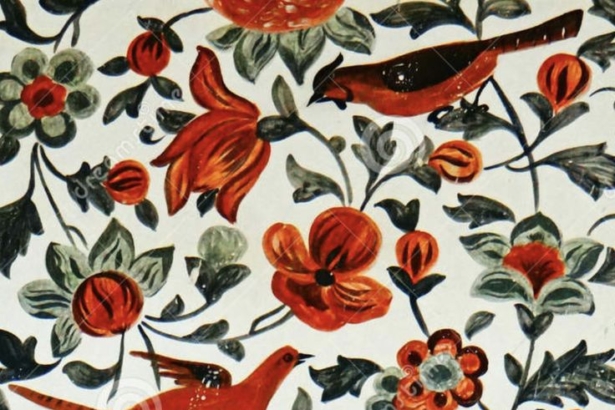
Life rarely unfolds as a predictable, linear path. More often, it resembles a sudden storm that sweeps us off course, leaving us disoriented and forced to confront our deepest vulnerabilities. Terry Tempest Williams captures this beautifully in her memoir, When Women Were Birds, using the sudden arrival of a painted bunting on a snowy morning as a metaphor for human awakening. Watching the bird emerge from the shadows into the dawn light, she reflects on her own life’s turbulence:
“In the wounding of becoming lost, I can correct myself.”
Williams embraces uncertainty not as a threat, but as a vital vehicle for transformation. This perspective directly echoes Ralph Waldo Emerson’s classic observation that human growth depends on instability:
“people wish to be settled [but] only as far as they are unsettled is there any hope for them.”
When we allow our rigid routines to be disrupted, we open a doorway to our authentic selves. Living consciously requires a rare willingness to experience the world without emotional armor. Williams notes the delicate balance required to stay fully present in a turbulent world:
“I want to feel both the beauty and the pain of the age we are living in. I want to survive my life without becoming numb… I want to possess a light touch that can elevate darkness to the realm of stars.”
Faced with a life-threatening vascular malformation that could burst at any moment, Williams chooses not to retreat into fear or denial. Instead, she reframes her medical condition as a profound reminder of the shared fragility between humanity and nature. For her, time becomes an acceleration of consciousness. She views our personal narratives not as fixed destinies, but as malleable scripts, reminding us that there are so many ways to change the sentences we have been given. Williams’s reflections form part of a rich, interconnected tapestry of literary thought that addresses the inherent ambivalence of the human condition.
The late Milan Kundera frequently examined the existential weight of decision-making. He argued that human life is defined by a central ambivalence: because we only live once, we have no basis for comparison and can never truly know if our choices are correct. Without a rehearsal, we are forced to act on intuition, making our desire for absolute certainty an impossibility. Writer and essayist Rebecca Solnit approaches disorientation from a different angle, suggesting that getting lost is a necessary prerequisite for self-discovery. In her philosophy, being lost isn’t a geographical failure; it is a conscious surrender to the unknown. It is only when the familiar landscape vanishes that we truly open ourselves up to transformation. Similarly, author George Saunders champions the courage of uncertainty. In an era obsessed with rigid ideological stances and absolute metrics, Saunders argues that true intellectual and moral bravery lies in admitting what we do not know. Embracing doubt allows for empathy, nuance, and genuine creative exploration.
Ultimately, Williams challenges us to view awe not as a passive emotion that occasionally strikes us, but as an active, daily responsibility. Amid personal crisis and historical uncertainty, the act of noticing, whether it is the dazzling colors of a rare bird on a winter morning or the fragile rhythm of our own breath, becomes a radical act of survival. By embracing our vulnerability and stepping into the unknown, we discover that the most profound beauty is often found precisely where we feel most unsettled.
We welcome your contributions! Submit your blogs, opinion pieces, press releases, news story pitches, and news features to opinion@minutemirror.com.pk and minutemirrormail@gmail.com