Summary
- Instead, he used the state to recreate the entire art world in his own distorted image.
- It was the ultimate revenge of a failed painter who used the power of an entire state to banish the modern art movements.
- Ultimately, internet memes jokingly warn modern art schools to accept everyone to save the world.
If you spend any time on TikTok, Instagram Reels, or X, you have likely run into a very specific dark-comedy internet trend. A young artist posts a video sharing their heartbreak after being rejected by an art school. Almost instantly, the comment section fills up with thousands of Gen Z users leaving the exact same deadpan replies.
“Please don’t give up on your dreams,” “Have you considered a career in politics?” or simply, “Oh no, not again.”
This viral inside joke is a direct reference to one of the most consequential turning points in modern history. Adolf Hitler’s failure to become a professional painter. The memes treat art school rejection as a universal catalyst for global villainy. However, the actual history of Hitler’s paintings reveals an unsettling stance of rejection, mediocrity, and the weaponization of culture.
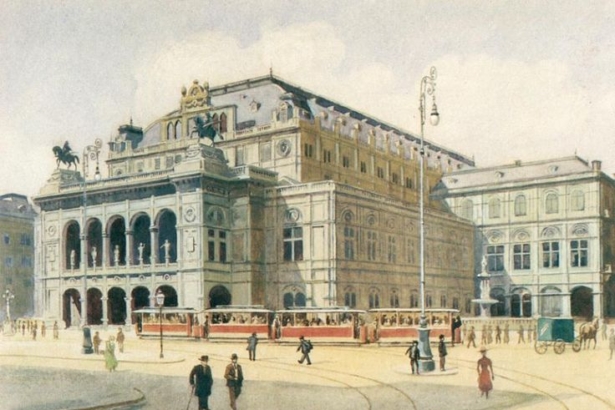
The historical reality of Hitler’s artistic career is often misunderstood. He was not a completely untalented doodler, nor was he a misunderstood genius. Historically, he is classified as a thoroughly mediocre architectural draftsperson. A young Hitler lived in Vienna and Munich between 1907 and 1913. He’s busy scraping together a living by painting small postcards and watercolors of famous buildings. He produced hundreds of these pieces replicating existing photographs or older prints. When art historians analyze Hitler’s paintings today, they point out an eerie flaw. An utter detachment from humanity. His focus was entirely on cold, rigid architectural lines. When human figures do appear in his landscapes, they are often tiny. The became disproportionate suddenly. They’re treated as afterthoughts rather than living subjects. His mechanical approach is exactly why the Academy of Fine Arts Vienna rejected him twice in 1907 and 1908. The admissions committee noted that he had some talent for drawing structures. Yet his lack of appreciation for the human form rendered him ineligible for the fine arts program. They famously suggested he should pursue architecture. Voila! Architecture was the path he rejected because he lacked academic credentials.
Decades later, this specific historical footnote has been opted by digital subcultures. Gen Z is known for using aggressive absurdity and pitch-black irony to cope with massive historical truths. Internet culture does what it does best by transforming World War II into a meme about college admissions. It defuses historical horror through satire. While the jokes are lighthearted, historians point out that this rejection heavily fuelled Hitler’s radicalization. He began absorbing the virulent anti-Semitic and nationalist pamphlets. Afterward, he started blaming a corrupt elite for his personal failures.
What makes the art history aspect of the Nazi regime so terrifying then? It is how Hitler eventually weaponized his rejection once he achieved absolute power. He did not leave his artistic ambitions behind anyhow. Instead, he used the state to recreate the entire art world in his own distorted image. In 1937, the Nazi party organized the infamous Degenerate Art (Entartete Kunst) exhibition. Hitler ordered the confiscation of thousands of avant-garde, modern masterpieces. Those included works by Picasso, Chagall, and Matisse. These paintings were hung accompanied by derogatory graffiti text to mock modern art as sick and un-German. Simultaneously, Hitler launched the Great German Art Exhibition. It was arranged to promoting hyper-realistic paintings that celebrated racial superiority and classical architecture. It was the ultimate revenge of a failed painter who used the power of an entire state to banish the modern art movements.
Ultimately, internet memes jokingly warn modern art schools to accept everyone to save the world. Still, history shows a darker truth. The problem wasn’t simply that an institution rejected an uninspired painter. It was that a resentful individual created a way to turn his own creative failures into an identity for global devastation.
We welcome your contributions! Submit your blogs, opinion pieces, press releases, news story pitches, and news features to opinion@minutemirror.com.pk and minutemirrormail@gmail.com