Summary
- Yet Independence Day is not merely an occasion to celebrate the Pakistan we inherited; it is an opportunity to ask a more demanding question: What have we done with the Pakistan that was entrusted to us?
- Consequently, a religiously inspired Pakistan should not merely ask whether society looks Islamic from the outside.
- Pakistan does not need another generation that merely memorises patriotic slogans.
Every 14 August, Pakistan awakens to the familiar colours of green and white. Flags appear on buildings, national songs fill the air, children dress in traditional colours, and speeches once again remind the nation of the sacrifices that accompanied independence. Yet Independence Day is not merely an occasion to celebrate the Pakistan we inherited; it is an opportunity to ask a more demanding question: What have we done with the Pakistan that was entrusted to us?
On 14 August 1947, independence transformed millions of lives. Pakistan emerged from one of the most extraordinary political movements of the twentieth century, carrying the hopes of Muslims of the subcontinent for political security, social justice, dignity and the freedom to shape their collective future. Nearly eight decades later, the country possesses a substantial population, strategic importance, nuclear capability, a young generation, a resilient economy and a remarkable human resource. But the distance between Pakistan’s original aspirations and its contemporary realities remains a serious national question.
The first mistake would be to interpret patriotism as silence about national shortcomings. Genuine patriotism requires the courage to identify weaknesses as well as the wisdom to recognise achievements. A country cannot strengthen itself by denying its problems. Nor can it progress through perpetual pessimism. Pakistan’s challenge in 2026 is therefore to move beyond both exaggerated self-congratulation and destructive cynicism.
The political history of Pakistan demonstrates the consequences of institutional instability, confrontation and the excessive personalisation of politics. Governments have changed, political alliances have shifted, constitutions have been amended, and civilian and non-civilian institutions have repeatedly struggled over the appropriate boundaries of authority. The result has often been a political culture in which winning power becomes more important than strengthening institutions.
This is particularly dangerous for a federation as diverse as Pakistan. Punjab, Sindh, Khyber Pakhtunkhwa, Balochistan, Gilgit-Baltistan and the regions of Azad Jammu and Kashmir possess distinct histories, cultures and political concerns. National unity cannot be imposed through administrative uniformity. It must be constructed through justice, representation, constitutionalism and an equitable distribution of opportunity.
The recent political and social tensions surrounding Azad Jammu and Kashmir offer another reminder that national integration cannot depend exclusively upon slogans. Reports of violent protests, deaths and political grievances in the region demonstrate how quickly unresolved questions of representation, economic opportunity and political legitimacy can become matters of national concern. At the same time, the ongoing electoral process indicates that democratic participation remains an important mechanism through which political differences can be addressed.
The lesson for Pakistan is broader than any particular political dispute: the federation becomes stronger when citizens believe that institutions listen to them.
Religion presents another essential dimension of Pakistan’s identity. The country was created in the name of a political and social vision deeply connected with the religious consciousness of the Muslims of the subcontinent. But Islam cannot be reduced to national symbolism, political slogans or ceremonial references. Its deeper teachings demand justice, honesty, compassion, accountability, dignity and responsibility.
The Qur’anic concept of Ummah is fundamentally connected with moral solidarity. It does not mean that differences disappear; rather, it teaches that human beings and communities are bound by principles of justice and mutual responsibility. The Qur’an repeatedly places justice at the centre of social life. Consequently, a religiously inspired Pakistan should not merely ask whether society looks Islamic from the outside. It should ask whether the weak receive justice, whether public resources are protected from corruption, whether the powerful are accountable, whether minorities live with dignity, and whether the poor have meaningful opportunities to improve their lives.
Pakistan’s constitutional framework itself reflects this relationship between Islamic values and democratic citizenship. The Objectives Resolution, incorporated into the Constitution, describes democracy, freedom, equality, tolerance and social justice as principles to be observed, while also affirming the rights of minorities to freely profess and practise their religions and develop their cultures.
This constitutional balance is important because religious identity and citizenship should not be presented as competing ideas. A confident Islamic state does not need discrimination to demonstrate its faith. It demonstrates its moral strength through justice. Protection of minorities is not a concession to another culture; it is part of the constitutional and ethical responsibility of the state.
Pakistan’s social crisis, meanwhile, is perhaps more complicated than its political crisis. Millions of Pakistanis continue to demonstrate extraordinary resilience, entrepreneurship and generosity. Pakistani professionals have achieved distinction around the world, while ordinary citizens routinely support relatives, neighbours and communities in times of hardship. Yet social inequality, unemployment, educational disparities, population pressure, inflationary pressures and unequal access to healthcare continue to limit the potential of a large part of the population.
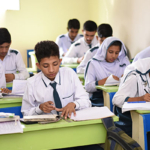
The most important national resource is not the country’s geography, minerals or strategic position. It is its people. A nation with a young population cannot afford an education system that merely produces certificates. Pakistan needs education that produces critical thinkers, scientists, entrepreneurs, skilled workers, ethical professionals and responsible citizens. Artificial intelligence is rapidly transforming economies and professions, making it even more urgent for Pakistan to reform its educational priorities rather than simply expand enrolment.
The same principle applies to women and young people. A country cannot speak convincingly about development while large sections of its human capital remain underutilised. Pakistan’s future competitiveness will depend increasingly upon the quality of its education, digital capacity, scientific research, vocational training and entrepreneurial ecosystem.
Independence also has an international dimension. Pakistan’s geography has historically placed it at the intersection of major geopolitical interests. Its relationship with China, Saudi Arabia, Türkiye, the Gulf states, the United States, Europe, Afghanistan and other regional partners reflects the complexity of its strategic environment. But the strongest foreign policy is ultimately built upon domestic strength. Economic stability, political credibility, social cohesion and institutional continuity provide a stronger foundation for diplomacy than dependence upon temporary geopolitical alignments.
National security, therefore, should be understood in a broader sense. A secure Pakistan is not merely one with strong borders and capable armed forces. It is also a Pakistan where a child can attend a quality school, where a graduate can find meaningful employment, where a farmer can obtain a fair return, where businesses can operate predictably, where justice is accessible, and where citizens can disagree without fearing one another.
This is where the spirit of 14 August must become more demanding. Independence was achieved through collective political determination; its preservation requires collective civic responsibility.
The national flag should therefore remind politicians of constitutional responsibility, administrators of public accountability, teachers of their duty to educate generations, journalists of their responsibility to inform rather than inflame, religious scholars of the obligation to promote justice and tolerance, business leaders of ethical economic development, and citizens of their own responsibility to reject corruption and social hatred.
Pakistan does not need another generation that merely memorises patriotic slogans. It needs a generation that understands why the country was created and what citizenship requires.
The real tragedy would not be that Pakistan has problems. Every nation has problems. The tragedy would be to possess the human, geographical, cultural and intellectual resources to overcome them and still remain trapped by division, institutional distrust and short-term thinking.
On 14 August 2026, Pakistan should celebrate its independence, but celebration should be accompanied by accountability. We should remember the sacrifices of 1947 without turning history into nostalgia. We should honour Quaid-i-Azam Muhammad Ali Jinnah not merely through portraits and speeches but by examining the principles of constitutional government, unity, discipline, democratic representation and equal citizenship associated with the founding vision.
The Pakistan of tomorrow will not be created by flags alone. It will be created in classrooms, laboratories, courts, farms, factories, universities, newsrooms, parliaments and homes. It will be created whenever a citizen chooses integrity over corruption, dialogue over hatred, competence over favouritism and national interest over personal gain.
The greatest tribute to independence is therefore not simply to say that Pakistan is alive. It is to ensure that Pakistan becomes more just, more educated, more prosperous, more democratic, more tolerant and more united.
Seventy-nine years after independence, the question is no longer whether Pakistan has survived. It has.
The greater question is whether we are prepared to build the Pakistan that generations sacrificed to create.
We welcome your contributions! Submit your blogs, opinion pieces, press releases, news story pitches, and news features to opinion@minutemirror.com.pk and minutemirrormail@gmail.com