
Summary
- For years, the defence of major Middle Eastern countries has largely depended on the United States.
- Their growing defence cooperation is unlikely to be viewed favourably by either the United States or Israel.
- Even before the reported expansion of the defence arrangement, statements from the United States and Israel indicated growing concern.
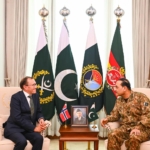
The effects of the defence agreement between Pakistan and Saudi Arabia were witnessed by the entire world during the recent US-Iran-Israel war. At the same time, there was continuous speculation about whether the scope of this defence agreement could be expanded in the coming days.
For years, the defence of major Middle Eastern countries has largely depended on the United States. However, during the recent conflict, the US appeared unable to fully protect either these countries or even some of its own military bases in the region.
When Iran attacked Saudi Arabia, Pakistan immediately issued a strong warning, stating that if Iran wanted to protect its own territorial integrity, it should avoid any aggression against Saudi Arabia; otherwise, Pakistan would honour its defence commitments.
Soon afterwards, the world witnessed a different situation in areas where Pakistani forces were present. While attacks continued in various parts of the region, areas protected by Pakistani forces experienced a markedly different security environment. Against this backdrop, international newspapers began suggesting that the United States’ influence in the Middle East could be entering a period of decline.
As the poet famously said:
“Insha Ji, get up and leave now;
What is the point of becoming attached to this city?”
The peace talks between Iran and the United States, hosted by Pakistan and referred to as the “Islamabad Accord”, created further diplomatic momentum. Shortly after the first meeting, discussions surrounding the Pakistan-Saudi defence agreement began attracting global attention. Influenced by these developments, other countries in the region also started exploring the possibility of joining or cooperating with the defence arrangement.
Pakistan is the world’s only nuclear-armed Muslim-majority country. Saudi Arabia is one of the world’s most influential oil-producing states and holds immense religious significance for Muslims worldwide. Türkiye, meanwhile, has established a strong reputation for its drone technology and non-nuclear missile capabilities.
The combination of these three countries could have significant strategic consequences for the region. Their growing defence cooperation is unlikely to be viewed favourably by either the United States or Israel.
Even before the reported expansion of the defence arrangement, statements from the United States and Israel indicated growing concern. The role of American military bases and radar systems located in several Muslim-majority countries has also come under greater scrutiny, particularly over their alleged role in supporting Israel during the conflict.
One US think tank reportedly described the emerging regional landscape as involving two major blocs: a Sunni alliance and a Shia alliance, with Israel and the United States potentially prepared to confront both.
Such assessments could be interpreted as an indication of changing strategic dynamics and a possible reduction in American and Israeli influence across parts of the region.
As mentioned earlier, several other countries are reportedly watching the development of the Pakistan-Saudi defence partnership closely. Egypt is also said to have participated in preliminary discussions, and its potential inclusion in the future cannot be ruled out.
If Egypt joins the arrangement, the strategic balance could become even more significant.
Egypt controls the Suez Canal, one of the world’s most important maritime trade routes on which a substantial portion of global commerce depends. It also possesses one of the region’s strongest naval forces and a large fleet of military aircraft. Access to Egyptian territory and strategic waterways could therefore have major implications for the Middle East, Israel and Europe.
With Pakistan, Saudi Arabia, Türkiye and potentially Egypt forming a broader strategic group, the combined military capabilities of these countries, supported by Saudi Arabia’s enormous energy resources and financial strength, could create a formidable regional bloc.
This is one reason why the emerging defence arrangement is increasingly being compared with Article 5 of the NATO treaty.
Under Article 5, an armed attack against one NATO member is considered an attack against all members, triggering a collective commitment to assist the country under attack. NATO invoked Article 5 for the first and only time in its history following the terrorist attacks against the United States on September 11, 2001.
In the coming days, countries such as Egypt, Bangladesh, Kuwait and Jordan could potentially become part of broader defence cooperation, although their formal participation would depend on future diplomatic and strategic decisions.
At present, Israel, the United States, India and Iran all appear to have concerns about the potential consequences of such an alliance. However, the coming months will reveal its actual structure, scope and strategic impact on the region.
We welcome your contributions! Submit your blogs, opinion pieces, press releases, news story pitches, and news features to opinion@minutemirror.com.pk and minutemirrormail@gmail.com