Summary
- These are the stories of resilience that deserve a central place in our understanding of Pakistan, 79 years after its founding.
- Resilience is not an abstract virtue.
- Resilience in Pakistan is not optimism.
Every 14th of August we hear the same national narrative. Speeches recall 1947, flags are hoisted, and anthems are played at midnight. The symbolism matters. It reminds us of the cost of independence and the idea of Pakistan. Yet symbolism without substance risks becoming ritual. If we are to understand what independence means in 2026, we must look beyond the ceremony and toward the quiet, persistent work that sustains the nation through every crisis. That work is rarely televised. It is carried out by teachers in under-resourced schools, by health workers walking door to door, by engineers keeping the grid alive during heatwaves, by farmers adapting to erratic weather, and by young people building livelihoods from laptops in small towns. These are the stories of resilience that deserve a central place in our understanding of Pakistan, 79 years after its founding.
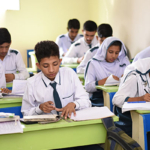
Resilience is not an abstract virtue. It is a measurable response to constraint. Pakistan has faced recurring fiscal stress, energy shortfalls, climate shocks, and security challenges. In each case, state capacity alone has been insufficient. What has prevented collapse is a dense network of civic and professional effort that fills gaps, innovates under pressure, and restores basic function. Consider education. Official data continues to show millions of children out of school and low learning outcomes. At the same time, thousands of low-fee private schools, community learning centers, and volunteer tutoring initiatives operate in the same neighborhoods. They do not appear in headlines, but they keep children literate, prepare them for exams, and create a pathway, however narrow, to higher education. The same pattern appears in health. Lady Health Workers and polio teams travel on foot in heat and in risk, maintaining immunization coverage and maternal counseling in areas where clinics are distant or overburdened. Their work is repetitive, underpaid, and essential. Without it, disease surveillance and primary care would deteriorate far more rapidly.
Economic resilience is visible in the informal sector and in the emerging digital economy. Pakistan’s labor market has never been able to absorb all new entrants through formal jobs alone. In response, millions have created their own employment: workshops, transport, retail, agriculture processing, and services. In the last decade, a new layer has appeared. Freelancers in Lahore, Karachi, Islamabad, Peshawar, Quetta, Multan, and Faisalabad now earn foreign exchange by writing, designing, coding, and providing remote services. They pay no rent for office space, require little imported capital, and learn through online courses. This is not a substitute for industrial policy, but it is a real expansion of opportunity. It represents a form of independence: the ability of an individual to earn without waiting for a large institution to hire them. The state’s role here should be to reduce friction, ensure reliable electricity and internet, and simplify taxation and payment systems, so that this energy is not wasted.
Climate resilience is now inseparable from national security. Floods in 2010, 2014, and 2022 displaced millions and damaged infrastructure worth billions. Drought and heatwaves threaten wheat and water. The response has included both engineering and community adaptation. Farmers are experimenting with drought-tolerant varieties and more efficient irrigation. Urban volunteers organize tree planting and waste management in their streets. Provincial and federal programs have attempted large-scale afforestation and watershed management. Progress is uneven and often underfunded, but the impulse is clear: adapt or lose. The most effective adaptations are local, because they are designed around specific soil, rainfall, and social networks. National policy can support them by providing data, credit, and technical extension, but it cannot replace the judgment of people who live on the land.
What ties these examples together is a refusal to wait for perfect conditions. Resilience in Pakistan is not optimism. It is a practical calculation that problems will persist, and that action must proceed anyway. This attitude is visible in small businesses that maintain generators and solar panels to cope with load-shedding, in parents who pool money to hire a tutor, and in journalists and lawyers who document cases despite pressure. It is not heroic in the cinematic sense. It is tedious, repetitive, and often thankless. That is precisely why it matters. Nations are built not only in founding moments but in the accumulation of ordinary competence over decades.
As we mark 79 years, the task is to recognize this resilience and to institutionalize it. Recognition means collecting data that captures informal work, community schools, and local adaptation, and then designing policy around them. Institutionalization means protecting merit in recruitment, ensuring predictable funding for primary services, and removing regulatory obstacles for small enterprises and freelancers. It also means telling a different story about Pakistan. The dominant story is one of crisis and rescue. The more accurate story is one of persistence and incremental gain. Both are true. But a country that only narrates its crises will train its citizens to expect failure. A country that also narrates its resilience will train its citizens to contribute.
Independence, therefore, is not a date. It is a practice. It is the practice of showing up to teach, to heal, to build, to adapt, and to hold institutions accountable when they fall short. The midnight speech reminds us why we began. The morning work determines whether we continue. If we wish to honor 1947, we should honor those who, without fanfare, keep Pakistan functioning every day between 15th August and the next 14th. Their work is not perfect, and it is not sufficient on its own. But it is the foundation on which any serious reform must rest. To see it, to name it, and to support it is the most patriotic act available to us now.
We welcome your contributions! Submit your blogs, opinion pieces, press releases, news story pitches, and news features to opinion@minutemirror.com.pk and minutemirrormail@gmail.com