Summary
- Industry estimates put LPG consumption at close to two million tonnes a year, and the petroleum minister has spoken of a daily requirement of roughly 6,500 to 7,000 tonnes.
- A country that imports seven of every ten kilograms of its cooking and heating gas, and relies on one neighbour for a large share of that, does not have an energy policy.
- What I have is a forest that burns every summer, a village that cannot afford its kitchen, a country that spends over a billion dollars a year on imported LPG and about $1.5 billion on imported coal, and a workable idea sitting in an inbox.
There is a particular silence that tells you an institution has died. It is not the silence of a closed office. The office is open, the files are stacked, the tea arrives on time. It is the silence of a desk that no longer asks whether an idea is good for the country, and asks only who is bringing it and what he is bringing along. After thirty-seven years of working on energy and water in Pakistan, I have learned to recognise that silence. I met it again this year, and the story is worth telling, because it explains better than any statistic why a country can sit on a solution and still queue for gas.
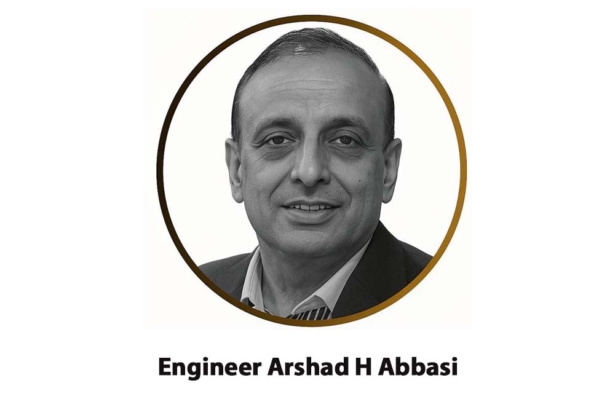
I am a village-born man from the hills of Murree. My house stands at the edge of what was once a thick coniferous forest, and I also own a stretch of Shamlat forest that I look after as if the trees were my children. I have walked that ground all my life. In recent years I have watched it become more dangerous with every dry spring.
Anyone who lives beside a pine forest knows the problem, even if the files in Islamabad do not. Conifers shed needles all year, and the heaviest fall comes in April, just as the fire season begins. The needles lie as a carpet that can grow thick, they decompose very slowly, and the resin in the trees burns like fuel. Add dry cones, and one spark is enough. Forest fires have many causes, from timber crime to careless visitors, but the dry needle bed and cones are the common fuel in almost every one of them.
The sad irony is that this “waste” was once a resource. Our grandparents used needles for roofing and burned dry wood and cones for cooking and warmth. Then rules took away the villagers’ access to dry firewood, concrete replaced needle roofs, and LPG replaced the hearth. The people who once cleared the forest floor, and who rushed out to fight every fire because the forest was theirs, now stand and watch. A forest that nobody uses becomes a forest that nobody guards.
For years I waited for the provincial government to consider any innovation that would turn this needle and cone waste into pine pellets. Pellets are not an exotic idea. Across the European Union they are a well-established, high-efficiency biofuel for heating and power, and the same material makes an eco-friendly animal bedding. Nothing came. So on 21 August 2024 submitted a proposal to IUCN, hoping that an international conservation body would see what the provincial departments had not. The proposal was simple: save coniferous forests from fire by removing the fuel, give people in remote areas a cheap fuel, offer a cleaner alternative to LPG, and, above all, reduce our dependence on imports.
I will say plainly what I felt, and I say it in sorrow rather than anger. The forest departments, and I am sorry to say the IUCN as well, seemed to see in me an investor. I was left with the distinct impression that the first question was not whether the idea works, but what the man in front of them intended to bring to the table for the desks the file must pass through. Nobody asked about calorific values. Nobody asked how many tonnes of needles a hectare yields. It is a shame for institutions that exist to protect forests and people.
And here is what pains me most. Individuals and NGOs from the northern states of India, and from Nepal, contact me without hesitation to ask about the feasibility of this very source of cheap energy. They do not ask whether I am an investor or Pakistani. They ask whether it works. Our neighbours treat the idea as engineering. We treat it as a transaction.
Now consider what is happening to the household kitchen. As I write on 25 October 2026, the Oil and Gas Regulatory Authority (OGRA) has notified an LPG price of Rs279.34 per kg for October, which makes an 11.8 kg domestic cylinder Rs3,296.23. That price exists only on paper. Market reports in the past week put LPG at Rs500 to Rs600 per kg across much of the country, with some reports of even higher rates. Reuters-sourced reports quoted a 12 kg cylinder at about Rs7,000 in Balochistan, Rs7,500 in Lahore and Rs8,200 in Skardu, up from around Rs4,500 only days earlier. The Pakistan Bureau of Statistics recorded an average of Rs6,310.76 for an 11.67 kg cylinder on 22 October. I could not find a single official figure dated specifically 25 October; the notified rate stays in force until OGRA’s November notification, while the real price is whatever the shortage allows.
The cause is plain. The Gabd-Rimdan and Taftan crossings with Iran were closed on 17 October, and LPG imports through them stopped. Hundreds of tankers and trucks are reported stranded on both sides of the border. A partial reopening on 21 October allowed exports to resume, but LPG imports remained blocked. Freight for the alternative sea route through Gwadar has reportedly jumped from about $60 to $80 per tonne to as much as $380.
What do the national numbers say? Industry estimates put LPG consumption at close to two million tonnes a year, and the petroleum minister has spoken of a daily requirement of roughly 6,500 to 7,000 tonnes. Domestic production supplies about 30 % of that. Local output rose to about 0.767 million tonnes in FY2026, well above its 0.567 million tonne target, and the minister puts daily domestic output at 2,000 to 2,500 tonnes. Imports supply the other 70 %: about 1.5 million tonnes in FY2026, at a bill of $1.089 billion, up 3.21 %. The plan for FY2027 is to import 1.55 million tonnes against 0.75 million tonnes of local production. As for Iran, estimates differ. The Pakistan LPG Association says roughly 7,000 tonnes a day arrives from Iran, over 4,000 of it through Gabd-Rimdan. The petroleum minister said in June that the figure was 4,000 to 5,000 tonnes a day, while other reports say about half of all imports come from Iran. The daily and annual figures do not reconcile neatly, which is itself a comment on how poorly we measure what we depend on. Whichever number is right, a single closed border has been enough to double prices.
A country that imports seven of every ten kilograms of its cooking and heating gas, and relies on one neighbour for a large share of that, does not have an energy policy. It has a hope.
My feasibility work, which I shared with IUCN, begins with a count. Pakistan has roughly 1.9 million acres of conifer forest, of which about 940,000 acres are in Khyber Pakhtunkhwa, 660,000 in Gilgit-Baltistan, and smaller areas in Balochistan, Azad Kashmir and Punjab. Every one of those acres sheds needles and cones every year. Compared with LPG, pine pellets are first of all ours. LPG is bought in dollars, while pellets are made from a waste we already have, in the same valleys where the shortage bites hardest, and no border closure can stop a pellet plant in Murree, AJKAbbottabad or Gilgit. They also cut the fire risk, because every tonne of needles removed from the floor is a tonne that cannot feed a fire, and paying people to collect it gives villagers a reason to guard the forest again. They create work where there is none, since collection, drying, pelletising and bagging are jobs in remote areas that presently export their young men. They are a renewable by-product, cleaner than imported fuel, that would otherwise rot slowly or burn as wildfire. And they ease the price shock: LPG moves with the Gulf benchmark, the exchange rate and the next border incident, while a local fuel is priced by local labour.
I must be honest about the trade-off, because a feasibility study that hides its weak points is worthless. Pound for pound, LPG carries far more energy than pellets, so a household needs a larger quantity of pellets, and a stove designed for them. The exact cost of conversion still has to be calculated, and that is precisely what the study I proposed is meant to do. But I do not doubt that, with LPG at Rs500 to Rs600 per kg in the market, the conversion cost of a local fuel will compare very favourably.
The same logic applies to coal. In my report, imported coal was costing about $110 per tonne in May, with a net heating value of around 23,000 BTU per kg. Pine needles carry about 17,700 BTU per kg, roughly three-quarters of coal’s value, and the resin and cones, by my figures, considerably more. Pakistan burns coal in power plants, brick kilns and cement works, to the tune of millions of tonnes every year. My initial findings indicate that the available pine biomass is enough to replace the roughly $1.5 billion worth of coal we import annually. Pellets burn cleanly enough for boilers and kilns, and the European Union has used them for exactly this purpose for years. None of this needs a miracle. It needs a survey of how much biomass is available, a pilot plant, a collection model that includes the villagers, and a pricing study. That is a modest, practical programme.
Yes, it is also true that I am addicted. I am addicted to the idea of making my country self-sufficient in energy, and I make no apology for it. It is not a new addiction, and I am in good company, because the state itself has declared the same mission. The Hydrocarbon Exploration and Licensing Policy, issued around 2018, calls self-sufficiency in oil and gas a national mission. Its own data are sobering. Indigenous crude oil met only about 15 % of national requirements, with the rest imported, and oil and gas together made up about 65 % of the energy mix. The oil import bill for July to May of 2017-18 was $12.93 billion, up 30.5 % in a year, equal to about 63 % of export earnings and about 40 % of the trade deficit. LNG imports had jumped almost 87 %, from $1.312 billion to $2.453 billion. The policy then set targets: oil output from about 84,000 to 150,000 barrels a day in roughly two and a half years, gas from about 3,900 to 6,000 million cubic feet a day in three, and refining capacity from 20 to 35 million tonnes a year. It estimated that full domestic supply would add at least $18 billion in value, and it pointed to a resource base of about 27 billion barrels of oil and 282 trillion cubic feet of gas, plus roughly 205 trillion cubic feet of technically recoverable shale gas. Only about 361,000 of 827,000 square kilometres of sedimentary area was under exploration, and just 16 offshore wells had been drilled.
Now look at where we stand. In FY2026, our petroleum group imports reached $16.86 billion, with crude alone at $7.17 billion, up almost 32 %. Domestic gas production is expected to keep falling, and a closed border has just shown how thin our LPG cushion is. I cannot say how much of the 2018 plan was delivered, but the import bill speaks for itself, and I would add one humble point: a nation that talks of drilling for 282 trillion cubic feet while sweeping forest waste into the fire has overlooked an energy source lying on the ground in plain sight. It needs no rig, no licensing round and no foreign contractor. I am addicted to self-sufficiency, and the pine needle is the cheapest and quickest place to begin.
I have no documents to wave about the LPG trade, and I will make no accusation against any named person. But every Pakistani knows what our market does with a shortage. Prices double, regulators write notices that nobody enforces, and supply is promised to normalise in a few days. It is widely believed, in drawing rooms and tea shops alike, that the LPG import lobby is strong enough to be heard even at the Prime Minister’s House. I cannot prove it, and I would be glad to be proved wrong. But it would explain why a local alternative that would make the lobby less necessary has never found a champion. Still, I refuse to write a country off. There are officers, scientists and a few ministers, one in a million perhaps, who sit awake at night thinking about Pakistan and not about their postings. I have met a few. They are the reason I keep writing.
There is one more thing I must say, and I say it for 260 million Pakistanis. We must not keep going to the IMF and the World Bank with a begging bowl. A loan does not cure a country whose money leaks out through greed. What this nation needs is a medicine, one that eliminates greed from ministers, from bureaucrats, and from NGOs, and I would gladly see it tested first on every desk in the energy sector, my own included. No such medicine exists in a pharmacy. It can only be made of honest institutions that ask whether an idea works before they ask who is bringing it.
So I put a question to readers everywhere, to engineers in Europe who run pellet plants, to foresters in Nepal and the Indian Himalaya, to donors, to journalists, and to any official who happens to read this: how do I tell the bureaucracy and decision-makers of Pakistan that I am not an investor? I have no bag of dollars. I have no company to sell. I am an engineer who has worked on energy for 37 years, and I own a piece of forest that I want to see standing in fifty years. I am not asking anyone for a licence to extract anything. I am asking them to read a feasibility study and to say yes or no on the merits.
If I had a bag of dollars, I know what would happen. The doors would open. A secretary would clear his diary. The forest department would find a notification. The planning minister would send a car, and my work, the same work that has been waiting since 21 August, would be bought and presented as a national achievement, and Pakistan would be declared self-sufficient in energy by the following budget speech.
I do not have the bag. What I have is a forest that burns every summer, a village that cannot afford its kitchen, a country that spends over a billion dollars a year on imported LPG and about $1.5 billion on imported coal, and a workable idea sitting in an inbox. The government says prices should ease within days. The next shortage will arrive anyway. Between the two, our needles will keep falling, and the fire season will keep coming.
Pakistan does not lack resources. It lacks the humility to ask an engineer a simple question: does it work? I am still here, and still waiting for someone to ask.
We welcome your contributions! Submit your blogs, opinion pieces, press releases, news story pitches, and news features to opinion@minutemirror.com.pk and minutemirrormail@gmail.com