Summary
- Iranian Parliament Speaker Mohammad Bagher Ghalibaf, who also serves as a top negotiator with Washington, said Tehran remains deeply at odds with the United States despite a recently signed memorandum of understanding between the two countries.
- Ghalibaf said Iran has no peace with the United States and will not recognize Israel, adding that Tehran will continue backing what it calls the axis of resistance, using missiles if necessary or negotiations when political pressure requires it.
- An unnamed Israeli official said Israel is waiting for confirmation from the Lebanese army and the United States Central Command that Lebanese forces are prepared to deploy and take control of the designated areas before any withdrawal begins.
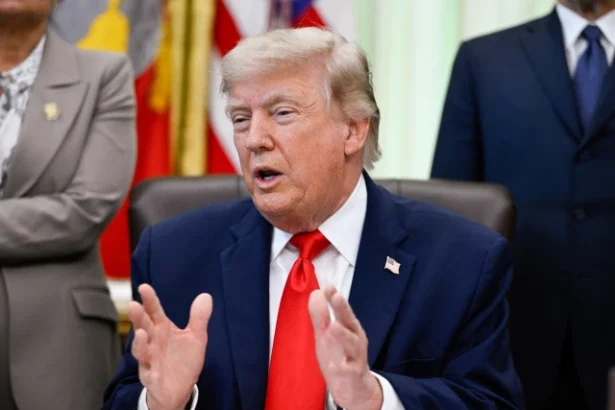
President Donald Trump said Monday that the United States would either reach a deal with Iran or move to finish the job militarily, adding that he would prefer to secure an agreement rather than resume conflict.
Trump’s remarks came as tensions across the region remained high following the assassination of Iran’s Supreme Leader Ayatollah Ali Khamenei earlier this year and amid a fragile ceasefire that has repeatedly come under strain. His comments landed the same day Iranian mourners gathered in Tehran for Khamenei’s funeral procession, an event that has drawn both domestic grief and renewed threats from Israeli officials.
Israeli Defense Minister Israel Katz said his country carried out the strike that killed Khamenei, claiming the Iranian leader had pursued what Katz described as a plan to destroy Israel. Katz repeated his warning that Israel would eliminate any future Iranian leader who pursued similar aims, according to Israeli broadcaster Channel 13. He made the comments as the funeral procession continued in Tehran, and he said Israel remains ready to defend itself against any threat at any time.
Katz had previously said Khamenei’s son and successor, Mojtaba, was marked for death, a statement that triggered an angry response from Iranian officials. Iran’s Foreign Minister Abbas Araghchi accused Trump of allowing Israel free rein to make such threats, saying any action against Iran’s people or leadership would draw an immediate and forceful response.
Iranian Parliament Speaker Mohammad Bagher Ghalibaf, who also serves as a top negotiator with Washington, said Tehran remains deeply at odds with the United States despite a recently signed memorandum of understanding between the two countries. He described implementing that agreement as difficult but achievable. Ghalibaf made the remarks during a meeting in Tehran with Mohammad Darwish, head of Hamas’s leadership council, who traveled to Iran for Khamenei’s funeral ceremonies.
Ghalibaf said Iran has no peace with the United States and will not recognize Israel, adding that Tehran will continue backing what it calls the axis of resistance, using missiles if necessary or negotiations when political pressure requires it. He said Iran must avoid negotiating simply for the sake of negotiating, and he said Iranian officials insisted that the territorial integrity of regional countries and an end to war against Iran’s allied resistance groups be written into the memorandum with Washington. He said Muslim countries increasingly recognize that cooperation with the United States and Israel will not guarantee their security.
Separately, Ghalibaf said peace in Lebanon cannot hold unless Iran continues playing what he called its stabilizing role in the region. He made those comments during a meeting with senior Hezbollah official Muhammad Fneish, who also traveled to Tehran for the funeral. Ghalibaf said Iran made Lebanon’s future a central issue during talks that led to the memorandum with Washington, emphasizing Lebanon’s territorial integrity and sovereignty throughout negotiations. He also praised Hezbollah’s role fighting alongside Iran during the recent war with the United States and Israel, calling it a turning point that demonstrated the bond between Tehran and allied resistance groups.
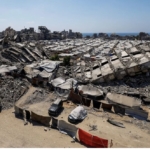
Meanwhile, tensions continued along the Lebanese border despite a framework agreement Lebanon and Israel signed on June 26. Israeli forces demolished several homes Monday in the southern Lebanese town of Aitaroun and carried out an explosion in nearby Houla, according to Lebanon’s state run National News Agency. Israeli drones also continued flying over Beirut’s southern suburbs, the agency reported.
The demolitions occurred despite an active ceasefire and the American sponsored agreement, which calls for a phased Israeli withdrawal from Lebanese territory starting with two designated pilot zones. Israel has continued military operations inside Lebanon since March 2, killing more than 4,300 people and injuring over 12,000 others, according to official figures. Israeli forces still occupy parts of southern Lebanon, including areas held for decades and territory seized during the 2023 and 2024 war, and they advanced more than 10 kilometers into Lebanese territory during their most recent offensive.
Israeli and Lebanese military officers have begun talks mediated by the United States to establish criteria for what officials describe as a Hezbollah free zone ahead of a planned Israeli withdrawal from two southern villages, according to Israel’s public broadcaster. Citing unnamed security sources, the broadcaster said the discussions aim to prevent misunderstandings that could delay the agreement’s implementation, particularly given past disputes over how to define such zones.
Israeli Prime Minister Benjamin Netanyahu held a security consultation Sunday with senior defense officials to review developments along the Lebanese border and plans for the withdrawal. An unnamed Israeli official said Israel is waiting for confirmation from the Lebanese army and the United States Central Command that Lebanese forces are prepared to deploy and take control of the designated areas before any withdrawal begins. The official said Israel has not yet started withdrawing from either pilot area, though officials expect the process to begin within coming weeks if the necessary arrangements fall into place.
The framework agreement between Israel and Lebanon does not set a fixed timeline for a complete Israeli withdrawal. Instead, it ties further troop movements to the Lebanese army assuming full security control in evacuated areas and the disarmament of non state armed groups, a provision widely understood to reference Hezbollah.
As these regional tensions continue unfolding, Trump’s warning that the United States stands ready to finish the job with Iran underscores how quickly the current ceasefire could unravel if diplomatic efforts fail to produce a lasting agreement.
We welcome your contributions! Submit your blogs, opinion pieces, press releases, news story pitches, and news features to opinion@minutemirror.com.pk and minutemirrormail@gmail.com