Summary
- Danylo Tsvok, who heads Ukraine’s defence ministry AI research centre, told Reuters that artificial intelligence is already embedded in multiple battlefield functions — from flying drones and planning combat operations to analyzing missile strike data.
- He predicts that within three to five years, if the war continues, AI systems will be unified into a single network overseeing the battlefield, creating what he called a “war of operating systems” between Ukraine and Russia.
- Ukraine insists on keeping “a human in the loop” for combat decisions, but Tsvok acknowledged that AI systems may eventually outpace human decision‑making.
Ukraine’s war against Russia is increasingly becoming a testing ground for artificial intelligence, and Kyiv’s defence AI chief says it is ushering in a “new paradigm” of warfare.
Danylo Tsvok, who heads Ukraine’s defence ministry AI research centre, told Reuters that artificial intelligence is already embedded in multiple battlefield functions — from flying drones and planning combat operations to analyzing missile strike data. He predicts that within three to five years, if the war continues, AI systems will be unified into a single network overseeing the battlefield, creating what he called a “war of operating systems” between Ukraine and Russia.
“The system that possesses more data and better understands that data, proposes solutions — that system will gain the advantage,” Tsvok said. His centre was founded in March under Defence Minister Mykhailo Fedorov, who has prioritized AI and data‑driven decision‑making in Ukraine’s defence strategy.
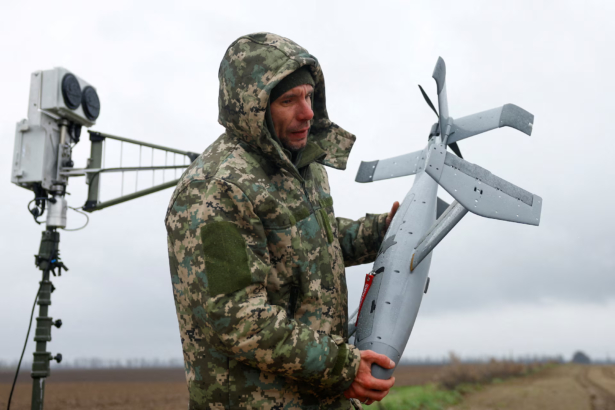
Drones have already transformed the war, with thousands launched daily by both sides. AI integration promises to accelerate the “kill chain” — the process of identifying, targeting, and striking the enemy — even further. Ukraine is also experimenting with ground robots to offset troop shortages.
The goal, Tsvok explained, is to create a single operating system that can recommend battlefield decisions from frontline units up to strategic command. “The aim is to unite weapons and data systems into one single living organism that can operate in a coordinated manner,” he said.
Foreign AI companies are watching closely, eager to test their systems and train models on combat data. U.S. firm Palantir has already provided technology, and Ukraine has launched Brave1 Dataroom to share battlefield data with allies. Moscow, meanwhile, is developing its own AI capabilities, with Ukrainian commanders warning that Russia is using AI to shorten planning times for drone and missile attacks.
Ukraine insists on keeping “a human in the loop” for combat decisions, but Tsvok acknowledged that AI systems may eventually outpace human decision‑making. “Then the question arises: how do we keep up with making decisions that autonomous systems propose?” he said.
We welcome your contributions! Submit your blogs, opinion pieces, press releases, news story pitches, and news features to [email protected] and [email protected]