Summary
- The United Nations Committee on Economic, Social and Cultural Rights has welcomed Pakistan’s 2025 legislation setting the minimum marriage age at 18 for both men and women.
- The committee completed its review of Pakistan’s second periodic report under the International Covenant on Economic, Social and Cultural Rights on Wednesday.
- Responding to the concerns, Minister of State for Law and Justice Barrister Aqeel Malik, who led Pakistan’s delegation, said the country had introduced several legislative, policy and institutional reforms since 2017 to strengthen economic, social and cultural rights.
The United Nations Committee on Economic, Social and Cultural Rights has welcomed Pakistan’s 2025 legislation setting the minimum marriage age at 18 for both men and women. However, UN experts have expressed concerns over the continued prevalence of child marriages, bonded labour and the slow pace of flood rehabilitation.
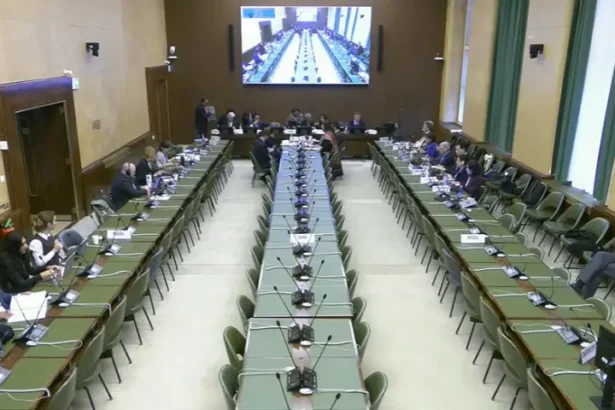
The committee completed its review of Pakistan’s second periodic report under the International Covenant on Economic, Social and Cultural Rights on Wednesday. During the proceedings, experts acknowledged the country’s legislative progress but stressed the need to ensure that legal protections were effectively implemented.
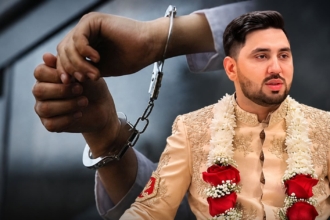
Committee expert Michael Windfuhr welcomed the amendment to the Child Marriage Restraint Act 1929, which raised the minimum marriage age to 18 for both genders. However, he questioned whether the new legislation had reduced the number of child marriages and sought details about measures being taken to protect children from early marriages.
Another committee expert, Lazhari Bouzid, raised concerns about bonded labour, particularly in agriculture and the informal sector. He highlighted the continued exploitation of workers in brick kilns and questioned reports suggesting that construction companies and government agencies were purchasing bricks produced through debt bondage.
The experts also sought clarification on Pakistan’s recovery efforts following the devastating floods of 2022 and 2025. They asked about the rehabilitation of displaced families, reconstruction of damaged houses and restoration of affected communities’ access to land and other resources.
Responding to the concerns, Minister of State for Law and Justice Barrister Aqeel Malik, who led Pakistan’s delegation, said the country had introduced several legislative, policy and institutional reforms since 2017 to strengthen economic, social and cultural rights.
He said legislation had established 18 as the minimum marriage age for boys and girls in Islamabad, Balochistan, Punjab and Sindh. The laws also criminalised child, early and forced marriages.
Addressing bonded labour, the Pakistani delegation said the Constitution prohibited slavery and forced labour, while the Bonded Labour System (Abolition) Act 1992 had abolished the practice.
The delegation informed the committee that Punjab had documented more than 210,000 brick kiln workers. District vigilance committees had also been established in several areas to monitor labour conditions. Labour inspectors identified more than 2,900 victims of forced labour during the previous year.
On flood rehabilitation, officials said the government had established a national emergency operations centre and launched a flood protection programme targeting vulnerable communities and infrastructure.
The initiative aims to protect at-risk populations, eight million acres of agricultural land and 2.2 million housing units.
The delegation further reported that 600,000 of the 2.1 million houses destroyed in the 2022 floods had been reconstructed, while work on the remaining homes was continuing.
In her concluding remarks, committee expert and task force leader Julieta Rossi acknowledged Pakistan’s explanation of its efforts and the challenges it faced. However, she highlighted the gap between legislative progress and the actual implementation of rights.
She said the committee would include its assessment in its concluding observations and hoped Pakistan would implement its recommendations in good faith.
Barrister Aqeel Malik maintained that Pakistan was working to translate constitutional guarantees into practical protections, adding that the country had made considerable progress despite economic and institutional challenges.
The committee’s vice chair and acting chair of the dialogue, Asraf Ally Caunhye, thanked the Pakistani delegation for its participation and commitment to safeguarding the rights protected under the international covenant.
We welcome your contributions! Submit your blogs, opinion pieces, press releases, news story pitches, and news features to opinion@minutemirror.com.pk and minutemirrormail@gmail.com