Summary
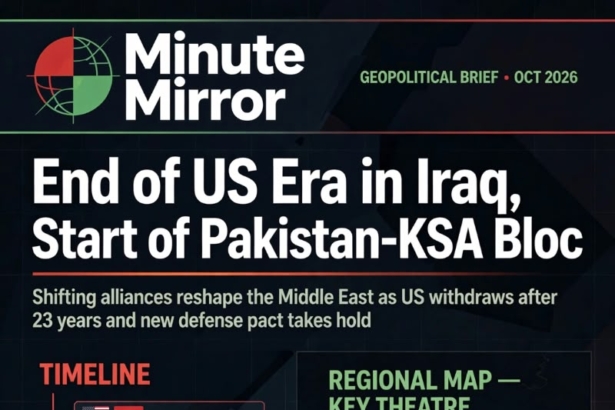
- ISLAMABAD/BAGHDAD/WASHINGTON: The United States is set to complete the withdrawal of its remaining military forces from Iraq on September 30, 2026, bringing an end to more than two decades of American military involvement in the country.
- Under the plan, the coalition’s military mission in Iraq was to wind down while the relationship between the two countries moved toward a bilateral security partnership.
- For Washington, the withdrawal marks the formal end of the current coalition military mission in Iraq after more than two decades of war, occupation, counterinsurgency and counterterrorism operations.
ISLAMABAD/BAGHDAD/WASHINGTON: The United States is set to complete the withdrawal of its remaining military forces from Iraq on September 30, 2026, bringing an end to more than two decades of American military involvement in the country.
The withdrawal marks the conclusion of the US-led international coalition’s military mission against the Islamic State group in Iraq. Iraqi authorities have described September 30 as the fixed and final deadline for completing the departure of coalition forces.
The process follows a transition agreement announced by Washington and Baghdad in September 2024. Under the plan, the coalition’s military mission in Iraq was to wind down while the relationship between the two countries moved toward a bilateral security partnership.
The end of the current mission closes a chapter that began with the US-led invasion of Iraq in 2003. The invasion removed Saddam Hussein’s government and was publicly justified in large part by US claims concerning weapons of mass destruction and security threats. Subsequent searches did not uncover the stockpiles of active WMDs that had been asserted before the invasion.
From 2003 to 2011, American forces operated in Iraq during a period marked by insurgency, sectarian violence and the emergence of al-Qaeda in Iraq. US forces formally withdrew in December 2011.
The American military returned to Iraq several years later after the Islamic State captured large areas of the country, including Mosul. Beginning in 2014, US forces became part of an international coalition supporting Iraqi and Kurdish security forces in the fight against ISIS.
The campaign eventually resulted in the defeat of ISIS’s territorial control in Iraq, although the group has continued to pose a security challenge through underground networks and attacks.
The latest withdrawal will therefore change the nature of the US-Iraq security relationship rather than ending cooperation altogether. Iraqi officials have said future ties will include bilateral cooperation, intelligence sharing and training. Iraqi military officials have also said the country’s security forces are prepared to take greater responsibility for national security.
The withdrawal also comes amid continuing debate over Iraq’s internal security structure. Prime Minister Ali al-Zaidi has faced pressure to bring all weapons under state authority, including those held by powerful Iran-aligned armed groups. Reuters reported that the government’s effort to address the status of these militias remains a significant domestic challenge.
The human cost of the Iraq war has been extensive. Reuters reports that approximately 4,500 American service members have died during the more than two decades of US military involvement. Iraqi casualties have been substantially higher, although estimates vary considerably depending on the methodology and period covered.
The economic consequences have also remained a subject of debate, with estimates of the overall US cost varying depending on whether long-term veterans’ care, interest payments and other expenses are included.
For Iraq, the September 30 deadline represents a significant transition in its relationship with foreign military forces. Iraqi authorities say the country is moving toward greater control over its own security while maintaining selected forms of cooperation with international partners.
For Washington, the withdrawal marks the formal end of the current coalition military mission in Iraq after more than two decades of war, occupation, counterinsurgency and counterterrorism operations.
The departure will not erase the political, security and humanitarian consequences of the Iraq war. Instead, it begins a new phase in which Baghdad will have greater responsibility for managing its security environment while its relationship with Washington shifts toward bilateral cooperation.
We welcome your contributions! Submit your blogs, opinion pieces, press releases, news story pitches, and news features to opinion@minutemirror.com.pk and minutemirrormail@gmail.com