Summary
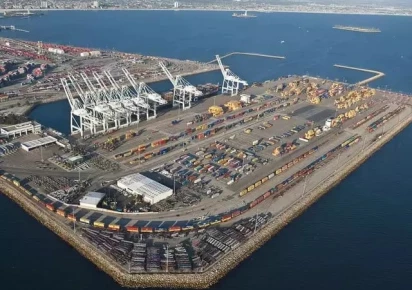
- The conflict between the United States and Iran intensified on Friday after the US military said it destroyed an Islamic Revolutionary Guard Corps (IRGC) surveillance tower at Shahid Kalantari Port in Chabahar, while Iranian officials vowed to continue military operations until security is restored in the Strait of Hormuz.
- The US said the facility was used to track commercial vessels passing through the Strait of Hormuz and assist in planning attacks on merchant shipping.
- IRGC Aerospace Force Commander Seyed Majid Mousavi said Iranian forces would keep carrying out operations until stability returns to the country’s southern coastline and the Strait of Hormuz.
The conflict between the United States and Iran intensified on Friday after the US military said it destroyed an Islamic Revolutionary Guard Corps (IRGC) surveillance tower at Shahid Kalantari Port in Chabahar, while Iranian officials vowed to continue military operations until security is restored in the Strait of Hormuz.
According to the US Central Command (CENTCOM), the surveillance tower formed part of a long-standing maritime monitoring network used by the IRGC along Iran’s Gulf of Oman coastline. The US said the facility was used to track commercial vessels passing through the Strait of Hormuz and assist in planning attacks on merchant shipping.
CENTCOM said the strike was aimed at reducing Iran’s ability to monitor maritime traffic and protecting freedom of navigation in one of the world’s busiest energy corridors.
The US military also rejected Iranian claims that its forces had suffered casualties at the former al-Tanf military base in Syria. CENTCOM stated that no American troops had recently been killed or captured, dismissing Tehran’s allegations as false.
Meanwhile, Iran signalled that its military campaign would continue. IRGC Aerospace Force Commander Seyed Majid Mousavi said Iranian forces would keep carrying out operations until stability returns to the country’s southern coastline and the Strait of Hormuz. He said Iran would continue launching what he described as targeted strikes from across the country.
Iranian authorities also announced that transportation infrastructure damaged during overnight US attacks had been repaired quickly. Officials said emergency teams restored traffic on several major highways and temporary routes were opened around damaged bridges, allowing transport to resume within hours.
As fighting spread across the region, Kuwait reported that several military personnel were injured after drones targeted army facilities and military camps. Kuwaiti authorities also confirmed damage to a power generation and water desalination plant, where a fire broke out before being brought under control.
Bahrain said its air defence systems intercepted several aerial threats targeting the kingdom. Officials accused Iran of attacking civilian areas and urged residents to report any suspicious objects that may have fallen after the interceptions.
Iranian Foreign Minister Abbas Araghchi criticised the United States and Israel, accusing Israel of influencing US foreign policy and claiming that American resources were being used to silence critics of Israeli policies. His remarks came as diplomatic tensions continued to rise alongside the military confrontation.
The latest escalation followed another wave of US strikes targeting Iranian infrastructure. Iranian media reported attacks on several bridges, transport facilities and an airport in the country’s south. Casualties were also reported after strikes hit bridges in Bandar Khamir, while transportation infrastructure in other areas sustained damage.
We welcome your contributions! Submit your blogs, opinion pieces, press releases, news story pitches, and news features to opinion@minutemirror.com.pk and minutemirrormail@gmail.com