Summary
- US officials also confirmed the reimposition of a naval blockade on vessels traveling to and from Iranian ports, describing the measure as necessary to protect international shipping.
- Iranian officials argued that if their energy exports remained blocked, regional shipping benefiting US allies should also face restrictions.
- He also said US negotiators had informed Iranian officials that reaching a diplomatic agreement remained the best option to avoid additional military action.
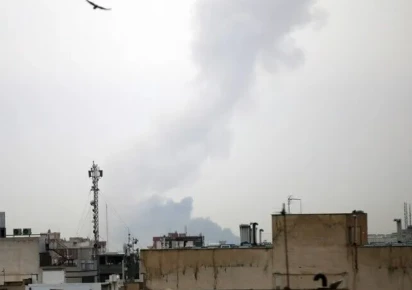
The conflict between the United States and Iran intensified dramatically on Wednesday after fresh US airstrikes targeted multiple military and strategic locations across Iran, killing at least seven military personnel, damaging civilian infrastructure and further escalating fears of a wider regional war.
Iranian military officials said one of the deadliest attacks struck an army base in Bampur, near the southeastern city of Iranshahr, where at least seven service members were killed and several others injured.
According to Iran’s semi-official Tasnim News Agency, the overnight attack involved 13 precision missiles that struck a military guesthouse, guard posts and accommodation facilities. Iranian authorities accused Washington of deliberately targeting areas where personnel were sleeping in an attempt to maximize casualties.
The Iranian army vowed a “decisive response,” warning that the latest strikes would not go unanswered.
Civilian Death Toll Continues to Rise
As military operations expanded, Iranian officials reported increasing civilian casualties.
Government spokeswoman Fatemeh Mohajerani said more than 30 civilians had been killed in recent attacks across southern Iran. Although she did not specify the exact locations, she described the losses as another tragic consequence of the renewed hostilities.
The Iranian Ministry of Health also confirmed that more than 260 people were injured in the latest wave of attacks. Health Ministry spokesman Hossein Kermanpour said 222 victims had already been discharged after receiving treatment, while several others remained hospitalized. Among the injured were children, highlighting the growing humanitarian impact of the conflict.
Strategic Ports and Civilian Infrastructure Hit
Iran also accused the United States of targeting civilian infrastructure.
Officials from the country’s Ports and Maritime Affairs authority said US projectiles struck the maritime traffic control center at Chabahar Port, damaging the facility responsible for coordinating maritime navigation, search-and-rescue operations and commercial shipping.
Although no casualties were reported, authorities warned that the attack could disrupt port operations and maritime safety.
In Khuzestan Province, Iranian officials reported that a wheat storage silo and another civilian facility were damaged overnight. Provincial authorities said investigations were underway, adding that no deaths had been reported at those sites.
Meanwhile, officials in Bushehr Province confirmed that three locations were hit by US strikes early Wednesday, though initial reports indicated there were no injuries.
CENTCOM Confirms New Wave of Strikes
The US Central Command (CENTCOM) confirmed carrying out a seven-hour military operation targeting what it described as Iranian missile launch sites, drone facilities, coastal defense systems and naval capabilities near the Strait of Hormuz.
According to CENTCOM, fighter aircraft, drones and naval vessels launched precision-guided munitions against dozens of military objectives aimed at reducing Iran’s ability to threaten commercial shipping in one of the world’s busiest maritime corridors.
US officials also confirmed the reimposition of a naval blockade on vessels traveling to and from Iranian ports, describing the measure as necessary to protect international shipping.
Strait of Hormuz Crisis Raises Global Alarm
The renewed military campaign comes amid growing tensions over the Strait of Hormuz, through which nearly one-fifth of the world’s oil supplies normally pass.
Iran’s Islamic Revolutionary Guard Corps (IRGC) declared that the strategic waterway would remain closed until what it called “the end of America’s evils.”
The Guards further warned that Iran could move to block other strategic maritime routes, including the Bab el-Mandeb Strait, a vital gateway linking the Red Sea with the Gulf of Aden.
Iranian officials argued that if their energy exports remained blocked, regional shipping benefiting US allies should also face restrictions.
The warning has renewed concerns over global energy supplies, with analysts cautioning that simultaneous disruption of both waterways could severely affect international trade.
Houthis Signal Support
The Iran-aligned Houthi movement in Yemen also raised tensions by indicating it was prepared to close the Bab el-Mandeb Strait if attacks on Yemen continued.
The group recently resumed missile attacks after accusing Saudi Arabia of violating a four-year truce through airstrikes on Houthi-controlled territory.
The Houthis previously demonstrated their ability to disrupt international shipping during the Gaza conflict by repeatedly targeting commercial vessels in the Red Sea.
Jordan Intercepts Missiles
Regional spillover continued as Jordan’s Armed Forces announced that its air-defense systems intercepted three ballistic missiles entering Jordanian airspace from Iranian territory early Wednesday.
Military officials said the missiles were successfully destroyed without causing casualties or property damage. Engineering teams later secured areas where missile debris landed.
China and US Clash at the United Nations
The deteriorating security situation also triggered sharp exchanges at the United Nations.
China’s UN Ambassador Sun Lei accused Washington of pushing the Middle East “to a dangerous precipice” through continued military operations against Iran. He urged the United States to stop creating new conflicts and focus on diplomacy.
US Ambassador Mike Waltz, however, accused China of failing to prevent the transfer of dual-use technologies and satellite imagery that Washington claims have assisted Iran and Yemen’s Houthi movement.
China rejected the allegations, calling them “completely baseless.”
Trump Warns of More Strikes
US President Donald Trump signaled that the military campaign could intensify further.
Speaking in an interview, Trump warned that the United States could target Iran’s energy infrastructure, including power plants and bridges, if Tehran refuses to resume negotiations.
He also said US negotiators had informed Iranian officials that reaching a diplomatic agreement remained the best option to avoid additional military action.
Oil Prices Surge
The renewed fighting immediately affected global energy markets.
International benchmark Brent crude rose to its highest level in more than a month, while West Texas Intermediate (WTI) also posted significant gains as traders priced in the risk of prolonged supply disruptions through the Strait of Hormuz.
With military operations expanding, diplomatic efforts stalled and threats against vital shipping lanes increasing, international observers warn that the Middle East may be entering one of its most dangerous periods in recent years, carrying significant implications for regional security, global trade and energy markets.
We welcome your contributions! Submit your blogs, opinion pieces, press releases, news story pitches, and news features to opinion@minutemirror.com.pk and minutemirrormail@gmail.com