Summary
- By Falak Naz Batool On the evening of the first weekend of September 2026, Macklemore opened for Ed Sheeran at MetLife Stadium in New Jersey.
- Yet media reports often frame the controversy around Ed Sheeran and Macklemore as something that simply happened to them, something personal, rather than a result of one man taking a stand.
- To take an example, right around the time Macklemore was being dropped from stadium lineups in America, the Prime Minister of Pakistan was publicly condemning Israeli actions in the strongest terms during a meeting with the Lebanese Interior Minister.
By Falak Naz Batool
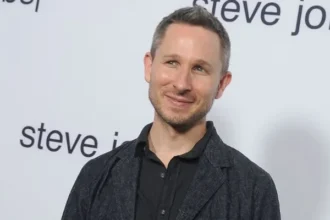
On the evening of the first weekend of September 2026, Macklemore opened for Ed Sheeran at MetLife Stadium in New Jersey. Wearing a keffiyeh, he shouted “Free Palestine” to a crowd of more than 80,000 people. Within ten days, the backlash came: Pink criticised him publicly, and the Messina Touring Group, promoter of the U.S. leg of Sheeran’s Loop Tour, dropped his remaining American dates after venues threatened to cancel the shows. Macklemore was set to appear in eight of the 10 shows left on the U.S. leg of Ed Sheeran’s tour. Robert Kraft, the owner of Gillette Stadium, claimed the decision followed a pattern of anti-Semitic language. Macklemore, however, shared on Instagram that Robert Kraft, the billionaire owner, exerted influence as part of a pressure campaign against Sheeran by giving him an ultimatum: if Macklemore stays, he will be dropped. This entire clash shows a harsh truth regarding the corporate entertainment industry and how it treats geopolitical conscience as just another breach of contract, while the world observes human slaughter turn into a brief news cycle.
Macklemore’s position and activism are best captured by his own words: “I didn’t need 10 shows from Ed. I needed 2.” This underscores that activism is a choice, not an accident. Yet media reports often frame the controversy around Ed Sheeran and Macklemore as something that simply happened to them, something personal, rather than a result of one man taking a stand. Macklemore explained that his goal on tour was to get those two words out to American audiences who would never hear them otherwise. That is genuine activism. But Ed Sheeran’s silence, and his attempt to maintain an entirely apolitical stance in the face of a massive genocide, shows a much deeper problem: the world has become completely desensitised, trapped inside cosy bubbles.
The perpetual conflict between Israel and Palestine has persisted through the ages, its origins deeply embedded in history. Yet its present-day significance is oftentimes eclipsed by sensationalism and superficial support. Why do we only hear about the suffering of Palestinian people when a celebrity becomes a headline on the news? Why does a mass killing only draw attention when a controversy happens, staying dormant the rest of the time? The real issue is the trouble with attention spans whenever a major controversy happens around Israel-Palestine.
The script repeats over and over. Someone mentions Palestine, the word genocide gets used, and it is called brave or careless depending on who says it. Institutions react; it becomes the main argument for a week, names rotate through musicians, actors, and athletes; meanwhile, the people die, and the actual genocide gets buried under numbers, stats, internet fights, and then the cycle moves on to someone else. This constant repetition dulls public response, desensitising us to the reality of the crisis; when the same words attach to controversy after controversy, they become a repeated signal that elicits a smaller reaction each time.
From Pakistan’s perspective, the situation is completely different. It is no secret that Pakistan does not recognise Israel, and its passports carry a printed statement saying they are valid for all countries except Israel. Solidarity with Palestine is not a risky opinion or a career risk in Pakistan; it is part of established state policy.
Historically, entertainment and media have always played a diverse part in forming perceptions, often diminishing complex issues to narratives of support, neutrality, or opposition, casting individuals as either allies or enemies, Zionist or anti-Semite. This binary framing jeopardises and undermines subtle understanding of the complexity of conflict. To take an example, right around the time Macklemore was being dropped from stadium lineups in America, the Prime Minister of Pakistan was publicly condemning Israeli actions in the strongest terms during a meeting with the Lebanese Interior Minister. Putting these two stories side by side shows that neutrality is an illusion. Western countries are not acting from a place of neutrality; they simply operate within their own corporate mandates, which only fail when someone tests them.
The entertainment industry’s panic proves the real political clarity terrifies the global establishment far more than war itself. Each new controversy amplifies attention but overshadows the urgency of the predicament, turning a heavy legal and human catastrophe into a hollow slogan that feels thrown at people every few months. Repetition wears words down; still, right now, a celebrity row is often the only mechanism forcing millions of people to think about Gaza for even a single day.
When human lives are reduced to cancelled tours and temporary internet drama, the real crisis gets lost. True justice demands breaking out of the cycle where a genocide only matters when the entertainment industry gets stirred up, and recognising that staying neutral in the face of a genocide is a complicity that is no longer acceptable.
We welcome your contributions! Submit your blogs, opinion pieces, press releases, news story pitches, and news features to opinion@minutemirror.com.pk and minutemirrormail@gmail.com