Summary
- The two main Arab political groups, the United Arab List and the Joint List, could play an important role in forming the next government.
- After the official results are confirmed, Israel’s president will consult political parties and choose a leader who has the best chance of forming a government.
- The final results and negotiations between political parties will determine who forms Israel’s next government.
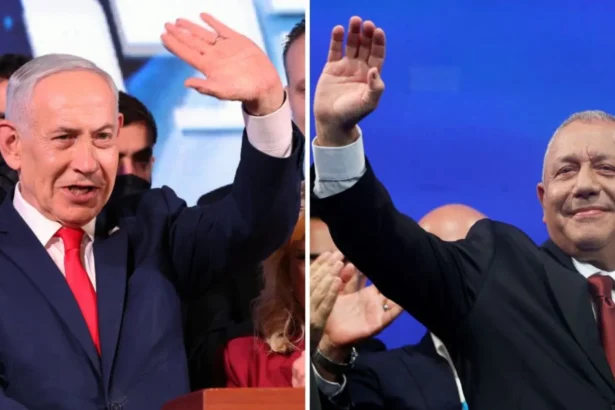
JERUSALEM: Exit polls from Israel’s general election show that neither Prime Minister Benjamin Netanyahu’s alliance nor the opposition led by former military chief Gadi Eisenkot has secured a clear majority in parliament.
Three Israeli TV channels released exit polls showing a close contest between the two sides. Two channels initially predicted that both groups would win around 51 seats each in the 120-seat Knesset. A third channel gave Netanyahu’s alliance a small lead.
Updated exit polls later showed that two channels placed both sides at 51 seats. Another gave Netanyahu’s alliance 52 seats and Eisenkot’s opposition group 49 seats.
The results suggest that forming the next government could be difficult. The final outcome may depend on the number of seats won by Arab political parties, which were expected to secure a combined 18 or 19 seats.
Voter turnout reached 77.7% by the time polling stations closed on Tuesday night. The Central Elections Committee said this was the highest turnout recorded by that hour since 1999.
The official results were expected to begin coming out overnight. However, around 600,000 postal and other absentee ballots, mostly cast by military personnel, were not expected to be fully counted until Thursday.
Both Netanyahu and Eisenkot claimed progress after the exit polls were released. Supporters of Eisenkot celebrated at his party headquarters in Tel Aviv, while Netanyahu’s supporters said the election was not over yet.
Eisenkot said his party and its allies had made history. He promised to work towards forming a government. Former prime minister Yair Lapid, who supports Eisenkot’s alliance, said the results showed a major setback for Netanyahu’s side.
Netanyahu, however, called for the formation of a strong right-wing government. His allies said it was too early to draw conclusions before the final results were announced.
The two main Arab political groups, the United Arab List and the Joint List, could play an important role in forming the next government. United Arab List leader Mansour Abbas said he hoped his party and the opposition alliance could secure the 61 seats needed for a parliamentary majority.
Joint List chairman Yousef Jabareen also said Arab parties could not be ignored during government formation.
After the official results are confirmed, Israel’s president will consult political parties and choose a leader who has the best chance of forming a government. The process could take several weeks. If the chosen leader fails to form a government, another election may be held.
The election was Israel’s first since the Hamas-led attacks on October 7, 2023, and the wars that followed in Gaza, Lebanon and Iran.
Key issues during the campaign included security failures linked to the October 7 attacks, Israel’s military operations, changes to the judicial system and the growing burden of military service. The country’s international relations were also a major concern.
Netanyahu and his allies urged voters to take part in the election, warning that higher turnout among opposition and Arab voters could affect the results. Some right-wing parties also asked for voting hours to be extended, but the election authorities rejected the request.
The final results and negotiations between political parties will determine who forms Israel’s next government.
We welcome your contributions! Submit your blogs, opinion pieces, press releases, news story pitches, and news features to opinion@minutemirror.com.pk and minutemirrormail@gmail.com