Summary
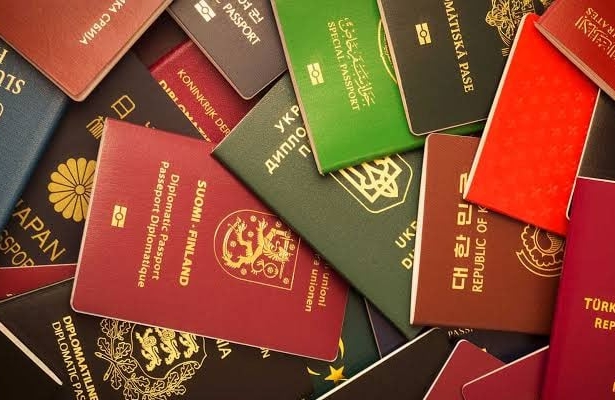
- Passports issued by most countries around the world are generally seen in four main colours — red, blue, green and black — and there are several interesting reasons behind the choice of these colours.
- New Zealand uses a black passport as an expression of its national identity, while some countries also use black covers for diplomatic passports.
- Thus, while countries have considerable freedom in choosing passport colours, tradition, national identity, political or religious symbolism, and practical design considerations have helped make red, blue, green and black the dominant colours seen on passports worldwide.
Passports issued by most countries around the world are generally seen in four main colours — red, blue, green and black — and there are several interesting reasons behind the choice of these colours.
According to international media reports, blue is often associated with the “New World” and, in some cases, is seen as representing a distance from Europe’s traditional identity. Several countries have therefore adopted blue passport covers for historical, geographical or symbolic reasons.
Red, meanwhile, has sometimes been associated with communist ideology and political systems. As a result, the colour has acquired a political significance in some countries.
Croatia, for example, has retained its blue passport despite being a member of the European Union. The choice has at times been viewed as a symbolic expression of the country’s distinct identity.
Green passports are more commonly linked to religious identity. Several Muslim-majority countries use green passport covers, with the colour traditionally associated with Islam and regarded in Islamic tradition as a colour favoured by the Prophet Muhammad (PBUH).
Black is the least common of the four major passport colours. New Zealand uses a black passport as an expression of its national identity, while some countries also use black covers for diplomatic passports.
Countries are generally free to choose the colour of their passport covers. Different shades of blue, red, green and black are also used, depending on national preferences and design requirements.
Why are pink or light-coloured passports uncommon?
The limited range of passport colours is not solely linked to political, religious or cultural considerations. Practical aspects of passport production and design also play a role.
Golden symbols and lettering on passport covers are commonly applied using hot foil stamping. These metallic markings tend to stand out more clearly and elegantly against darker backgrounds.
For instance, Nepal’s passport has a dark brown cover, which also provides a strong contrast for the golden markings.
As a result, bright or very light colours such as pink or yellow are generally considered less practical because they may provide less contrast and make the metallic details less prominent.
Thus, while countries have considerable freedom in choosing passport colours, tradition, national identity, political or religious symbolism, and practical design considerations have helped make red, blue, green and black the dominant colours seen on passports worldwide.
We welcome your contributions! Submit your blogs, opinion pieces, press releases, news story pitches, and news features to opinion@minutemirror.com.pk and minutemirrormail@gmail.com