Summary
- He said the country’s healthcare system is under growing pressure due to preventable diseases.
- The minister said Pakistan needs a major shift from treatment-based healthcare to preventive healthcare.
- He said around 6.2 million children are born in Pakistan every year, which places additional pressure on health services.
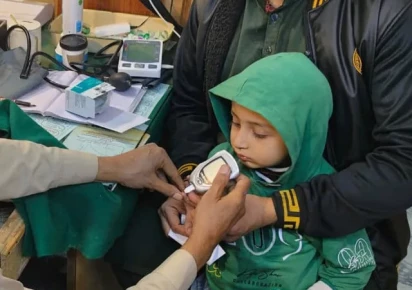
Health Minister Mustafa Kamal has warned that Pakistan is facing a severe public health challenge. He said nearly 10 million children between the ages of five and 15 are suffering from diabetes.
He made the remarks while speaking at the inauguration of the School of Pharmaceutical Sciences at the Health Services Academy in Islamabad. He said the country’s healthcare system is under growing pressure due to preventable diseases.
The minister said Pakistan needs a major shift from treatment-based healthcare to preventive healthcare. He stressed that the focus must be on stopping diseases before they spread, rather than only treating patients after illness.
He highlighted diabetes, hepatitis, heart disease, and maternal health complications as major concerns. He said these diseases are increasing at an alarming rate across the country.
He pointed to sugary drinks as a major cause of rising diabetes cases among children. He said little progress has been made in controlling sugar consumption despite repeated concerns.
The minister also linked health problems to rapid population growth. He said around 6.2 million children are born in Pakistan every year, which places additional pressure on health services.
He shared other worrying figures, saying thousands of women die every year due to pregnancy-related complications. He also said millions of people in the country are affected by hepatitis.
He added that heart attacks are causing frequent deaths across Pakistan, with one reported every minute.
The minister criticized weak policy implementation. He said some preventive measures are ignored while harmful products remain easily available in the market.
He argued that Pakistan’s main problem is not a shortage of funds but poor management and governance. He said large development budgets are often not used effectively.
He called for better use of resources and stronger health planning at both federal and provincial levels.
Health experts present at the event supported the need for reforms. They stressed improving primary healthcare, strengthening medical education, and focusing on prevention.
Officials said the newly established School of Pharmaceutical Sciences will help improve research, training, and healthcare development in the country.
The minister concluded that improving public health is essential for national development. He said reducing preventable diseases is key to easing pressure on hospitals and building a healthier society.
We welcome your contributions! Submit your blogs, opinion pieces, press releases, news story pitches, and news features to [email protected] and [email protected]