
Summary
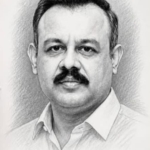
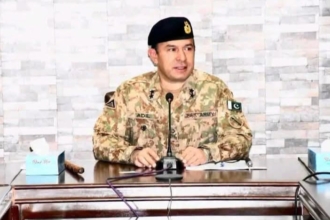
- ISLAMABAD: Field Marshal Syed Asim Munir’s rise through Pakistan’s military leadership has marked a significant chapter in the country’s defence establishment, taking him from senior intelligence and field command positions to the country’s highest military office.
- His appointment as Chief of Army Staff placed him at the centre of Pakistan’s military leadership, while subsequent changes to the country’s defence command structure elevated him to the position of Chief of Defence Forces.
- His supporters describe the trajectory from intelligence leadership to army command and ultimately the country’s senior defence position as evidence of a career shaped by operational and institutional experience.
ISLAMABAD: Field Marshal Syed Asim Munir’s rise through Pakistan’s military leadership has marked a significant chapter in the country’s defence establishment, taking him from senior intelligence and field command positions to the country’s highest military office.
Munir has held several key appointments during his military career, including Director General of Military Intelligence and Director General of Inter-Services Intelligence. His experience in both intelligence institutions was followed by senior command and staff responsibilities, including command of the 23 Division, Force Command Northern Areas and Gujranwala Corps, as well as the position of Quartermaster General at General Headquarters.
His appointment as Chief of Army Staff placed him at the centre of Pakistan’s military leadership, while subsequent changes to the country’s defence command structure elevated him to the position of Chief of Defence Forces. His appointment as Field Marshal further distinguished his career within Pakistan’s military history.
Supporters of Munir’s career have highlighted his extensive experience in intelligence, field command and strategic planning as important factors in his rise. The assessment that his career represents an example of professional advancement, however, is an interpretation rather than a measurable historical conclusion and should be distinguished from the documented record of his appointments.
Munir has also received major military honours, including the Sword of Honour and the Nishan-e-Imtiaz (Military) and Hilal-e-Imtiaz (Military), according to publicly reported details of his service career.
His tenure has coincided with a period of significant security, economic and regional challenges for Pakistan. During this period, the military leadership has been involved in national security policy, counterterrorism efforts, defence diplomacy and initiatives connected with economic investment and strategic cooperation.
The Special Investment Facilitation Council has remained an important platform for attracting foreign and domestic investment, particularly in sectors including agriculture, mining, information technology and energy. Pakistan has also continued efforts to strengthen economic and strategic relations with countries including Saudi Arabia, the United Arab Emirates, Qatar, Türkiye, China and Azerbaijan.
On the defence side, the military leadership has emphasised greater coordination among the three armed services, modernization and preparedness against evolving security threats. Counterterrorism and intelligence-led security operations have also remained central to the country’s national security agenda.
Munir’s tenure has further coincided with Pakistan’s efforts to expand military-to-military cooperation and defence diplomacy through bilateral engagements and multinational exercises.
His supporters describe the trajectory from intelligence leadership to army command and ultimately the country’s senior defence position as evidence of a career shaped by operational and institutional experience. Critics and independent analysts, meanwhile, have debated the broader role of the military in Pakistan’s political and economic affairs, making assessments of his legacy a subject of continuing public discussion.
What remains clear from his publicly documented career is that Munir has occupied some of the most consequential positions in Pakistan’s security establishment. His elevation to Field Marshal and Chief of Defence Forces has placed his tenure among the notable developments in the country’s contemporary military history.
We welcome your contributions! Submit your blogs, opinion pieces, press releases, news story pitches, and news features to opinion@minutemirror.com.pk and minutemirrormail@gmail.com