Summary
- UK Prime Minister Andy Burnham has tasked the country’s security chiefs with establishing a new National Centre for Information Defence to counter hostile state information attacks, including AI-driven disinformation and deepfakes.
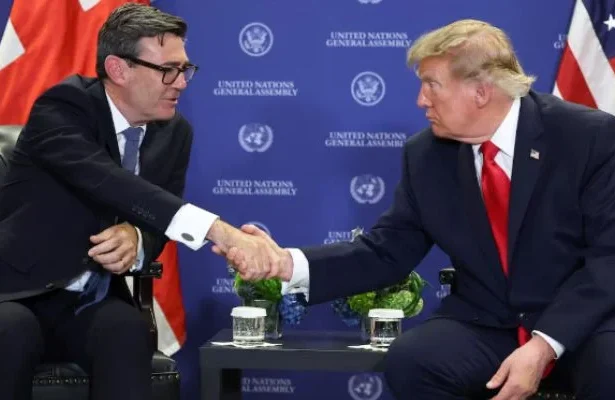
- Speaking at the United Nations General Assembly in New York on Tuesday, Burnham said the centre would “detect, attribute and disrupt” hostile information attacks and help protect Britain’s democracy.
- “Today I am tasking our security chiefs to begin work on a new National Centre for Information Defence – to detect, attribute and disrupt these kinds of hostile state information attacks.
UK Prime Minister Andy Burnham has tasked the country’s security chiefs with establishing a new National Centre for Information Defence to counter hostile state information attacks, including AI-driven disinformation and deepfakes.
Speaking at the United Nations General Assembly in New York on Tuesday, Burnham said the centre would “detect, attribute and disrupt” hostile information attacks and help protect Britain’s democracy.
“Today I am tasking our security chiefs to begin work on a new National Centre for Information Defence – to detect, attribute and disrupt these kinds of hostile state information attacks. To support and defend our democracy,” Burnham said.
He said artificial intelligence would “multiply the threat” posed by information warfare, as hostile actors increasingly use technology to spread disinformation and manipulate public opinion.
The proposed centre is expected to bring together UK intelligence agencies, government departments, law enforcement bodies and social media companies to strengthen the country’s ability to detect and respond to foreign information operations.
Burnham singled out Russia in his speech, saying the Kremlin spends around £1.3 billion a year on manipulating information. He accused Russian agencies of using bots, fake websites and falsified newspaper articles, as well as forging the branding of 28 British organisations, including universities and the BBC. He also said the UK had evidence of attempts to interfere in the 2019 general election.
Burnham also linked national resilience to social and economic conditions, arguing that people facing financial difficulties or young people who are not in employment, education or training may be more vulnerable to foreign influence and online manipulation. He said the government would work to strengthen communities’ ability to recognise and respond to disinformation.
The UK also plans to share its experience with other countries facing similar threats. Burnham said Britain had already supported Moldova in protecting its elections from Russian interference and was prepared to share its understanding of how hostile information operations work and how governments can respond.
The announcement forms part of Burnham’s broader push for greater international cooperation on artificial intelligence and national security. In his UN speech, he also announced that Britain was developing a new AI defence partnership with the United States aimed at protecting critical national infrastructure.
We welcome your contributions! Submit your blogs, opinion pieces, press releases, news story pitches, and news features to opinion@minutemirror.com.pk and minutemirrormail@gmail.com